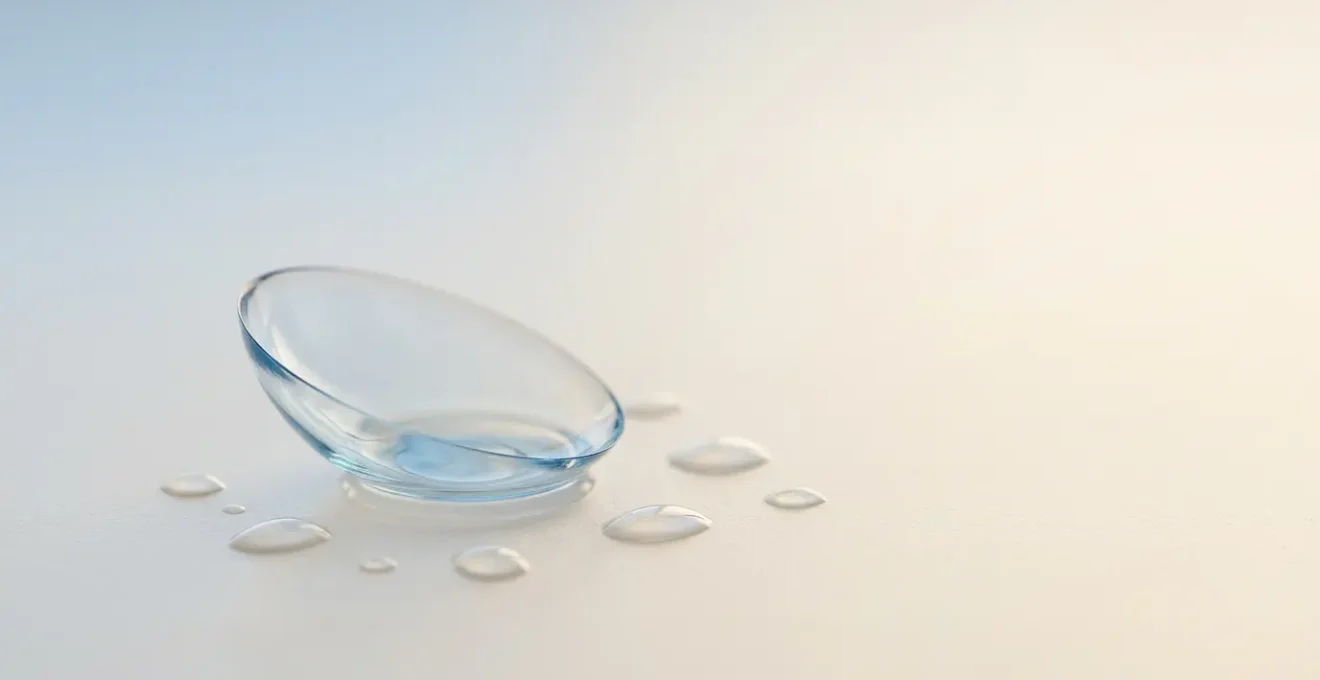
Ortho-K provides complete visual freedom for athletes by biomechanically reshaping the cornea during sleep.
- It uses the gentle, hydraulic pressure of your tear film to temporarily mold the eye’s surface.
- This process not only corrects central vision but also enhances peripheral awareness, which can boost reaction time in sports.
Recommendation: For athletes in contact or water sports, Ortho-K is a powerful, reversible alternative to surgery for achieving high-performance, device-free vision.
For any athlete, clear vision is non-negotiable. Yet, for a swimmer staring at a blurry lane clock or a rugby player who has lost a contact lens mid-scrum, the frustration is all too real. Conventional solutions like prescription goggles or daily disposable lenses come with their own set of compromises—fogging, discomfort, displacement, and the constant worry of losing one at a critical moment. These limitations force many athletes to choose between clear vision and peak performance.
The standard conversation around vision correction often revolves around these familiar, yet imperfect, daytime options. But what if the entire paradigm could be shifted? What if, instead of correcting vision during the day’s activities, you could re-engineer your optical system overnight while you sleep? This isn’t just about the convenience of not wearing glasses or contacts; it’s about leveraging advanced corneal biomechanics to gain a competitive advantage. This is the core principle of Orthokeratology, or Ortho-K.
This approach moves beyond simple correction to become a tool for performance enhancement. It offers a level of freedom and reliability that daytime wear simply cannot match, especially in the demanding environments of contact and water sports. It represents a fundamental shift from compensating for a visual deficit to proactively managing and optimizing the eye’s optical surface.
This guide will deconstruct the science behind Ortho-K, from the fluid dynamics at play on your cornea to the practical steps for nightly application. We will explore its dual role in providing lifestyle freedom and controlling myopia, analyze the real-world impact on athletic performance, and provide the technical data you need to understand if this innovative solution is right for you.
To navigate this technical deep-dive, the following summary outlines the key areas we will explore, from the fundamental science of corneal reshaping to its specific applications in sports and myopia management.
Summary: Ortho-K: Engineering Clear Vision Overnight for Peak Daytime Performance
- How Do Tears Reshape Your Cornea While You Sleep?
- How to Apply Rigid Lenses Before Bed Without Discomfort?
- Myopia Control or Lifestyle Freedom: What Is the Primary Goal of Ortho-K?
- The 6-Hour Rule: What Happens to Your Vision If You Don’t Sleep Enough?
- When to Stop Wearing Ortho-K Before a Laser Surgery Consultation?
- Night Lenses or Defocus Glasses: Which Lifestyle Fits Your Child Best?
- Why Does Peripheral Vision Improvement Boost Reaction Time in Team Sports?
- Myopia Control in 2024: Can You Stop Your Child’s Prescription Getting Worse?
How Do Tears Reshape Your Cornea While You Sleep?
The concept of reshaping the eye with a contact lens may sound like science fiction, but the mechanism is based on a fundamental principle of fluid dynamics. Ortho-K lenses don’t simply press on the eye; they orchestrate a controlled, microscopic change using the natural tear film that coats your cornea. The lens is designed with a specific reverse-geometry. The central part of the lens vaults over the cornea, creating a minuscule space, while the mid-periphery of the lens sits closer to the corneal surface.
When you close your eyes to sleep, this precision-engineered gap is filled with your tear fluid. The lens design generates gentle but persistent hydraulic forces within this trapped tear layer. This fluid pressure exerts a positive force in the mid-periphery and a negative “suction” force centrally. This pressure differential causes the central corneal epithelium—the outermost, highly regenerative layer of the cornea—to thin slightly, while the mid-peripheral epithelium thickens. This subtle redistribution of epithelial cells flattens the central cornea, correcting myopia (nearsightedness).

As this microscopic view illustrates, the entire process is a delicate interplay between the lens, the tear film, and the biological tissue. The cornea itself is not compressed or damaged. Instead, it is the remarkable flexibility and regenerative capacity of the corneal epithelium that allows for this temporary and completely reversible change. Upon waking and removing the lens, the cornea retains this newly molded shape for the entire day, providing clear, unaided vision.
How to Apply Rigid Lenses Before Bed Without Discomfort?
The success of Ortho-K hinges on consistent nightly wear, and that begins with a comfortable and hygienic insertion routine. Unlike soft lenses, Ortho-K lenses are made from a rigid gas-permeable (RGP) material, which is necessary for the precise corneal molding. While the term “rigid” can be intimidating, modern materials and proper technique make for a surprisingly comfortable experience. The key is control and a gentle hand. Developing a consistent, clean routine is the most critical factor in preventing both discomfort and potential complications.
Before you even touch your lenses, thorough hand washing is paramount. Use an unscented soap and dry your hands with a lint-free towel to avoid transferring oils or debris to the lens or your eye. Once the lens is placed on your fingertip, filled with a comfort solution, the technique is all about neutralizing the blink reflex. By using one hand to hold the upper lid and the other to hold the lower lid, you create a wide, stable opening to gently place the lens on the eye. It’s not about forcing the lens in, but about creating the perfect landing zone for it.
Correct blinking is very important while wearing contact lenses. Look straight ahead and completely close both eyes slowly and gently. Then, re-open after a slight pause. After putting in the contact lenses, a few gentle blinks will make the lenses more comfortable quickly.
– NHS University Hospitals Coventry & Warwickshire, Instructions for Rigid Gas Permeable Contact Lens Wearers
Your Action Plan: Perfecting Rigid Lens Insertion
- Hygiene First: Thoroughly wash and dry your hands with unscented soap before handling lenses.
- Lens Placement: Place the clean lens on the tip of your index finger, ensuring it’s defect-free and properly oriented.
- Lid Control: With your non-dominant hand, gently hold your upper eyelid toward your eyebrow to prevent lashes from interfering.
- Lower Lid Positioning: Use your middle finger on your dominant hand to pull your lower eyelid down, creating a wide opening.
- Gentle Application: Look upward and cautiously place the lens on the lower white part of your eye, then release both lids slowly.
- Natural Centering: Blink several times gently to allow the lens to move to its correct position on the cornea.
Myopia Control or Lifestyle Freedom: What Is the Primary Goal of Ortho-K?
A common question surrounding Ortho-K is whether its primary purpose is to provide device-free daytime vision for adults or to control the progression of nearsightedness in children. The innovative answer is that it’s not an “either/or” scenario. Both outcomes are achieved simultaneously through the same sophisticated biomechanical process. The lens is engineered to address two different optical zones for two distinct, yet complementary, goals.
The central part of the lens is responsible for the “lifestyle freedom” aspect. It flattens the central cornea to correct the existing refractive error, allowing an athlete or active individual to see clearly all day without glasses or contacts. This is the immediate, tangible benefit that most adult users seek. However, the true genius of the Ortho-K design lies in its periphery. While flattening the center, the lens simultaneously creates a zone of mid-peripheral corneal steepening. This secondary effect is the key to myopia control.
Research suggests that the eye’s growth and elongation (the physical cause of worsening myopia) are driven by signals from peripheral vision. Conventional glasses and contacts correct central vision but can create “hyperopic defocus” in the periphery, which may signal the eye to grow longer. As optometric research demonstrates, Ortho-K’s dual mechanism flattens the center for clear vision while creating peripheral steepening that is thought to counteract this growth signal. Therefore, the primary goal depends on the patient: for an adult athlete, it’s lifestyle; for a child, it’s myopia control. But the technology elegantly delivers both.
The 6-Hour Rule: What Happens to Your Vision If You Don’t Sleep Enough?
The effectiveness of Ortho-K is directly proportional to the duration of nightly wear. Practitioners typically recommend a minimum of six to eight consecutive hours of sleep with the lenses in place for the full corrective effect to last the entire following day. This isn’t an arbitrary number; it’s based on the time required for the gentle hydraulic forces to complete the subtle reshaping of the corneal epithelium. Skipping hours or having inconsistent wear time will lead to predictable and tangible consequences for your vision.
If you don’t wear the lenses for a sufficient duration, the cornea will not be fully molded. This results in an under-correction. You might experience clear vision in the morning, but it will likely start to fade by the afternoon, leading to blurriness, ghosting, or halos, especially in low light. This phenomenon is known as regression. The corneal epithelium is an elastic tissue, and without the lens holding it in the corrected shape for the full duration, it will naturally and gradually begin to return to its original form. Clinical studies indicate that after full discontinuation, the cornea completely returns to its original shape, but even one night of insufficient wear can cause partial regression the next day.
Case Study: The Two-Week Stabilization Period
For new users, especially those with higher prescriptions, achieving stable all-day vision is not instantaneous. For patients with 4 diopters of myopia, for example, achieving full all-day vision correction typically requires approximately two weeks of consistent overnight wear. During this adaptation period, the vision defect begins to decrease gradually with each night of use. The exact timeline depends on individual corneal characteristics, but this highlights that the molding process is cumulative, and consistency is paramount, especially in the beginning.
Think of it like a retainer for your teeth. If you don’t wear it long enough, the teeth start to shift back. Similarly, if your Ortho-K “retainer” isn’t worn for the full 6-8 hours, your vision will begin to shift back to its uncorrected state sooner than desired. For an athlete, this could mean the difference between a sharp view of the field at the end of a long tournament day and struggling with suboptimal vision.
When to Stop Wearing Ortho-K Before a Laser Surgery Consultation?
One of the most powerful features of Ortho-K is its complete reversibility. Because the process only affects the corneal epithelium—the outermost, rapidly regenerating layer of cells—and not the deeper structural layers of the cornea (like the stroma, which is altered in LASIK), stopping wear allows the eye to return to its original state. This is a crucial safety feature and provides a significant advantage for individuals who may consider permanent vision correction like laser surgery in the future.
If you are considering a consultation for a procedure like LASIK or PRK, it is absolutely essential to discontinue wearing your Ortho-K lenses well in advance. Laser surgery requires incredibly precise measurements of your cornea’s natural shape and thickness. Since Ortho-K fundamentally (though temporarily) alters that shape, any measurements taken while actively using or recently having used the lenses will be inaccurate. This could lead to an incorrect surgical plan and a poor visual outcome. The cornea must be allowed to fully regress to its baseline, pre-treatment curvature.
Orthokeratology produces a temporary moulding of the cornea. If we stop using the contact lenses at night, after 4 or 5 days the eye will fully recover its shape and the patient will return to his usual prescription.
– Institut Català de Retina (ICR), Orthokeratology: What are Ortho-K lenses?
While some regression happens quickly, most surgical centers will require a much longer washout period to ensure complete stability. The general rule is to stop wear for at least one month for every year of Ortho-K use, though your surgeon will provide a specific protocol. This is because even after the refractive error has returned, subtle epithelial thickness changes may still be present. As multiple histological studies confirm, the changes in corneal thickness after orthokeratology are confined to the epithelium, which is what makes the process fully reversible and safe, but also necessitates this waiting period for accurate surgical mapping.
Night Lenses or Defocus Glasses: Which Lifestyle Fits Your Child Best?
When considering myopia control for a child, the two leading non-invasive options are often Ortho-K (night lenses) and specialized defocus glasses. Both are designed not just to correct vision, but to actively manage the progression of nearsightedness. The choice between them is less about which is clinically “better”—as both have shown significant efficacy—and more about which best integrates into the child’s and family’s lifestyle, particularly for an active child.
Defocus glasses are the simpler option logistically. There’s no insertion/removal routine, no cleaning solutions, and a lower risk of infection. However, they come with all the classic drawbacks of glasses for an athletic child: they can break, fall off, fog up, and get scratched. They can be a significant hindrance in contact sports, swimming, and gymnastics, potentially discouraging a child from participating freely. The technology also relies on the child looking through the precise center of the lens for clear vision, which may not always happen during dynamic play.

Ortho-K, on the other hand, offers complete daytime freedom. Once the morning routine is done, the child is free to run, swim, and play any sport without any physical device on their face. This is an enormous psychological and practical benefit for an active child, fostering confidence and uninhibited participation. However, this freedom comes with responsibility. It requires a diligent nightly routine of cleaning, insertion, and removal, which typically involves significant parental supervision. Furthermore, as a 2024 safety study revealed that approximately 20% of children using these lenses stopped, mainly due to fitting issues, it underscores the importance of a skilled fitter and patient adherence.
Why Does Peripheral Vision Improvement Boost Reaction Time in Team Sports?
For an athlete, vision is more than just reading the scoreboard. It’s about processing a dynamic, 360-degree environment in fractions of a second. A key, often-overlooked component of elite athletic vision is the quality of peripheral awareness. This is where Ortho-K offers a unique and scientifically grounded performance advantage that goes far beyond simply correcting central vision acuity. The benefit lies in how it manages peripheral defocus.
In a myopic eye corrected with standard glasses or soft contacts, central vision is sharp, but the optics often create a slight blur or “hyperopic defocus” in the far periphery. Your brain can ignore this blur, but it still means you are receiving less clear information from the edges of your visual field. In a fast-paced team sport, that peripheral information is critical—it’s the teammate in your blind spot, the defender closing in, the direction the play is flowing. A reduced quality of peripheral input can subtly delay your brain’s ability to process the full environmental picture, thus slowing reaction time.
Orthokeratology is particularly advantageous for those with active lifestyles or those participating in sports. It is especially beneficial for those who swim, surf, or partake in other water sports and those who are involved in combat sports or martial arts.
– Vision Institute, A Guide To Orthokeratology: Overnight Vision Correction
Ortho-K’s unique corneal reshaping process fundamentally changes this optical profile. By creating that zone of mid-peripheral steepening, it not only helps control myopia progression but also more accurately focuses peripheral light onto the retina. This effectively reduces peripheral defocus. The result is an expanded “visual bandwidth”—the brain receives a clearer, more accurate data stream from a wider field of view. An athlete can process spatial relationships and movement more quickly and accurately, leading to faster recognition of patterns, improved situational awareness, and ultimately, a quicker physical reaction.
Key takeaways
- Ortho-K uses tear fluid dynamics overnight to correct daytime vision without surgery.
- It is highly effective for athletes in contact and water sports, offering total visual freedom.
- Beyond vision correction, Ortho-K is a proven method for controlling myopia progression in children and adolescents.
Myopia Control in 2024: Can You Stop Your Child’s Prescription Getting Worse?
The increasing prevalence of myopia (nearsightedness) in children has made myopia control a primary focus of pediatric eye care in 2024. The goal is no longer to just correct vision with stronger glasses each year, but to actively intervene to slow or halt the progression. A worsening prescription is not just an inconvenience; it’s linked to an increased risk of serious eye conditions later in life, such as retinal detachment and glaucoma. Ortho-K has emerged as one of the most effective, non-pharmacological methods for this intervention.
The mechanism behind its efficacy is the peripheral defocus management we’ve discussed. By reshaping the cornea to focus peripheral light in front of the retina (myopic defocus) instead of behind it (hyperopic defocus), Ortho-K is believed to remove the stimulus that encourages the eye to elongate. The primary measure of success in myopia control is not just the change in prescription (diopters), but the change in axial length—the physical length of the eyeball from front to back. Slowing axial elongation is the true goal, and this is where Ortho-K has demonstrated significant results.
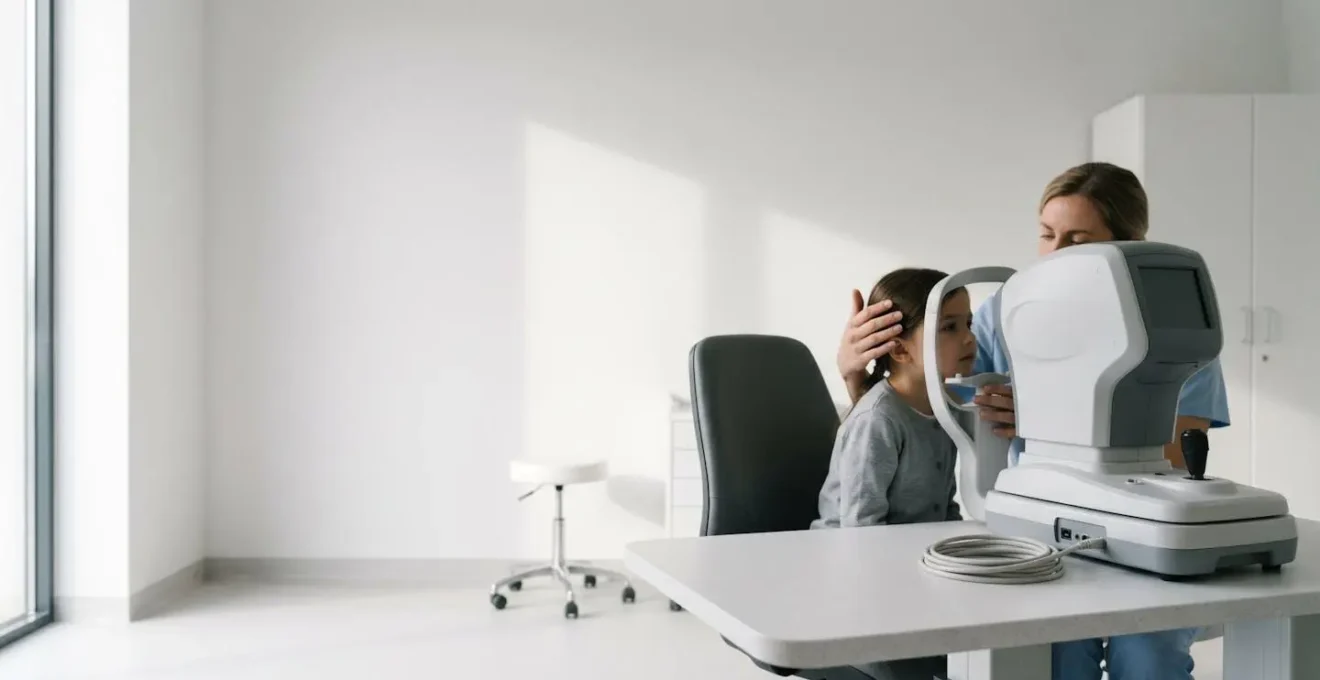
The clinical data is compelling. As the following analysis comparing Ortho-K to standard glasses shows, the reduction in axial length growth over two years is significant, often around 50%. The effect is most pronounced when treatment is initiated at a younger age.
| Outcome Measure | Orthokeratology Group | Single-Vision Spectacles (Control) | Percent Reduction |
|---|---|---|---|
| 2-Year Axial Elongation | ~0.3 mm | ~0.6 mm | ~50% |
| Refractive Change | ~0.25 D | ~0.75 D | ~0.5 D difference |
| Patient Age Factor | Greater effect when initiated at early age (6-8 years) | Standard progression rates | Enhanced efficacy in younger children |
| Individual Variability (2-year AL elongation) | 40% with ≤0.30mm (very effective); 25% with >0.59mm (less effective) | Standard distribution | Treatment response varies significantly |
While no treatment can guarantee a complete stop to progression for every child, Ortho-K represents a powerful, evidence-based strategy to significantly change a child’s myopic trajectory, preserving not just their vision but their long-term eye health.
To determine if this advanced optical solution is right for your specific sport and vision needs, the next step is a detailed corneal topography assessment with a certified orthokeratology specialist.