Vision Professionals
Navigating the landscape of eye care can often feel as complex as the human eye itself. When you experience a shift in your vision, a sudden flash of light, or persistent eye strain, knowing exactly which specialist to consult is the critical first step toward preserving your sight. The world of ocular health is not handled by a single type of practitioner, but rather by a highly specialised, multidisciplinary team designed to address everything from routine refraction to complex neurological visual disorders.
Many patients use the terms interchangeably, yet there is a profound difference between the professional who measures the precise angle of your progressive lenses and the surgeon who operates on a cataract. Understanding these distinct roles empowers you to make informed decisions about your health, optimise your pathway through public or private healthcare systems, and ensure that your eyes receive the precise level of care they require at every stage of life.
Navigating the Core Eye Care Providers
The foundation of proactive eye health relies on knowing the difference between primary care and advanced medical intervention. Establishing a relationship with the right practitioner ensures that silent conditions are detected early and emergencies are handled swiftly.
The Optometrist: Your Primary Care Doctor for the Eyes
For the vast majority of people, the optometrist is the gateway into the eye care system. Far from just updating your prescription, an optometrist acts as your primary healthcare provider for ocular health. During a preventive eye exam, they do much more than ask you to read letters off a chart. They actively screen for systemic issues like diabetes and hypertension, which often manifest first in the delicate blood vessels of the retina.
This is why detailing your family history is crucial. Sharing a lineage of macular degeneration or diabetes helps your doctor spot risks long before symptoms appear. One of the most vital diagnostic tools in their arsenal is pupil dilation. While a standard look through an undilated pupil is like peering through a keyhole, dilation opens the door entirely, revealing the full periphery of the retina where silent tears or detachments can occur.
As you age, the frequency of these visits must adapt. While biennial exams are generally sufficient for healthy young adults, professionals highly recommend switching to annual exams as you enter your senior years, or sooner if you develop systemic health conditions.
The Ophthalmologist: Advanced Medical and Surgical Care
When an optometrist detects a complex pathology, they will refer you to an ophthalmologist—a medical doctor who specialises in surgical and advanced medical eye care. A common point of confusion is knowing where to go for sudden, alarming symptoms like flashes of light or a sudden shower of floaters. While a high street optician can perform initial checks, severe or sudden onset symptoms often warrant a direct visit to a hospital eye clinic or an emergency ophthalmology department to rule out retinal detachment.
In a hospital setting, treatment is strictly triaged based on medical urgency rather than the order of arrival. For instance, patients suffering from glaucoma are prioritised differently than routine cataract cases. Because glaucoma involves irreversible nerve damage that can progress silently, timely intervention is critical, whereas cataracts, while debilitating, usually progress slowly and can be scheduled for elective surgery without permanent vision loss.
Managing Referrals and Hospital Appointments
Accessing specialist care often involves navigating administrative pathways that require patience and strategy. Understanding how appointments are allocated can significantly impact the speed at which you receive treatment.
Public Healthcare Pathways and Wait Times
In public healthcare systems like the NHS, wait times for an ophthalmologist referral can vary dramatically based on your geographic location and the clinical urgency of your condition. To help manage these queues, systems such as « ChooseandBook » (or e-Referral services) are frequently utilised. Learning to navigate these platforms allows patients to view different hospital wait times and select clinics that might offer an earlier slot.
However, the system demands strict compliance. The consequence of a « DidNotAttend » (DNA) status is severe: missing a hospital eye appointment often results in being discharged back to your general practitioner, effectively resetting your wait time to zero. It is a harsh but necessary policy to manage high demand.
The Private Consultation Dilemma
Faced with long public waitlists, many patients consider the private route. Is paying a fee—often around £200 for an initial consultation—worth the investment? Here are the primary factors to consider when making this decision:
- Speed of diagnosis: Private consultations usually occur within days, providing immense peace of mind for worrying symptoms.
- Continuity of care: You are guaranteed to see the same consultant at every visit, unlike public clinics where you may see different doctors.
- Treatment transition: A private diagnosis does not necessarily mean you must pay for private surgery; many patients transfer back to the public queue for their actual procedure once diagnosed.
Preparing for Your Hospital Visit
Hospital eye appointments require specific preparation, particularly regarding transportation. When you are scheduled for comprehensive tests, follow these standard steps:
- Arrange a designated driver: Heavy diagnostic pupil dilation will blur your vision and cause extreme light sensitivity, making driving unsafe for several hours.
- Bring all current eyewear: Even old pairs of glasses help the specialist understand your visual history.
- Prepare a medication list: Systemic medications heavily influence eye pressure and tear production.
The Craft of Dispensing Opticians
Once a prescription is generated, the responsibility shifts to the dispensing optician. They are the engineers of the optical world, turning a medical prescription into a functional, comfortable visual tool.
Precision Beyond the Frame Brand
Many consumers focus heavily on the designer logo on the side of their frames, but a dispensing optician knows that their technical advice matters far more than the brand. For complex prescriptions, particularly varifocal lenses, precise physical measurements are non-negotiable. One such measurement is the pantoscopic tilt—the angle at which the frame front tilts toward your cheeks. If this angle is miscalculated by even a few degrees, the reading zone of a varifocal lens will be entirely out of alignment, causing neck strain and blurred vision.
Transparency is also key during this process. A common budget mistake is not telling your optician your financial limit upfront. Hiding your budget prevents the optician from recommending the best possible lens technology within your price range, often leading to compromises on essential features.
Customising Lenses for Your Lifestyle
To get the perfect lens coating, you must accurately describe your work environment. An optician needs to know if you work under harsh fluorescent lights, spend eight hours a day looking at multiple monitors, or drive frequently at night. These details dictate whether you need advanced anti-reflective coatings, blue-light filters, or polarised lenses.
When seeking this level of customisation, patients often weigh independent boutiques against high street chains. While chains offer competitive pricing and standardised service, independent boutiques frequently provide access to a wider variety of bespoke lens manufacturers and offer highly personalised, free tune-ups of your frame alignment—a service you should take advantage of whenever your glasses begin to slip or pinch.
Orthoptics and Binocular Vision Therapy
Sometimes, the issue is not with the clarity of the eye itself, but with how the brain and the eye muscles communicate. This is the specialised domain of the orthoptist.
Diagnosing Eye Coordination Issues
What does an orthoptist do that an optician cannot? While opticians focus on visual acuity and ocular health, orthoptists specialise in the neurological and muscular coordination of the eyes. They are the experts in diagnosing and managing conditions like strabismus (squint) and amblyopia (lazy eye).
A fundamental tool in their practice is the cover test. By simply covering and uncovering each eye while the patient focuses on a target, the orthoptist can detect subtle misalignments and lazy eye conditions that standard reading charts miss completely. Early detection is vital; if a child is experiencing unexplained reading issues, skipping lines, or suffering from fatigue at school, asking for an orthoptic referral can be a turning point in their educational development.
Active Therapy Versus Passive Correction
When dealing with double vision or focusing fatigue, patients often face a choice between passive and active treatments. Prism glasses alter the light entering the eye to align the images passively, offering immediate relief for double vision. However, for conditions like convergence insufficiency (the inability to maintain focus on near objects), active vision therapy is often the better long-term solution.
Therapeutic exercises, such as doing pencil push-ups correctly, train the brain and ocular muscles to work together effectively. Yet, patients must beware of the consistency trap. Vision therapy is akin to physiotherapy for the eyes; stopping the exercises after just two weeks because symptoms have mildly improved will almost certainly reverse the progress. Permanent resolution requires dedicated, sustained practice under the guidance of your vision professional.

What Does an Orthoptist Do That an Optician Cannot Treat?
The fundamental difference is not in treating the eyes, but in retraining the brain’s control system—a neurological function that corrective lenses cannot address. Orthoptists diagnose…
Lire la suite
Dispensing Optician: Why Their Advice Matters More Than the Frame Brand?
The logo on your glasses’ arm has almost zero impact on your quality of vision; the real value lies in the invisible optical engineering your…
Lire la suite
NHS Ophthalmologist Referral: How Long Will You Wait for Treatment?
The length of your NHS ophthalmology wait is not fixed; it is influenced by your specific clinical urgency and how proactively you navigate the system….
Lire la suite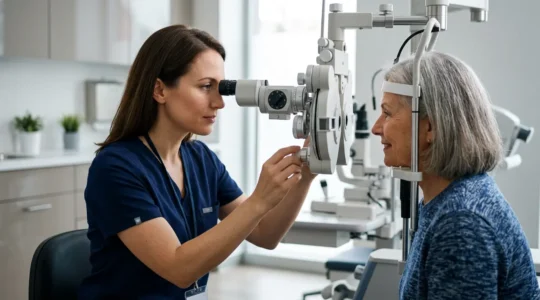
Optometrist or Ophthalmologist: Who Should Perform Your Preventive Eye Exam?
The essential first step for any preventive eye exam is an optometrist, not an ophthalmologist. Optometrists serve as the primary care doctors for your eyes,…
Lire la suite