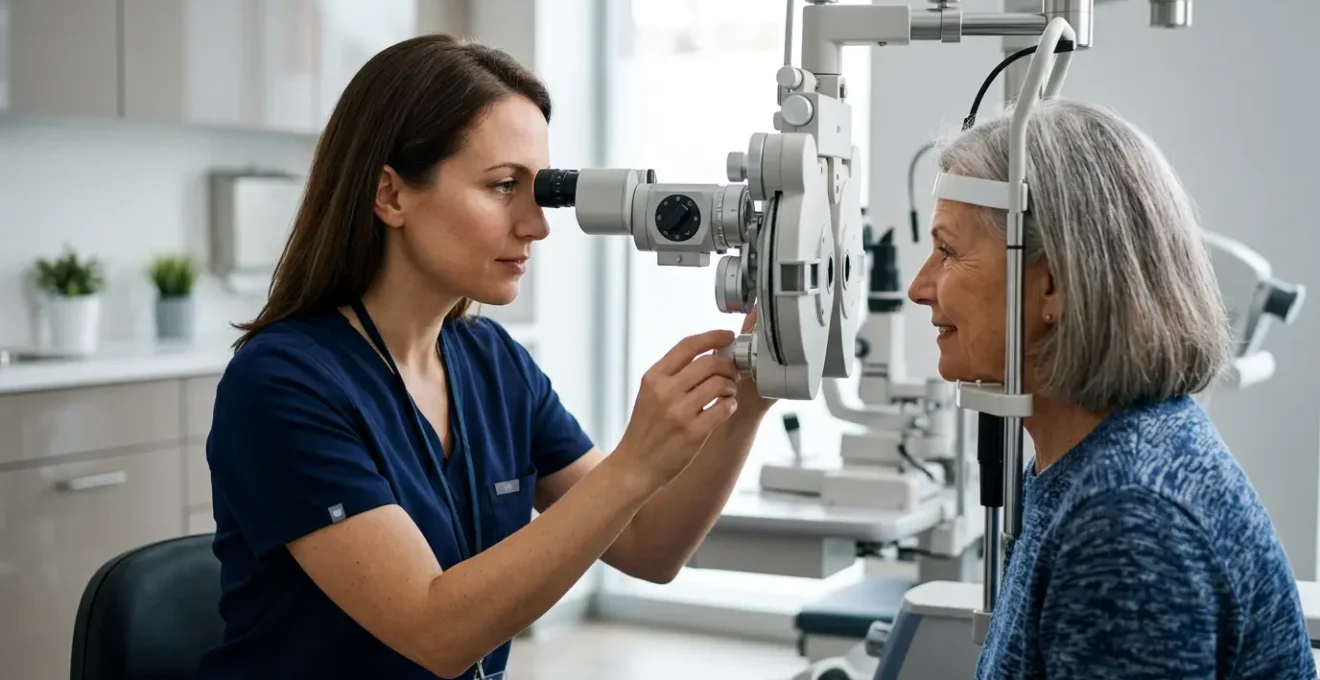
The essential first step for any preventive eye exam is an optometrist, not an ophthalmologist.
- Optometrists serve as the primary care doctors for your eyes, equipped to detect hundreds of diseases, not just prescribe glasses.
- An ophthalmologist is a surgical specialist you are referred to by an optometrist for advanced disease or surgery.
Recommendation: For your routine check-up, always start with a comprehensive exam from a qualified optometrist to establish a health baseline and create a clear diagnostic pathway.
Navigating the world of eye care can feel confusing. You see different titles—optician, optometrist, ophthalmologist—and it’s not always clear who you should turn to for a routine check-up. Many people operate under a simple, but incomplete, assumption: optometrists are for glasses and contacts, while ophthalmologists are for diseases and surgery. While not entirely wrong, this view misses the most critical aspect of modern preventive health care and can lead to delayed diagnosis and fragmented care.
The truth is, your regular eye exam is far more than just a vision test. It is a powerful, non-invasive window into your overall health. The key to leveraging it effectively isn’t about choosing one professional over the other, but understanding their distinct and complementary roles. The modern approach to eye wellness positions the optometrist as the central figure in your primary eye care journey—a gatekeeper who manages your vision, monitors for disease, and orchestrates specialist referrals when necessary.
This guide will dismantle the confusion by framing your decision within a clear, logical pathway. We will explore why the optometrist is your first and most important stop, how to prepare for your exam to maximize its value, what key tests reveal, and when the care of an ophthalmologist becomes essential. By understanding this structure, you can move from being a confused patient to an empowered advocate for your own long-term eye health.
To help you navigate this essential topic, we have structured this guide to answer your most pressing questions. Below is a summary of the key areas we will cover, designed to provide a clear roadmap for your eye health journey.
Summary: A Clear Guide to Choosing Your Eye Care Professional
- Why Is the Optometrist Your Primary Care Doctor for the Eyes?
- How to List Your Family History to Help Your Doctor Spot Risks?
- High Street Optician or Hospital Eye Clinic: Where Should You Go for Flashes?
- The Pupil Dilation Step That Reveals What a Standard Look Cannot
- When to Switch From biennial to Annual Exams as You Age?
- Why Every Two Years Is the Non-Negotiable Standard for Eye Tests?
- What Do the Plus and Minus Signs Actually Mean for Your Vision?
- NHS Eye Tests: What Actually Happens During Your 20-Minute Appointment?
Why Is the Optometrist Your Primary Care Doctor for the Eyes?
The most significant shift in understanding eye care is recognizing the optometrist (a Doctor of Optometry, or O.D.) as a primary healthcare provider, not just a refraction technician. They are the frontline professionals for your eyes, managing everything from routine exams to the diagnosis and treatment of many eye diseases. In the United States alone, optometrists perform over 88 million comprehensive eye exams annually, forming the bedrock of the nation’s eye care system. This role is foundational; they are the general practitioners of the eye world.
Unlike an ophthalmologist (a medical doctor, or M.D., who specializes in eye surgery), an optometrist is your first point of contact. They conduct comprehensive exams that assess not only your need for glasses or contact lenses but also screen for conditions like glaucoma, cataracts, macular degeneration, and diabetic retinopathy. If an optometrist detects a condition that requires surgical intervention or highly specialized medical treatment, they will then refer you to an ophthalmologist. This creates an efficient and structured diagnostic pathway, ensuring you see the right specialist at the right time without needing to self-diagnose. For most people, a referral is indeed needed to see an ophthalmologist for a specific issue, and that referral typically comes from an optometrist.
The significance of this primary care role cannot be overstated. As Dr. David Redman, an optometrist, noted in an interview with the American Optometric Association, the connection with patients is often profound. He states:
Many times, the only doctor a patient will see is their optometrist.
– Dr. David Redman, O.D., AOA News – Care Models of Success
This reality positions the optometrist as a crucial gatekeeper for both ocular and systemic health, often being the first to spot signs of broader health issues like diabetes or hypertension that manifest in the eye.
How to List Your Family History to Help Your Doctor Spot Risks?
One of the most powerful tools in preventive eye care is information you already possess: your family’s health history. Many sight-threatening eye conditions have a strong genetic component. By providing your optometrist with a detailed family history, you are essentially giving them a genetic roadmap to help predict your personal risk factors. This process of risk stratification is fundamental to personalized medicine, allowing your doctor to recommend a more tailored screening schedule.
For example, glaucoma, a leading cause of irreversible blindness, is often called the “silent thief of sight” because it has no symptoms in its early stages. However, a family history of the disease is a major red flag. Research from the Cleveland Clinic shows that having a first-degree relative with glaucoma increases your own risk by a staggering 4 to 9 times. Other conditions with significant hereditary links include age-related macular degeneration (AMD) and certain types of retinal detachment. Sharing this information allows your optometrist to be more vigilant and potentially begin monitoring for these conditions earlier than standard guidelines might suggest.
Simply saying “my grandmother had glaucoma” is a good start, but providing more detail transforms a vague comment into actionable clinical data. To make this process effective, it’s best to prepare a structured list before your appointment.
Your Action Plan: Building a Genetic Eye Health Map
- Document Conditions: List the specific eye condition each relative was diagnosed with (e.g., glaucoma, AMD, diabetic retinopathy, cataracts).
- Record Relationships: Note the relative’s relationship to you (e.g., mother, father, sibling, grandparent). First-degree relatives are most significant.
- Note Age of Onset: If possible, find out the age at which each relative was first diagnosed with their condition. Early onset can indicate a stronger genetic link.
- Include Systemic Diseases: List any family history of systemic conditions that affect eye health, such as diabetes, hypertension, and autoimmune diseases like lupus or rheumatoid arthritis.
- Create a Visual Aid: For clarity, sketch a simple family tree that extends to grandparents, parents, siblings, and children, annotating it with the relevant health information.
- Share Proactively: Present this documented history to your optometrist at the beginning of your exam so they can factor it into their assessment and screening plan.
High Street Optician or Hospital Eye Clinic: Where Should You Go for Flashes?
While an optometrist is the correct choice for routine and preventive care, certain symptoms demand more immediate attention and can blur the lines of where to go first. Symptoms like seeing sudden flashes of light, a shower of new floaters, or a “curtain” coming across your vision are considered ocular emergencies. These can be signs of a retinal tear or detachment, a condition that requires urgent specialist intervention to prevent permanent vision loss. In these acute scenarios, the question shifts from “optometrist or ophthalmologist?” to “where can I be seen the fastest?”
In many systems, such as the UK, a “High Street optician” (a community-based optometrist) is equipped to perform an initial emergency assessment. They can often see you much faster than a hospital eye clinic. They have the diagnostic tools to determine the severity of the issue and can make an immediate, direct referral to a hospital-based ophthalmologist if a retinal tear or other serious problem is suspected. This pathway is often the most efficient route to specialist care. However, if you cannot be seen by an optometrist immediately, you should go directly to a hospital’s accident and emergency (A&E) or emergency room (ER).
Understanding the difference between routine changes and emergency signals is key. Gradual changes in vision or the presence of a few long-standing floaters are typically not emergencies and can be addressed at your next routine exam. The red flags are sudden, dramatic changes. The key is to triage the symptom’s severity to determine the urgency of the response.

This visual metaphor helps illustrate the spectrum of urgency. Calm, slow-developing issues belong in the routine care pathway with your optometrist. Abrupt, alarming symptoms require an immediate assessment, which can often start at your local optometrist’s office but may need to escalate to a hospital setting. The rule is simple: when in doubt, seek care immediately.
The Pupil Dilation Step That Reveals What a Standard Look Cannot
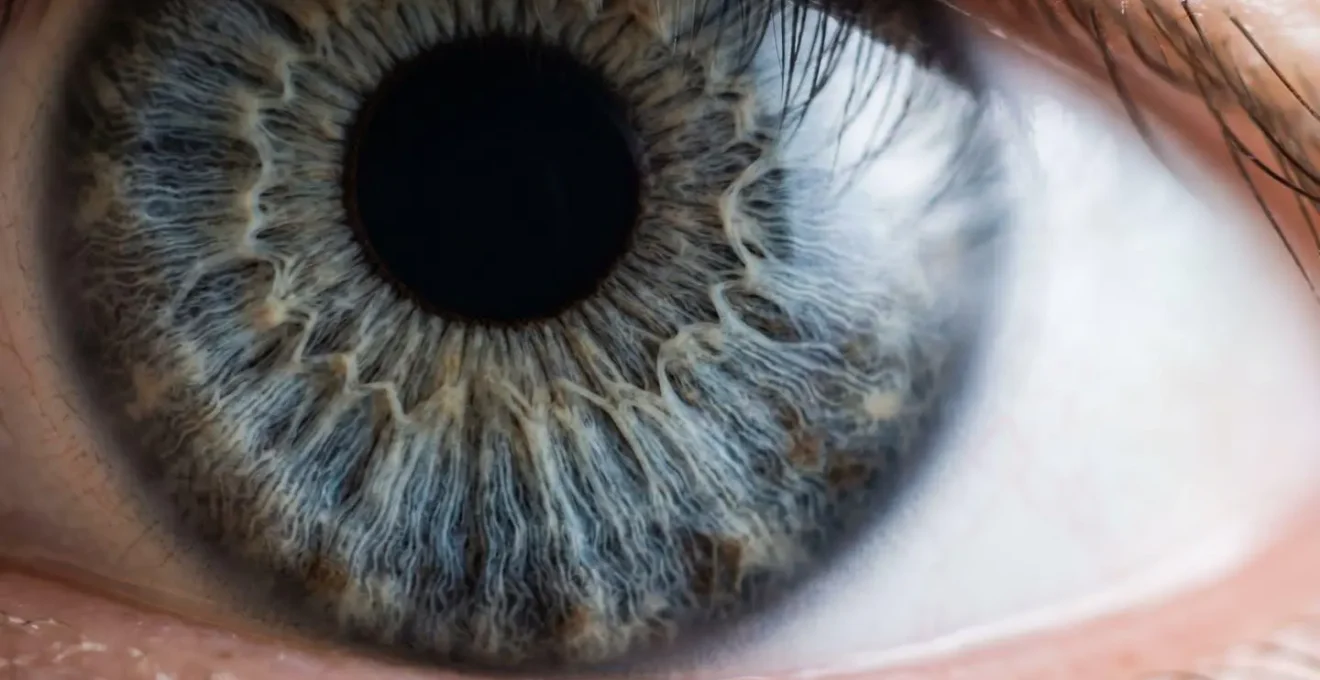
The part of the eye exam many patients find inconvenient—pupil dilation—is arguably one of the most critical components of a comprehensive check-up. This simple procedure, where special drops are used to temporarily widen the pupil, is not just about getting a better look. It is about transforming the eye into a clear holistic health window, allowing your optometrist to see structures that are otherwise impossible to fully assess. Looking through an undilated pupil is like trying to inspect a room by peeking through a keyhole; dilation opens the door wide.
When your pupil is dilated, your optometrist can get a panoramic, three-dimensional view of the entire back of your eye. This allows for a thorough examination of the retina (the light-sensitive tissue), the optic nerve (which connects the eye to the brain), and the intricate network of blood vessels. This is where the earliest signs of many serious conditions are found. For instance, the subtle optic nerve damage characteristic of early glaucoma, or the tiny drusen deposits that signal the start of macular degeneration, are best seen during a dilated exam.
Furthermore, this view provides a direct look at your vascular health. According to clinical evidence, the eye is the only place in the body where blood vessels can be observed directly without cutting into tissue. This means an optometrist can spot the early signs of over 250 systemic diseases, including diabetes, high blood pressure, and high cholesterol, sometimes before they are diagnosed by a primary care physician. The BrightFocus Foundation eloquently captures the unique power of this examination:
The eye is a beautiful organ, and it is the only place in the human body where a doctor can see a part of the central nervous system, the optic nerve.
– BrightFocus Foundation, The Dilated Eye Exam: Why It’s So Important
Skipping dilation for the sake of convenience means sacrificing the most powerful preventive health screening tool available in an eye exam. It’s a short-term inconvenience for an invaluable long-term benefit.
When to Switch From biennial to Annual Exams as You Age?
For young, healthy adults with no symptoms or significant risk factors, a comprehensive eye exam every two years is the standard recommendation. However, this interval is not a one-size-fits-all rule for life. As we age, the risk of developing sight-threatening eye diseases increases significantly, and the recommended frequency of exams must adapt accordingly. The question then becomes: at what point should you transition to more frequent, annual check-ups?
A key milestone in this transition is age 40. The American Academy of Ophthalmology (AAO) recommends that all adults, even those with no symptoms or risk factors, get a baseline eye disease screening at age 40. This is because the early signs of several conditions, such as presbyopia (the age-related loss of near focusing ability), glaucoma, and cataracts, often begin to emerge around this time. This baseline exam establishes a crucial data point for your ocular health, allowing your optometrist to track changes more effectively over time.
After this baseline exam, your optometrist will recommend a personalized schedule. However, certain factors automatically warrant a switch to annual or even more frequent exams, regardless of age. These include:
- A diagnosis of diabetes or hypertension: These systemic conditions can severely damage the blood vessels in the retina, requiring diligent annual monitoring.
- A strong family history of eye disease: If you have a first-degree relative with glaucoma or AMD, annual screening is essential.
- Taking certain medications: Some drugs, like corticosteroids or Plaquenil, can have side effects on the eyes and require regular monitoring.
- Being a contact lens wearer: Annual exams are necessary to ensure the lenses are fitting properly and not affecting the health of the cornea.
For healthy adults over the age of 60, annual exams become the standard recommendation, as the prevalence of conditions like cataracts and AMD rises sharply in this decade. The key is to view your exam frequency as a dynamic plan, co-managed with your optometrist based on your evolving personal risk profile.
Why Every Two Years Is the Non-Negotiable Standard for Eye Tests?
The recommendation for a comprehensive eye exam at least every two years for healthy adults under 40 can sometimes feel arbitrary, especially in the absence of any noticeable vision problems. However, this guideline is rooted in a fundamental and critical medical principle: many of the most serious, sight-threatening eye diseases develop asymptomatically. You can have perfect 20/20 vision and still be in the early stages of a condition that could lead to irreversible blindness.
As the American Optometric Association (AOA) clearly states, this silent progression is precisely why regular exams are so vital. They are not just for people who feel their vision is worsening. In their official guidelines, the AOA explains:
Many eye and vision problems have no obvious signs or symptoms, so you might not know a problem exists.
– American Optometric Association, Comprehensive Eye Exams Guidelines
Conditions like glaucoma, diabetic retinopathy, and even certain ocular tumors can develop for years without causing any pain or noticeable changes to your central vision. By the time symptoms do appear, significant and often permanent damage may have already occurred. A comprehensive eye exam, particularly one that includes pupil dilation, is the only way to detect these conditions in their earliest, most treatable stages. Waiting for a problem to become apparent before seeking care is a reactive approach that puts your sight at unnecessary risk.
Despite this clear medical guidance, a significant portion of the population does not adhere to this standard. National health data from Healthy People 2030 indicates that as of the 2023 baseline, only 52.5% of adults in the U.S. had a comprehensive eye exam within the past two years. This gap in compliance highlights a widespread misunderstanding of the exam’s preventive purpose. The biennial exam is a non-negotiable health screening, just like a dental check-up or a physical, designed to find problems before they find you.
What Do the Plus and Minus Signs Actually Mean for Your Vision?
Your prescription, with its series of numbers, pluses, and minuses, can seem like an arcane code. At its simplest, these signs describe the type of refractive error you have. A minus sign (-) indicates myopia, or nearsightedness, meaning you can see objects up close clearly, but distant objects are blurry. A plus sign (+) indicates hyperopia, or farsightedness, where you may struggle to focus on near objects, and in higher prescriptions, distant objects can also be blurry. These numbers simply quantify the lens power needed to focus light correctly onto your retina.
However, viewing your prescription as just a number for ordering glasses is a missed opportunity. It is a critical piece of longitudinal health data. A significant change in your prescription, especially over a short period, can be an early indicator of an underlying health issue. For example, a sudden myopic shift in an adult could be an early sign of developing cataracts or even uncontrolled blood sugar from diabetes.
Furthermore, the magnitude of your prescription is directly linked to your risk profile for other serious eye conditions. This is particularly true for individuals with high levels of myopia. What might seem like a simple need for strong glasses is, in fact, a significant anatomical difference: a highly myopic eye is typically longer than a normal eye, which stretches and thins the retina. This makes the eye more susceptible to sight-threatening problems.
Case Study: High Myopia as a Significant Risk Factor
Data from public health and labor statistics consistently show that the rising prevalence of myopia is a key driver for optometric services. This is not just about selling more glasses. It’s a public health concern because high myopia (a strong minus prescription) creates a significantly elevated risk profile. As highlighted by analyses of ocular health trends, individuals with high myopia face a substantially increased risk of developing retinal detachment and glaucoma compared to those with normal vision. This evidence transforms a simple prescription number into a critical piece of health data that necessitates regular, diligent monitoring by an optometrist to manage these heightened risks proactively.
Your prescription, therefore, is not a static label. It’s a dynamic data point that helps your optometrist assess your current vision, monitor for changes, and stratify your risk for future disease. It’s a key part of the story of your eye health.
Key Takeaways
- Your optometrist is your primary care doctor for the eyes, acting as the essential first point of contact for routine exams and disease screening.
- Pupil dilation is a critical, non-negotiable part of a comprehensive exam, providing a unique window into both your eye health and overall systemic well-being.
- Regular exams (at least every two years for healthy adults) are vital for detecting asymptomatic diseases like glaucoma before they cause irreversible vision loss.
NHS Eye Tests: What Actually Happens During Your 20-Minute Appointment?
For those in the United Kingdom, the National Health Service (NHS) provides access to eye tests, which are often structured as efficient, 20-to-30-minute appointments. Understanding what happens in this timeframe and how to prepare can help you get the most value from your visit. This process serves as an excellent case study for how a structured public health system approaches primary eye care, with the High Street optometrist acting as the system’s accessible frontline.
A typical NHS eye test is a highly streamlined but comprehensive screening. During the appointment, your optometrist will perform several key checks. These usually include: discussing your personal and family medical history, testing your vision at various distances (the letter chart), checking your eye muscle coordination, performing a pressure test for glaucoma (often the “puff of air” test), and examining the health of the front and back of your eyes with specialized instruments like a slit lamp and ophthalmoscope. If necessary, they will also determine your prescription for glasses or contact lenses.
Because the appointment is time-limited, preparation is key to ensuring all your concerns are addressed. Coming in with your questions and information organized allows the optometrist to focus on the most relevant aspects of your eye health. To maximize the value of your appointment, consider the following checklist:
- Prepare a Medication List: Bring a complete list of all your current medications and their dosages, as some can have significant side effects on the eyes.
- Write Down Your Questions: Note your top 2-3 vision or eye health questions beforehand to ensure you don’t forget to ask them.
- Describe Your Symptoms Clearly: If you have symptoms, practice describing them concisely. Note when they started, their frequency, and what makes them better or worse.
- Bring Current Eyewear: Have your current eyeglasses and/or contact lens prescription information with you for an accurate comparison.
- Document Family History: Bring your documented family eye health history, noting any relatives with glaucoma, macular degeneration, or other conditions.
Now that you understand the distinct roles and the clear diagnostic pathway, the next logical step is to take action. Don’t wait for a problem to arise. Proactively schedule your comprehensive eye exam with an optometrist today to establish your baseline and protect your vision for years to come.