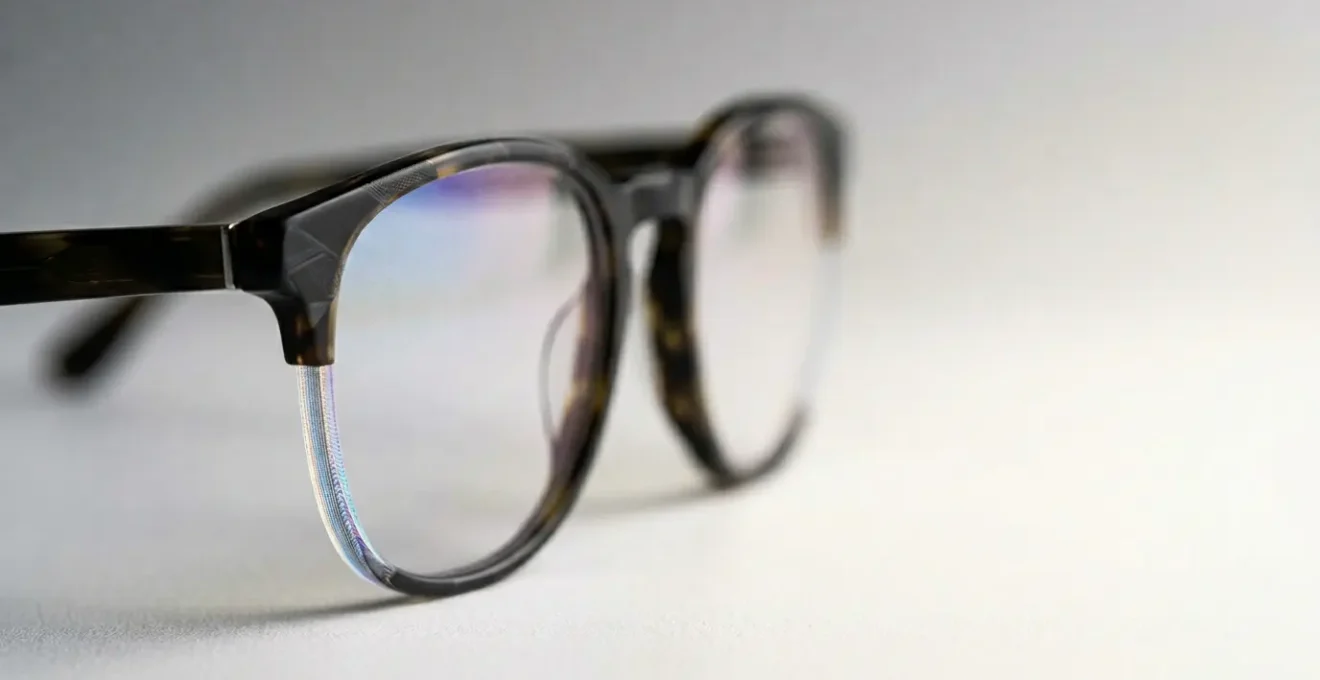
The premature peeling of your glasses’ anti-reflective coating isn’t from a single mistake, but from a series of daily ‘micro-aggressions’ you’re likely unaware of.
- Extreme temperature shifts (like opening an oven) and UV exposure cause thermal shock that cracks the coating.
- Common cleaners, even ‘gentle’ citrus-scented soaps, contain chemicals that systematically corrode the protective layers.
Recommendation: Adopt a two-stage cleaning protocol (rinse first, then wash) and use only pH-neutral soap to drastically extend your lens life.
That moment of frustration is all too familiar for glasses wearers. You invest in high-quality, anti-reflective lenses for crystal-clear vision, only to find them perpetually smudged, hazy, or covered in a web of tiny cracks after just a year. You feel like you’re constantly cleaning them, yet they never seem truly clean. You’ve followed the basic advice: you avoid using your shirt tail, you use the provided microfiber cloth, and you never clean them with harsh window cleaner. Yet, the coating still fails, making your expensive investment feel like a waste.
But what if the real culprits are more subtle and insidious? What if the daily habits you don’t even think about are the primary saboteurs of your lens’s integrity? The blast of heat from your oven, the ‘lemon-fresh’ scent in your dish soap, or even the way your frames fit are the true villains in this story. The peeling and ‘crazing’ of your coating is rarely a single event; it’s the result of a systematic breakdown caused by environmental factors and chemical micro-aggressions.
This guide will move beyond the obvious tips and delve into the hidden reasons your anti-glare coating is failing. We will uncover the environmental saboteurs in your kitchen and car, reveal the proper chemistry for safe cleaning, and explain how to distinguish between user damage and a manufacturing defect for warranty claims. By understanding the *why* behind the damage, you can adopt simple, preventative habits to protect your lenses and ensure they provide clear, comfortable vision for years to come.
To navigate this complex topic, we’ve broken it down into a series of specific questions. This structure will help you identify the precise issues affecting your glasses and provide targeted solutions to protect your investment for the long haul.
Summary: A Practical Guide to Preserving Your Anti-Reflective Lenses
- Why Does Opening the Oven Door Ruin Your Glasses Coating?
- How to Clean Your Glasses Without Stripping the Anti-Glare Layer?
- Hydrophobic or Standard: Is the Easy-Clean Feature Worth the Upgrade?
- The Lemon Scent Mistake That Corrodes Your Lens Coating Over Time?
- When to Claim on Your Warranty for Crazing vs Scratching?
- Why Do Modern LED Headlights Cause More Painful Glare Than Older Bulbs?
- Why Do Your Glasses Leave Red Marks and How to Fix It?
- Night Driving Glare: Which Lens Coatings Actually Improve Safety on UK Roads?
Why Does Opening the Oven Door Ruin Your Glasses Coating?
The sudden blast of superheated, moist air that hits you when you open an oven door is a prime example of thermal shock, one of the biggest enemies of your lens coatings. Anti-reflective coatings are made of multiple, microscopically thin layers of metal oxides bonded to the plastic lens. These materials expand and contract at different rates. When you expose them to a rapid, extreme temperature change, the layers are pulled in different directions, causing stress that leads to microscopic cracks, a phenomenon known as crazing.
While there isn’t specific data on oven doors, the principle is well-documented in other high-heat environments. For instance, research shows that on a hot day, the interior of a car can reach 122–158°F (50–70°C), temperatures sufficient to cause coating delamination over time. An oven can be 400°F (over 200°C). While you aren’t putting your head inside, that initial wave of heat is more than enough to start the damage process. Repeated exposure, day after day, weakens the bond between the layers until they begin to flake and peel. The simple preventative tip: make a habit of stepping back or turning your head away for a few seconds when you open a hot oven or dishwasher.
How to Clean Your Glasses Without Stripping the Anti-Glare Layer?
The single biggest mistake most people make is dry-wiping their lenses. Dust, silica, and other airborne particles on your lens act like sandpaper when dragged across the surface by a dry cloth. This creates micro-scratches that compromise the top layer of your coating, making it more susceptible to peeling. The golden rule of lens care is to always rinse before you wipe. This removes the abrasive grit before you touch the lens.
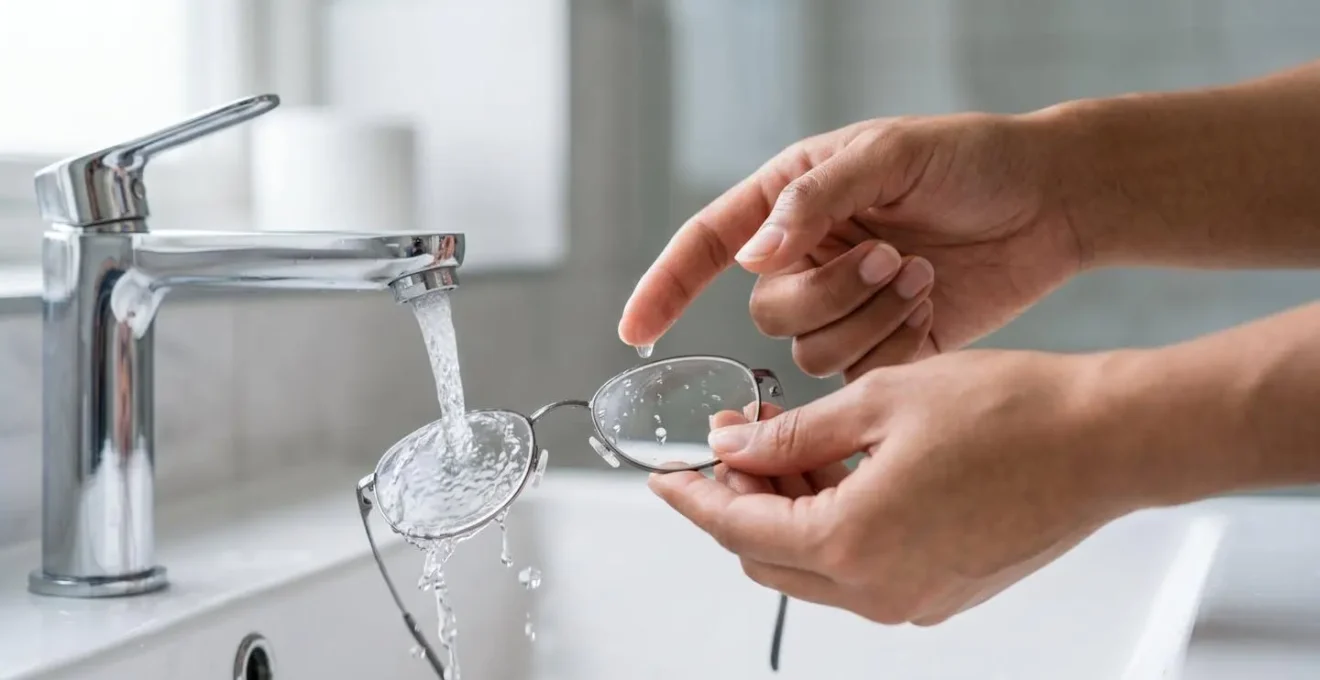
The correct method is a two-stage process that prioritizes removing debris before polishing. It ensures you’re cleaning the lens itself, not just grinding dirt into the coating. This protocol is the most effective way to maintain the integrity and performance of your anti-reflective and hydrophobic layers. It might seem like a lot of steps, but it quickly becomes a 30-second habit that will save you hundreds in the long run.
Your Action Plan: The Two-Stage Cleaning Protocol
- Wet Stage: Rinse lenses under lukewarm running water to remove dust and debris that could scratch during cleaning.
- Wet Stage: Apply a single drop of lotion-free dish soap to fingertips and gently massage both sides of lenses and frames.
- Wet Stage: Thoroughly rinse all soap residue with lukewarm water (never hot water, which damages coatings).
- Dry Stage: Gently shake glasses to remove excess water droplets.
- Dry Stage: Use a clean, dry microfiber cloth (not laundered with fabric softener) exclusively for polishing away water spots.
Hydrophobic or Standard: Is the Easy-Clean Feature Worth the Upgrade?
That “easy-clean” feature, known as a hydrophobic coating, is a super-slick top layer applied over your standard anti-reflective (AR) coating. Its job is to repel water, oil, and dust, making your lenses easier to clean and stay clean longer. For most users, the upgrade is absolutely worth it. It significantly reduces smudging from fingerprints and causes water droplets to bead up and roll off, which is a massive benefit in rain or fog. This means less frequent, and therefore less aggressive, cleaning, which indirectly extends the life of the underlying AR coating.
However, it’s not a magical, indestructible shield. This top layer is the most exposed part of the lens system and is susceptible to wear and tear. As experts from one performance eyewear company note, it requires careful handling to maintain its effectiveness. This is the crucial trade-off to understand.
Hydrophobic coatings wear out over time—especially with sweat, sun exposure, and repeated cleaning. They require delicate handling to avoid scratching or degrading the surface.
– Blinded Wear Co., Hydrophobic Coating on Sports Glasses Guide
While there’s no fixed expiry date, its performance will gradually diminish over one to two years with daily wear and regular cleaning. The key is that a well-maintained hydrophobic coating makes cleaning so much easier that you are less likely to damage the more critical AR layers underneath. So yes, it’s worth it—as long as you treat it with the care it deserves, using the proper cleaning protocol.
The Lemon Scent Mistake That Corrodes Your Lens Coating Over Time?
This is a perfect example of a hidden saboteur. You choose a dish soap because it smells fresh and clean, unaware that the very ingredients creating that scent are chemically attacking your expensive lenses. The issue isn’t the soap itself, but the additives. Soaps with “citrus,” “grease-cutting,” or “ultra” formulas often contain citric acid or other acidic compounds. These acids are great for dissolving grease on dishes, but they also corrode the delicate metal oxide layers of your anti-reflective coating.
Similarly, soaps with added lotions or moisturizers leave behind a filmy residue that defeats the purpose of cleaning and can trap dirt. Even seemingly natural cleaners like vinegar are a disaster for coated lenses, as the acetic acid can strip the coating. This is a case of chemical micro-aggression; each wash causes a tiny amount of damage, which accumulates over months until the coating’s integrity is compromised and it begins to peel.
The solution is to designate a “safe” soap exclusively for your glasses. Look for the simplest, most boring, pH-neutral, lotion-free liquid dish soap you can find. To be certain, you must become an ingredient detective and avoid any product containing these damaging agents:
- Ammonia or Bleach: Found in household window cleaners, these will strip coatings almost instantly.
- Moisturizers or Essential Oils: Leave a residue and can degrade coatings over time.
- ‘Ultra’ or ‘Grease-Cutting’ Formulas: Often contain harsh degreasers that are too aggressive for lens layers.
- Citric Acid, Citrus Extracts, or Vinegar: These acidic agents actively corrode the metal oxide layers.
When to Claim on Your Warranty for Crazing vs Scratching?
This is one of the most important distinctions an informed glasses wearer can make, as it’s the difference between a free replacement and being blamed for “user damage.” Most manufacturer warranties cover defects in the product, but not damage from accidents. The key is that crazing is a manufacturing defect, while a scratch is user-induced damage.
A scratch is linear and isolated. It has a clear start and end point, usually caused by a single impact or by dragging a sharp particle across the lens. You can often feel it with your fingernail. Warranties almost never cover scratches. Crazing, however, is a network of tiny, interconnected, web-like cracks across the coating surface. It often looks like a fine spiderweb or dried mud and is most visible when you hold the lens at an angle to the light. It’s caused by a failure in the bond between the coating and the lens, often due to thermal shock or internal stress, not a direct impact.
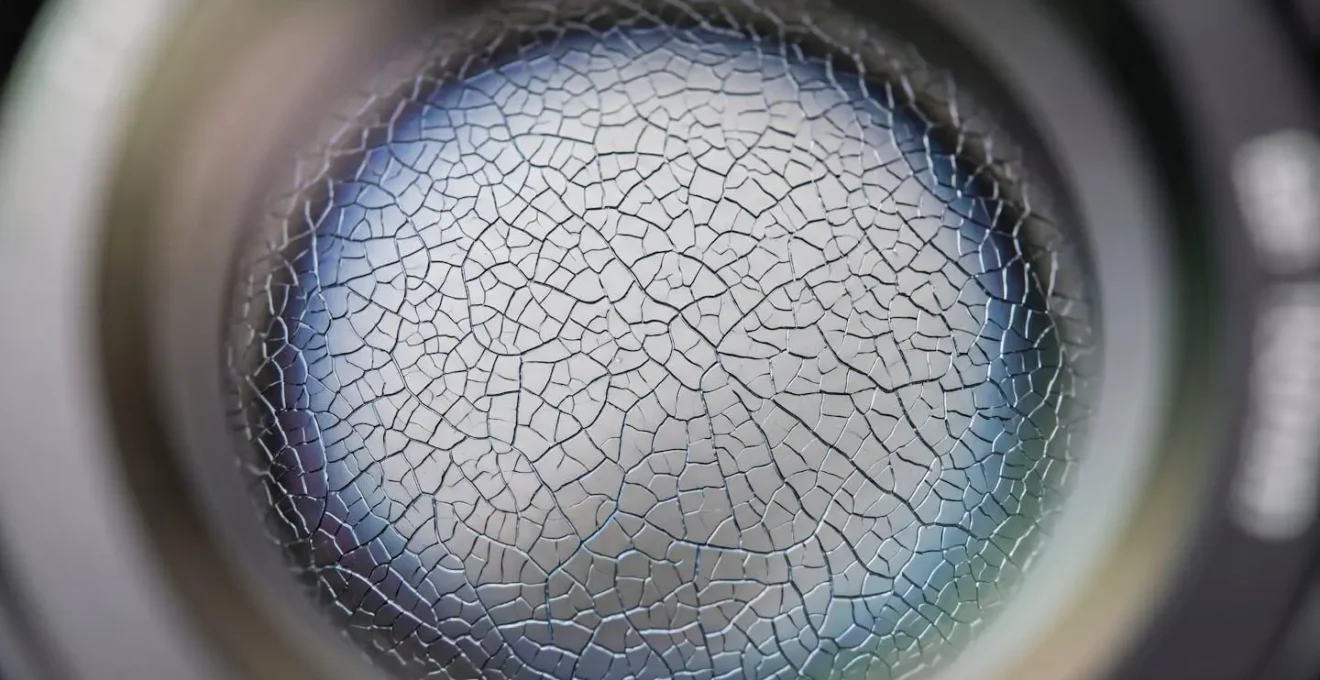
Understanding this difference gives you the power to advocate for yourself. When you return to your optician, using the right terminology is crucial for a successful warranty claim.
Case Study: The Power of Terminology in Warranty Claims
Eyewear industry data shows that while the average anti-glare coating lasts about two years, manufacturers typically provide a one-year warranty specifically for spontaneous crazing, which they recognize as a product failure. When approaching an optician, stating “I’m experiencing spontaneous crazing on the coating, not a scratch from impact” fundamentally shifts the conversation. This language moves the issue from the category of ‘user error’ to ‘product defect,’ significantly increasing the likelihood of a successful warranty claim, as confirmed by guidance from industry professionals.
Why Do Modern LED Headlights Cause More Painful Glare Than Older Bulbs?
The intense, almost painful glare from modern headlights isn’t just your imagination. It’s a result of two key factors: the color and intensity of the light itself. Older halogen bulbs produced a warmer, yellowish light. Modern LED and HID headlights, however, emit a much more intense, concentrated beam that is high in the blue-violet, high-energy visible (HEV) light spectrum. Our eyes are particularly sensitive to this wavelength, which is why it scatters more within the eye and is perceived as dazzling, uncomfortable glare.
Here’s where your high-quality lenses create an ironic twist. The entire purpose of an anti-reflective coating is to maximize the amount of light that passes through the lens to your eye, reducing distracting reflections from the lens surface itself. This is generally a huge benefit for clarity. For instance, modern anti-reflective coatings allow around 99.5% of available light to pass through. However, this also means that nearly 99.5% of that intense, uncomfortable HEV glare from LED headlights is also being transmitted directly to your retina with startling efficiency. Without a specific filter to manage that problematic wavelength, your clear lenses are simply doing their job too well, letting all the “bad” light in along with the “good.”
Why Do Your Glasses Leave Red Marks and How to Fix It?
Those persistent red marks on the bridge of your nose or behind your ears are a clear sign of a fundamental problem: your frames don’t fit properly. They are either too heavy for your nose pads, the bridge is too narrow, or the arms are adjusted incorrectly, creating pressure points. The immediate solution involves a trip back to your optician for a professional adjustment. They can change the pad material to hypoallergenic silicone, adjust the pad arms to distribute weight more evenly, or reshape the temple tips.
However, this discomfort is just the surface-level symptom of a deeper, more destructive problem. The same poor fit that causes those marks is also a primary contributor to the premature death of your lens coatings. When frames constantly slide down your nose, you instinctively push them up, multiplying finger contact and smudging. This forces you to clean them more often, accelerating the wear and tear on the coating. More critically, an ill-fitting frame can put the lenses under constant, uneven pressure.
Case Study: How an Unstable Frame Becomes a Lens’s Worst Enemy
The connection between frame fit and coating durability is often missed. An improperly fitted frame, especially a metal one, can exert uneven torque on the lenses. This constant micro-flexing stresses the rigid, brittle coating layers, leading to premature crazing or delamination, particularly at the lens edges where the frame holds them. According to some analyses, while a coating’s lifespan can be up to 5 years, a poor frame fit can shorten this significantly. A professional fitting isn’t just for comfort; it creates a stable chassis for your expensive lenses, protecting them from damaging mechanical stress.
Key Takeaways
- Thermal shock from sudden heat changes is a primary, hidden cause of the web-like cracks known as ‘crazing’.
- Never dry-wipe your lenses. The ‘rinse first, then wash’ protocol is essential to prevent scratching the coating with abrasive dust.
- Only use simple, pH-neutral, lotion-free soap. Additives in ‘ultra’ or citrus-scented soaps will chemically corrode your coatings over time.
Night Driving Glare: Which Lens Coatings Actually Improve Safety on UK Roads?
Driving at night on a wet, unlit A-road in the UK, with the blinding glare of oncoming LED headlights reflecting off the tarmac, is a stressful and dangerous experience. A standard anti-reflective (AR) coating helps by reducing the reflections on your own lens surfaces, but as we’ve seen, it does little to combat the intensity of the light source itself. To genuinely improve night driving safety, you need a more advanced, specialized coating engineered for this specific challenge.
Not all coatings are created equal. There is a clear hierarchy of performance when it comes to managing nighttime glare. While a basic AR coating is better than nothing, purpose-built driving lenses offer a significant leap in visual comfort and safety by selectively filtering the most problematic wavelengths of light.
This table breaks down the different levels of coating technology and their specific benefits for night driving. As it shows, the most effective solutions don’t just transmit light; they intelligently manage it, as detailed in comprehensive guides to AR coatings.
| Coating Level | Key Features | Night Driving Benefits | Light Transmission |
|---|---|---|---|
| Good: Basic AR Coating | Standard multi-layer metal oxides reduce general reflections | Reduces lens surface reflections and halos from street lights | ~95-97% light transmission |
| Better: AR + Hydrophobic | AR coating with water-repellent top layer | Maintains clarity in rain/fog; water beads and rolls off reducing smearing | ~97-99% light transmission |
| Best: Advanced HEV-Filtering AR | Wavelength-specific filtering (e.g., Zeiss DriveSafe, Crizal Drive) engineered to dampen 450nm LED light peak | Selectively reduces blue-violet HEV light from LEDs while maximizing transmission of other wavelengths; reduces glare without dimming scene | ~99.5% useful light transmission with selective HEV reduction |
For frequent night drivers, investing in a premium, HEV-filtering AR coating is not a luxury; it’s a critical safety feature. It directly addresses the root cause of modern glare by dampening the intense blue-light spike from LED headlights, reducing the “starburst” effect and improving reaction times without dimming your overall view of the road.
Armed with this knowledge, you can now move beyond the frustration of failing coatings. By understanding the hidden saboteurs in your environment and adopting simple, preventative maintenance habits, you can proactively protect your investment and ensure years of crystal-clear vision.