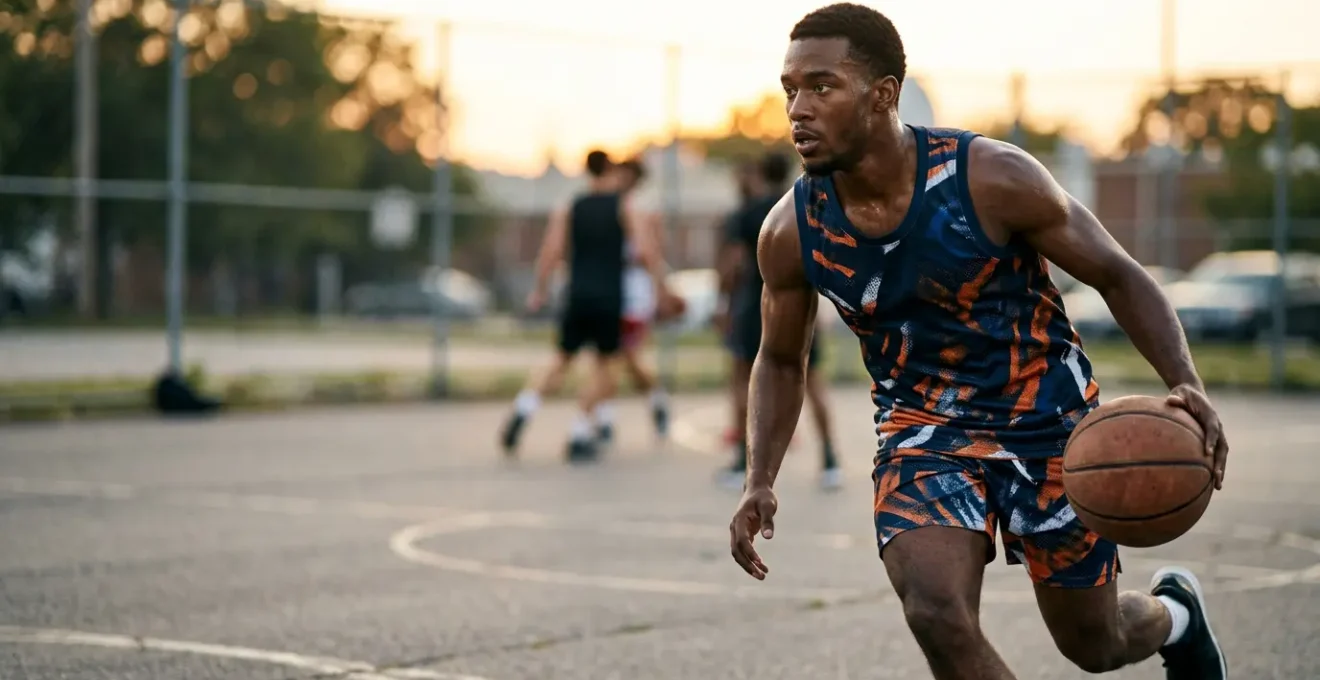
True visual freedom for an athlete isn’t about convenience; it’s a measurable performance advantage that directly translates to better results.
- Eliminating glasses and contacts removes physical barriers and reduces “cognitive load,” directly improving reaction time and spatial awareness.
- Modern solutions like SMILE and Ortho-K offer safer, more stable options than traditional methods, especially for high-impact and extreme environment sports.
Recommendation: Stop treating your vision as an accessory and start treating it as a core piece of performance equipment by choosing the right long-term solution for your specific sport.
As a mental sports coach, I see it all the time. The single drop of sweat that blurs a crucial moment. The heart-sinking fog that clouds your goggles on a descent. The nagging fear in the back of your mind about a contact lens shifting or glasses breaking during a critical play. These aren’t just minor annoyances; they are performance killers. They add to your cognitive load, stealing focus and chipping away at the one thing you need most: absolute confidence in your senses.
Many athletes try to patch the problem with temporary fixes. You’ve likely tried every anti-fog spray on the market or invested in expensive prescription inserts for your gear. While these can help, they are ultimately just crutches. They don’t address the root cause of the problem, which is the physical and mental barrier that sits between your eyes and your environment. This barrier creates a “performance ceiling” that you can’t push through with training alone.
But what if the real key to unlocking your next level of performance wasn’t in your training plan, but in your vision? This guide is built on a single, powerful premise: achieving true visual freedom is a strategic investment in your athletic career. It’s about removing the mental and physical distractions, enhancing your natural abilities, and building unshakable sensory confidence. It’s time to stop compensating for your vision and start using it as a weapon.
In the following sections, we will break down exactly how achieving visual freedom directly boosts athletic metrics. We will explore the most advanced, sport-specific solutions available today, moving beyond the myths and generic advice to give you a clear, actionable game plan for unlocking your true potential.
Summary: A Coach’s Guide to Unlocking Visual Performance
- Why Does Peripheral Vision Improvement Boost Reaction Time in Team Sports?
- How to Swim With Perfect Vision Without Risking Infection from Contacts?
- Prescription Goggles or Laser Surgery: Which Is the Best Investment for Skiers?
- The Anti-Fog Spray Myth: Why It Always Fails During High Intensity Cardio?
- When to Switch Correction Methods Before Your Marathon Training Peak?
- Why Does SMILE Cause Less Dry Eye Than Traditional LASIK?
- How Do Tears Reshape Your Cornea While You Sleep?
- LASIK vs SMILE: Which Laser Procedure Offers the Fastest Recovery for Professionals?
Why Does Peripheral Vision Improvement Boost Reaction Time in Team Sports?
In team sports, what you see in the corner of your eye is often the difference between a game-winning play and a missed opportunity. Peripheral vision isn’t just about seeing things to the side; it’s about processing a complex, dynamic environment at high speed. Glasses create a physical barrier, a “blinder” effect that constricts your field of view. Every time you have to turn your head to see what you should have sensed peripherally, you are losing precious milliseconds. This is a reaction-time deficit built directly into your equipment.
Switching from glasses to contact lenses is a step in the right direction. In fact, studies demonstrate that contact lenses provide athletes with a 15% increase in their peripheral vision field compared to traditional frames. This isn’t a minor tweak; a 15% wider field of view means seeing the open teammate, anticipating the defender’s move, and reacting to the play before it fully develops. It’s about transforming your awareness from a narrow tunnel into a wide, high-definition landscape.
The link between peripheral awareness and reaction speed is not theoretical. It’s a trainable, measurable athletic skill that is fundamentally limited by physical obstructions like glasses.
Case Study: Training Peripheral Vision Improves Reaction Times
A 2023 study involving 412 players from basketball, handball, and volleyball implemented a 6-week peripheral vision training program using Fitlight technology. The program consisted of two 30-minute sessions per week with exercises designed to improve manual reaction time to visual stimuli in the periphery. The results showed statistically significant improvements across all sports, proving that enhancing peripheral vision involvement leads to a measurable enhancement in reaction times.
Ultimately, removing the physical frame is the first step toward building complete sensory confidence. When your brain trusts the information coming from the entirety of your visual field, your body can react faster and more instinctively. It’s about letting your natural athletic ability shine, unhindered.
How to Swim With Perfect Vision Without Risking Infection from Contacts?
For a swimmer, the water is both your arena and your biggest visual challenge. The standard advice is clear and non-negotiable: never wear soft contact lenses in the pool, ocean, or lake. The risk of serious, vision-threatening infections like Acanthamoeba keratitis from microorganisms in the water is simply too high. This leaves most swimmers with two frustrating options: blurry vision or leaky, unreliable prescription goggles. But there is a third, superior option that provides complete visual autonomy in the water: Orthokeratology.
Orthokeratology, or Ortho-K, is a revolutionary, non-surgical approach. It uses specially designed rigid gas-permeable contact lenses that you wear only while you sleep. These lenses gently and precisely reshape the surface of your cornea overnight. When you wake up and remove them, your vision is corrected, and you can see perfectly and clearly for the entire day without the need for any glasses or contact lenses. For a swimmer, this is a game-changer. You get in the pool with crystal-clear, natural vision, with zero risk of infection from contacts and no reliance on cumbersome prescription goggles.
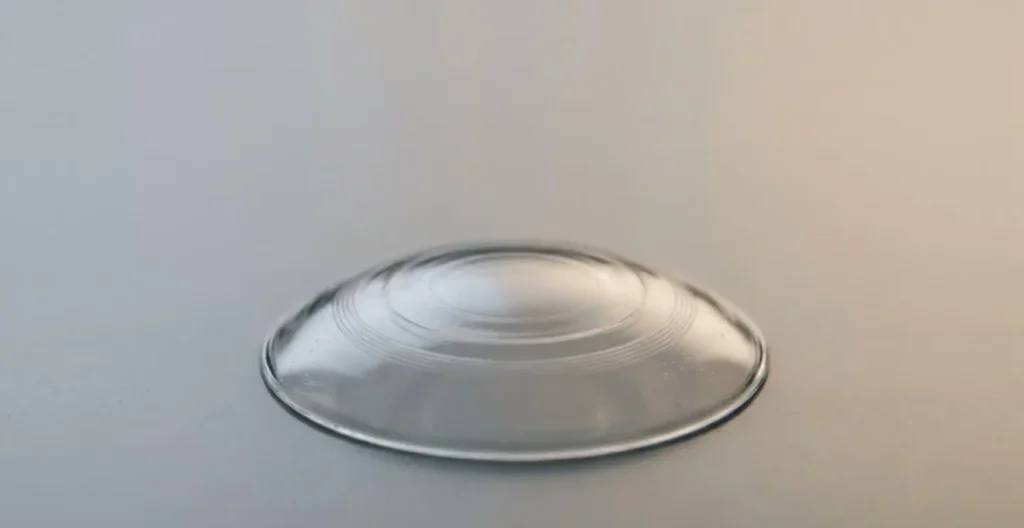
This technology works by using the tear film under the lens to create hydraulic forces that remodel the most superficial layer of your cornea. The effect is temporary, lasting a day or two, which is its greatest strength. It is completely reversible and safe, making it an ideal solution for athletes who are either not ready for or not candidates for permanent surgery. It puts you in complete control of your vision, day by day.
Prescription Goggles or Laser Surgery: Which Is the Best Investment for Skiers?
For a skier or snowboarder, clear vision is not just about performance; it’s about safety. The high speeds, variable light conditions, and extreme cold create a uniquely challenging environment for anyone with a refractive error. The debate often boils down to two paths: continually updating expensive prescription goggles or making a one-time investment in laser surgery. Viewing this choice through the lens of a long-term performance investment provides a clear answer.
While prescription goggles are a functional solution, they are a recurring expense and come with their own set of limitations, such as fogging, limited peripheral vision, and the hassle of matching them to changing light conditions. Laser surgery, on the other hand, is a capital investment in your performance. While the upfront cost is higher—with current LASIK pricing indicating that a procedure can range from $2,000 to $4,000 per eye—the 10-year outlook changes the entire equation. It’s an investment in 24/7 clarity, not just on the slopes, but in every aspect of your life.
The following table breaks down the true cost and performance trade-offs over a decade, helping you make a strategic decision rather than a reactive purchase.
| Factor | Prescription Ski Goggles | LASIK Surgery |
|---|---|---|
| Initial Cost | $150-$400 per pair | $4,000-$8,000 (both eyes) |
| 10-Year Total Cost | $600-$1,600 (replacements + prescription updates) | $4,000-$8,000 (one-time) |
| Altitude Performance | Interchangeable lenses for varying light conditions; UV protection built-in | Risk of increased dry eye at altitude; requires UV-blocking goggles anyway |
| Recovery Time | Immediate use | 4+ weeks before skiing; protective goggles mandatory first month |
| Cold Weather Impact | Anti-fog technology; designed for extreme cold | Dry air at elevation increases evaporative dry eye post-surgery |
| Impact Resistance | Polycarbonate lenses; replaceable if damaged | Permanent corneal flap risk with facial impact (though rare) |
| Versatility | Sport-specific only | 24/7 vision correction for all activities |
The table makes it clear: while LASIK requires a more significant initial outlay and careful consideration of factors like dry eye at altitude, it offers unparalleled versatility and freedom. It eliminates a piece of equipment and a source of cognitive load, allowing you to focus completely on your line, the snow texture, and your performance. It’s the difference between managing a problem and eliminating it entirely.
The Anti-Fog Spray Myth: Why It Always Fails During High Intensity Cardio?
Let’s be direct: relying on anti-fog spray for high-intensity sports is setting yourself up for failure. It’s a myth that a simple chemical coating can defy physics when your body is pushing its limits. During intense cardio, your body heat and perspiration create a high-humidity micro-climate behind your glasses or goggles. The rate of condensation simply overwhelms the spray’s ability to disperse moisture. It’s not a question of *if* it will fail, but *when*—and it will always be at the most critical moment.
The science is simple. Anti-fog coatings work by creating a hydrophilic (water-loving) surface that forces condensation to spread into a transparent, invisible film of water rather than forming distinct, light-scattering droplets (fog). However, this capacity is finite. Under the extreme conditions of a race or a hard training session, the volume of moisture produced quickly saturates the coating. The result is no longer a thin film, but a vision-distorting sheet of water or a complete return to opaque fogging.
This isn’t just an opinion; it’s a limitation of the technology itself. Independent industry analysis reveals that anti-fog sprays provide only 4 to 12 hours maximum effectiveness under ideal, not high-sweat, conditions. As a coach, this is unacceptable. You would never go into a competition with equipment that has a known, predictable failure point.
Commercial anti-fog sprays have an effective usage period of only 6 hours in continuous high steam environments.
– Research Team – Nature Communications, Long-lasting and stable anti-fog coating combined with active and passive strategy study
Stop chasing a temporary fix. The only real solution is to eliminate the surface that fogs up in the first place. Whether through Ortho-K or surgical correction, achieving visual freedom means you are removing the point of failure. It’s about building a system that is as resilient and reliable as you are trying to be.
When to Switch Correction Methods Before Your Marathon Training Peak?
For a marathon runner, timing is everything—and that applies to your vision correction strategy just as much as your training schedule. Making the switch from glasses or contacts to a permanent solution like LASIK is a strategic decision that must be planned in the off-season. The goal is to arrive at the starting line with fully adapted, stable vision and zero cognitive load from your eyewear. You want your focus on your pace, your form, and the road ahead, not on a lens fogging up or a contact drying out at mile 20.
The recovery and adaptation period is a critical training block in itself. While vision can be sharp within a day of a procedure like LASIK, the eye’s surface, tear film, and neurological adaptation take weeks or even months to fully stabilize. Planning a procedure like this in the middle of your peak training phase is a recipe for disaster. You must schedule the intervention with enough buffer to go through the complete recovery protocol without compromising your training volume and intensity. The ultimate goal is to achieve total visual autonomy well before your key races.

Think of it as periodization for your eyes. You need an “acclimatization” phase where your eyes heal and you get used to your new, unhindered perception of the world. This means you can’t decide to get surgery a month before your marathon. A successful transition requires foresight and planning, aligning your visual upgrade with your athletic calendar.
Your Action Plan: Safe Return to Training Post-LASIK
- Week 1-2: Light cardio only (walking, stationary bike). Avoid all sweat entering the eyes and wear protective eyewear outdoors.
- Week 2-3: Resume moderate running with protective sports goggles. Do not rub your eyes and use preservative-free artificial tears frequently.
- Week 3-4: Pool swimming is cleared at 2 weeks with tight-fitting goggles. Wait a minimum of 4 weeks before swimming in oceans or lakes.
- Week 4-6: High-intensity interval training is now permitted. Protective eyewear remains mandatory for any risk of impact.
- Month 2-3: Begin a gradual return to full competition intensity. Monitor for any vision fluctuations and report them to your surgeon immediately.
Why Does SMILE Cause Less Dry Eye Than Traditional LASIK?
For any athlete, but especially those training in windy, cold, or dry environments, post-operative dry eye is a significant concern. It’s not just an irritation; it’s a performance inhibitor that can affect visual quality and focus. This is where the technical differences between laser procedures become critically important. The SMILE (Small Incision Lenticule Extraction) procedure was engineered specifically to address one of the primary drawbacks of traditional LASIK: its impact on corneal nerves.
The key difference is the incision. Traditional LASIK creates a large, circular flap on the cornea, about 20mm in circumference, to access the tissue underneath. This process severs a significant number of corneal nerves that are responsible for the blink reflex and tear production signals. Fewer signals mean fewer tears and a higher incidence of dry eye. SMILE, in contrast, is a ‘flapless’ procedure. It uses a laser to create a small lenticule (a disc of tissue) within the cornea, which is then removed through a tiny keyhole incision of only 2-4mm. By preserving the vast majority of the corneal surface and its underlying nerve structures, SMILE maintains better corneal integrity and dramatically reduces the risk of chronic dry eye.
Case Study: The SMILE Advantage in Extreme Climates
Analysis of refractive surgery options for athletes reveals a key benefit of SMILE. For those competing in desert marathons, arctic expeditions, or high-altitude mountaineering, the preservation of corneal nerves is crucial. It translates to a significantly reduced incidence of post-operative dry eye because the corneal blink reflex remains more intact. The eye is simply less irritated by environmental factors like wind, dust, and extreme temperatures, making SMILE a critical consideration for elite performance athletes in harsh conditions.
This isn’t just a technical detail; it’s a fundamental advantage for an athlete’s long-term comfort and performance. It provides an extra layer of resilience and what every athlete craves: peace of mind.
For high-impact athletes, flapless procedures like PRK or SMILE may offer additional peace of mind.
– LASIK Score Medical Review Team, LASIK and Sports: Return-to-Play Timeline Guide
How Do Tears Reshape Your Cornea While You Sleep?
The concept behind Orthokeratology (Ortho-K) sounds like science fiction, but it’s grounded in elegant fluid dynamics. The specialized lenses you wear at night don’t just mechanically press on your eye. Instead, they create a precisely calculated vault over the center of your cornea. This micro-environment allows your own tear film to generate gentle, yet powerful, hydraulic forces that reshape the cornea’s most pliable layer—the epithelium.
Imagine the lens as a mold and your tear film as the medium. The lens is designed to be steeper in the periphery and flatter in the center. This design creates a positive “push” pressure in the mid-periphery of the cornea and a negative “pull” pressure in the center. This pressure differential causes the epithelial cells in the center to migrate slightly outwards and the cells in the mid-periphery to compress. This subtle, microscopic flattening of the central cornea is what corrects myopia (nearsightedness). It’s an incredibly precise and controlled process, all happening while you sleep.
This method has profound implications for athletes. Beyond the daily freedom it provides, it’s also a powerful tool for younger athletes whose eyes are still developing. In fact, according to the American Academy of Ophthalmology, it is clinically proven to slow myopia progression in children and adolescent athletes. It not only corrects vision today but can also help manage its progression for the future. It’s a proactive, rather than reactive, strategy.
Ortho-K is safe and entirely reversible, so it’s an ideal option for athletes who are too young for LASIK.
– All About Vision Medical Editorial Team, Orthokeratology for Athletes – Clinical Review
This reversibility is the ultimate safety net. It offers a path to perfect vision without the commitment or risks of permanent surgery, making it a uniquely powerful and flexible tool in an athlete’s performance arsenal.
Key Takeaways
- Peripheral vision is not a luxury; an improvement can directly enhance reaction time and is limited by glasses.
- Temporary solutions like anti-fog sprays are fundamentally unreliable for high-intensity sports; long-term strategies are required for peak performance.
- The “best” vision correction procedure (LASIK, SMILE, Ortho-K) is sport-dependent, requiring a trade-off between recovery time, cost, and impact resistance.
LASIK vs SMILE: Which Laser Procedure Offers the Fastest Recovery for Professionals?
For a professional athlete or someone in a tactical profession like a first responder or pilot, “recovery” isn’t just about healing—it’s about downtime. How quickly can you get back to performing at 100% capacity safely? When comparing LASIK and SMILE, the answer depends on how you define “fast.” We must break down recovery into two components: the speed of visual recovery and the timeline for full-impact, unrestricted activity.
LASIK often wins the race for initial visual sharpness. Because the flap is simply repositioned over a smooth, laser-treated surface, many patients report “wow” vision within hours of the procedure. For a professional who needs to be visually functional (e.g., for meetings or light duties) as quickly as possible, this can be a major advantage. However, this speed comes with a long-term structural trade-off: the corneal flap. This flap never heals with the same strength as the original cornea, creating a potential (though rare) vulnerability to traumatic, high-impact injuries for the rest of your life.
SMILE, on the other hand, prioritizes structural integrity over immediate “wow” factor. The visual recovery can be slightly slower, with vision sometimes described as “misty” or “hazy” for a few days to a week as the eye heals from the inside out. But the payoff is immense. Because there is no flap, the cornea retains almost all of its original biomechanical strength. This means that once the initial healing is complete, an athlete can return to high-contact sports, martial arts, or any high-risk activity with significantly greater peace of mind. The timeline to being cleared for full, unrestricted, high-impact activity is often shorter and more definitive with SMILE.
The choice for a professional is a strategic one. Do you need the fastest possible return to sharp, clear vision for low-impact duties (favoring LASIK)? Or is your priority the fastest, safest return to full, unrestricted, high-impact performance where corneal strength is non-negotiable (favoring SMILE)? Understanding this trade-off is key to aligning your choice with your career demands.
Your vision is the most critical piece of performance equipment you own. Stop letting it be a liability. The next step is to consult a specialist to design a visual freedom strategy tailored to your sport and your goals. Take control, and unlock your true potential.