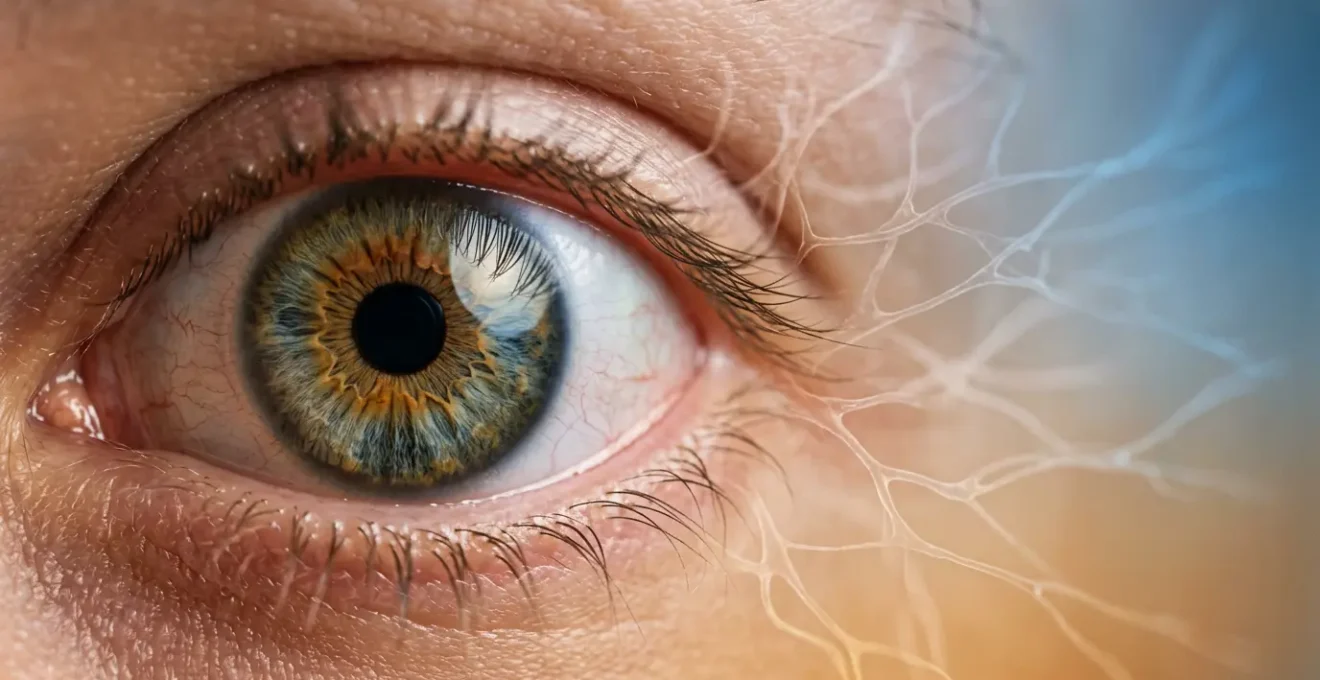
Chronic stress doesn’t just ‘strain’ your eyes; it actively dismantles your visual system through a cascade of hormonal, muscular, and pressure-related dysfunctions.
- Elevated cortisol constricts blood vessels, reducing critical blood flow to the retina and optic nerve.
- Unconscious habits like jaw clenching and holding your breath during concentration (“email apnea”) directly spike intraocular pressure, a key risk factor for glaucoma.
Recommendation: The key to protecting your sight lies in targeted mind-body techniques that interrupt these specific physiological pathways, not just in generic stress reduction.
Have you ever noticed that after a particularly grueling week at work, words on a screen seem to swim, or your vision feels less sharp? Many of us dismiss this as simple fatigue or “eye strain,” a temporary inconvenience to be fixed with a good night’s sleep. We’re told to take breaks from our screens, use eye drops, and maybe get a new prescription for our glasses. But from a functional medicine perspective, this is like fixing a leaky pipe without turning off the main water valve. These symptoms are not just in your head; they are the result of a real, measurable physiological cascade triggered by chronic stress.
The truth is far more complex and interconnected. The body’s stress response, governed by hormones like cortisol, doesn’t just affect your mood or heart rate; it wages a systemic war on your entire visual apparatus. This involves constricting blood vessels, creating chronic muscular tension, and even dangerously increasing the pressure inside your eyes. The common advice to simply “relax” often fails because it doesn’t address the specific, underlying mechanisms that are actively degrading your visual health.
If you’re interested in an integrative approach that connects the mind and body, you understand that symptoms are signals. Blurry vision during a stressful period is a critical signal that your visual system is under duress. The key isn’t just to manage the symptom, but to understand and dismantle the harmful feedback loops at their source. This requires moving beyond generic advice and embracing targeted techniques that directly counteract the physiological impact of stress.
This guide will explore the precise pathways through which stress impacts your vision. We will deconstruct the science behind why high cortisol leads to blurring, compare the most effective activities for lowering eye pressure, and uncover the hidden habits that sabotage your sight. Most importantly, you will learn a series of practical, science-backed interventions designed to sever these harmful connections and actively protect your long-term visual acuity.
Summary: Can Chronic Stress Really Degrade Your Visual Acuity Over Time?
- Why Does High Cortisol Cause Tunnel Vision and Blurring?
- How to Use Box Breathing to Relax Your Ciliary Muscles?
- Meditation or Cardio: Which Activity Better Lowers Intraocular Pressure?
- The Jaw Clenching Habit That Triggers Eye Headaches
- When to Schedule “Tech-Free” Hours to Reset Your Visual System?
- The Stress Habit That Keep Your Intraocular Pressure Dangerously High
- Why Does Moving Your Eyes in Patterns Release Muscular Tension?
- The 5-Minute Daily Eye Care Routine for Busy Professionals?
Why Does High Cortisol Cause Tunnel Vision and Blurring?
When your body perceives a threat—be it a looming deadline or a difficult conversation—it floods your system with cortisol, the primary stress hormone. While essential for short-term survival, chronically elevated cortisol initiates a harmful neuro-vascular cascade that directly impacts your eyes. The primary mechanism is vasoconstriction, or the tightening of blood vessels. As the European Association for Predictive, Preventive and Personalized Medicine (EPMA) explains, this process has profound consequences for vision:
Continuous stress in the body causes cortisol levels to rise, which in turn negatively affects the eyes and brain. Imbalances in the sympathetic nervous system caused by this increase in cortisol can lead to diseases of the visual system, such as glaucoma and optic neuropathy.
– European Association for Predictive, Preventive and Personalized Medicine (EPMA), Study on prolonged mental stress and vision loss
This isn’t a vague theory; it’s a direct physiological process. Research shows that elevated cortisol levels can disrupt blood flow between the eyes and the brain. The retina and optic nerve are incredibly metabolically active, requiring a constant, rich supply of oxygen and nutrients. When stress-induced vasoconstriction chokes off this supply, the cells begin to malfunction. This can manifest as temporary blurry vision, a sensation of “tunnel vision” as peripheral cells are affected first, or an increase in eye floaters.
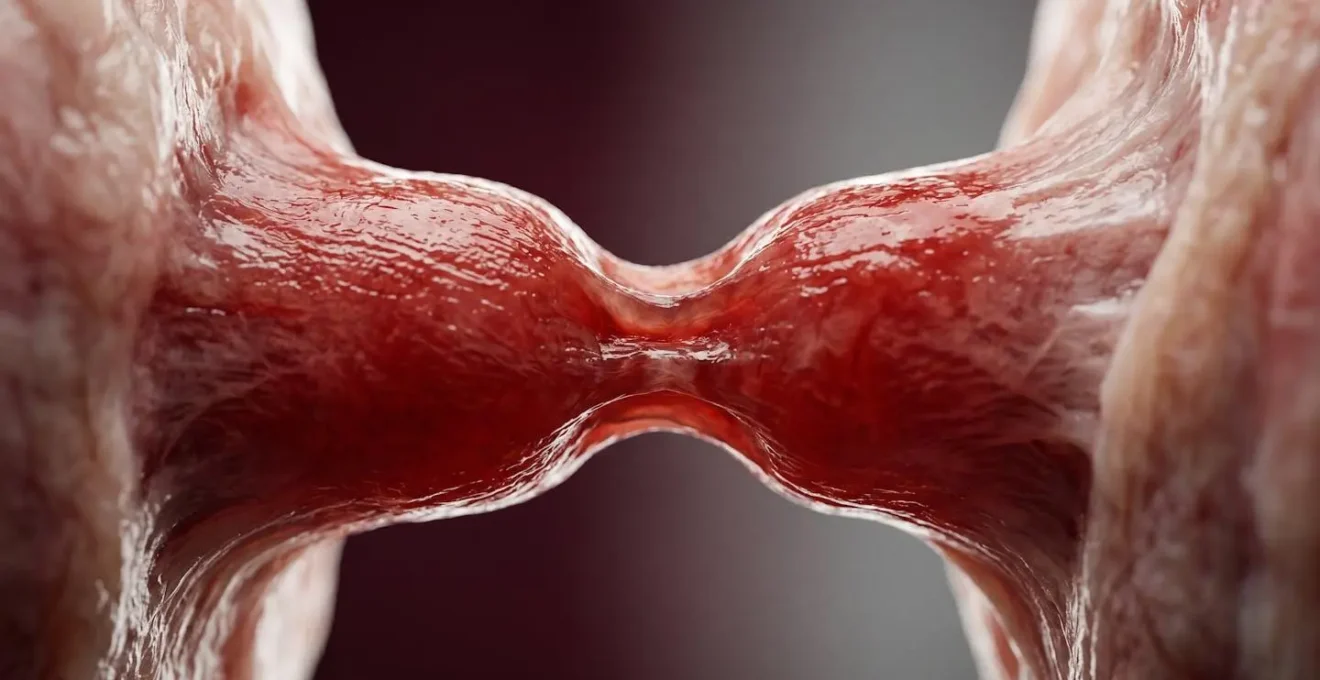
Over the long term, this chronic reduction in blood flow can lead to permanent damage. It is a key contributing factor to conditions like optic neuropathy, where the optic nerve is damaged, and can exacerbate glaucoma. Understanding this link is crucial: the blurry vision you experience during a stressful day is a warning sign of a deeper vascular issue that needs to be addressed at its hormonal source, not just with a change in eyeglass prescription.
How to Use Box Breathing to Relax Your Ciliary Muscles?
One of the most immediate ways stress affects vision is by causing an accommodative spasm. The ciliary muscles inside your eyes are responsible for changing the shape of the lens to focus on objects at different distances. When you’re stressed and staring intently at a screen, these tiny muscles can become locked in a state of constant contraction. This is why, after hours of focused work, looking up at a distant object can result in temporary blurriness—your muscles are struggling to relax and readjust. The key to releasing this tension lies in activating the parasympathetic “rest and digest” nervous system, and one of the most effective ways to do this is through controlled breathing.
Box breathing is a powerful technique because it directly stimulates the vagus nerve, a primary component of the parasympathetic nervous system that helps regulate heart rate, digestion, and muscle tension throughout the body, including the eyes. By imposing a slow, rhythmic pattern on your breath, you send a signal to your brain that the threat has passed, allowing your body to exit its fight-or-flight state. A 2023 study in Cell Reports Medicine found that breathwork practices like box breathing led to greater mood improvements and a reduced respiratory rate compared to mindfulness meditation alone.
To perform this technique and release your ciliary muscles, follow these simple steps:
- Find a Comfortable Position: Sit upright with a straight but relaxed spine. Let your shoulders drop and your chest open.
- Inhale for 4 Counts: Slowly breathe in through your nose for a count of four, allowing your belly to expand.
- Hold for 4 Counts: Gently hold your breath for four seconds. Avoid tensing your muscles during the hold.
- Exhale for 4 Counts: Slowly and completely exhale through your mouth for a count of four.
- Hold for 4 Counts: Hold your lungs empty for four seconds before beginning the next cycle.
- Repeat: Continue this cycle for 3-5 minutes, focusing on a smooth and effortless rhythm.
Practicing this for just a few minutes can provide an immediate release of the accommodative spasm, sharpening your vision and calming your nervous system. It’s a direct intervention to counteract the muscular tension component of stress-related vision problems.
Meditation or Cardio: Which Activity Better Lowers Intraocular Pressure?
Beyond muscle tension, one of the most dangerous effects of chronic stress is its ability to increase intraocular pressure (IOP), the fluid pressure inside the eye. Sustained high IOP is the primary risk factor for glaucoma, a progressive disease that damages the optic nerve and can lead to irreversible blindness. Both meditation and cardiovascular exercise are known stress-reducers, but from a functional perspective, they impact IOP through different mechanisms and on different timelines. The choice between them depends on the desired outcome: immediate but temporary relief, or sustained, long-term regulation.
Moderate aerobic exercise, like jogging or brisk walking, causes a significant but temporary drop in IOP immediately following the activity. This is largely due to metabolic changes and improved blood flow. However, mindfulness meditation appears to offer a more profound and lasting effect by directly down-regulating the body’s stress response. A landmark randomized controlled trial with glaucoma patients demonstrated that 21 days of daily mindfulness meditation not only lowered IOP significantly but also reduced stress biomarkers like cortisol and pro-inflammatory cytokines.
The following table, based on data from comparative analyses, breaks down the distinct effects of different activities on intraocular pressure, highlighting why certain exercises can be beneficial while others are potentially harmful for those at risk.
| Activity Type | Immediate IOP Effect | Long-term IOP Effect | Duration of Effect | Additional Benefits |
|---|---|---|---|---|
| Moderate Aerobic Cardio | Significant temporary drop post-exercise | Lower baseline IOP with daily exercise regime | Acute post-exercise period | Improved cardiovascular health, enhanced ocular blood flow |
| Mindfulness Meditation | Gradual reduction over days | Sustained baseline IOP reduction over weeks/months | Long-lasting with consistent practice | Reduced cortisol levels, normalized stress biomarkers, improved quality of life |
| High-Intensity Weightlifting (Valsalva Maneuver) | Dangerous IOP spike during straining | Potentially harmful | During and immediately after exercise | Not recommended for glaucoma patients |
As the table illustrates, while cardio is beneficial, meditation offers a more systemic, long-term solution for managing IOP by tackling the root hormonal cause. It’s not an either/or choice; a combination is ideal. However, for individuals concerned about IOP, incorporating a consistent meditation practice is a non-negotiable, powerful strategy for long-term ocular health.
The Jaw Clenching Habit That Triggers Eye Headaches
If you suffer from persistent headaches located behind your eyes, especially during stressful periods, the culprit may not be your eyes at all, but your jaw. Chronic, low-grade stress often leads to a condition called bruxism, the unconscious clenching or grinding of teeth. This habit creates immense tension in the masseter (jaw) and temporalis (temple) muscles. What most people don’t realize is the direct neurological connection between these muscles and the eye via the trigeminal nerve.
The trigeminal nerve is a major cranial nerve responsible for sensation in the face, including the eye area. When the jaw muscles are in a state of hyper-tension, they constantly irritate this nerve. This over-stimulation doesn’t just manifest as jaw pain; it creates a phenomenon known as myofascial referral, where the brain perceives pain in a different location from the source. This is why relentless jaw tension can trigger retro-orbital (behind the eye) pain, light sensitivity, and even symptoms of dry eye.
Case Study: Myofascial Pain Referral to the Retro-Orbital Region
Studies in optometry and neurology show that chronic jaw clenching (bruxism) constantly irritates the trigeminal nerve. This over-stimulation leads to hyper-tension in the masseter and temporalis muscles, which then refers pain directly to the retro-orbital (behind the eye) and temporal regions. Patients often report symptoms of eye strain, light sensitivity, and headaches that originate near the temples and radiate around the eye socket, all of which are directly traceable to the underlying jaw tension rather than an ophthalmic issue.
Becoming aware of this connection is the first step toward relief. Throughout the day, especially when concentrating, consciously check in with your jaw. Is it clenched? Are your teeth touching? A relaxed jaw posture involves having your lips together, but your teeth slightly apart. Gently placing the tip of your tongue on the roof of your mouth just behind your front teeth can help encourage this relaxed position.

By learning to release this jaw tension through conscious relaxation and self-massage of the temple and jaw muscles, you can directly calm the trigeminal nerve. This can dramatically reduce or even eliminate the eye-related headaches that you previously attributed solely to “eye strain,” demonstrating a powerful mind-body connection that is often overlooked in conventional eye care.
When to Schedule “Tech-Free” Hours to Reset Your Visual System?
In our hyper-connected world, the demand for constant visual focus on digital screens places an unprecedented load on our eyes. This isn’t just about the accommodative spasm discussed earlier; it’s also about disrupting our body’s fundamental biological rhythms. Blue light emitted from screens suppresses the production of melatonin, the hormone that governs our sleep-wake cycle. Crucially, melatonin is also a powerful antioxidant that is vital for the overnight cellular repair of eye tissues. To truly reset your visual system, you need to be strategic about creating tech-free windows, particularly at the beginning and end of your day.
The “Bookend Your Day” strategy is a functional approach designed to give your visual system dedicated time to relax into its natural state and to optimize its overnight repair cycle. It involves more than just closing your eyes; it requires actively engaging in far-field gazing to allow the ciliary muscles to fully release their tension.
Here is a practical schedule for implementing this visual reset:
- Morning Reset (First 30 minutes of your day): Before looking at any screen, spend time gazing at distant objects—at least 20 feet away. Look out a window at the horizon, trees, or distant buildings. This allows your ciliary muscles to relax fully after a night’s sleep, setting a healthy baseline for the day.
- Midday Maintenance (The 20-20-20 Rule): This classic rule is still essential. Every 20 minutes of screen time, make a conscious effort to look at something 20 feet away for at least 20 seconds. This acts as a micro-recovery break, preventing tension from building up to the point of a spasm.
- Pre-Bed Reset (60-90 minutes before sleep): This is the most critical window. Eliminate all screen exposure. This allows your brain to begin producing melatonin unimpeded. This is essential for initiating the melatonin-repair cycle, where the antioxidant properties of the hormone help repair cellular damage in the retina and other eye tissues overnight.
Instead of passively closing your eyes during these breaks, engage in active reset activities. Focus on distant landscapes or architectural details. This practice of far-field gazing is a gentle, restorative exercise for your eyes. By bookending your day with these tech-free periods, you’re not just reducing strain; you’re creating the optimal biological conditions for your visual system to repair and rejuvenate itself.
The Stress Habit That Keep Your Intraocular Pressure Dangerously High
While we’ve established that stress can raise intraocular pressure (IOP), the specific habits that cause these spikes are often unconscious and deeply ingrained in our daily work routines. From a functional standpoint, identifying and modifying these behaviors is just as important as practicing meditation. Research on psychological stress reveals that a significant portion of the population is susceptible, with some studies showing that 35% of subjects showed an IOP increase higher than 2 mmHg after a stress test. The danger lies in the habits that turn a temporary stress response into a sustained state of elevated pressure.
These are not dramatic events but subtle, repeated actions that compound over time. By becoming aware of them, you can make small adjustments that have a significant impact on your long-term ocular health. Here are three of the most common yet hidden stress habits that keep IOP dangerously high:
- “Email Apnea” or Concentration Breath-Holding: Have you ever noticed yourself holding your breath or breathing very shallowly while writing a difficult email or concentrating on a complex task? This is a common unconscious habit. It causes a rapid buildup of carbon dioxide (CO2) in your blood, which directly and immediately increases intraocular pressure. The fix: Set a timer to check in with your breath every 15-20 minutes during focused work. Are you breathing deeply into your belly? If not, take 3-4 conscious, slow breaths.
- “Tech Neck” and Impeded Venous Drainage: Chronic forward head posture, where your head juts forward from your shoulders to look at a screen, does more than cause neck pain. This biomechanically poor position can compress the jugular vein, which is the main vessel responsible for draining blood away from the head. This impeded venous drainage essentially creates a “backup” of fluid, contributing to a sustained elevation in IOP. The fix: Align your workstation so your screen is at eye level. Practice keeping your head positioned directly over your shoulders, with your ears aligned with your shoulders.
- The Caffeine-Magnesium Imbalance: Reaching for another cup of coffee during a stressful day is a common reflex. However, high caffeine intake can deplete the body’s stores of magnesium. Magnesium is a critical mineral for muscle relaxation and plays a role in regulating the outflow of aqueous humor (the fluid inside the eye). When magnesium is low, this outflow can be less efficient, contributing to higher IOP. The fix: Limit caffeine to under 400mg per day (about 4 cups of coffee) and be mindful of intake during highly stressful periods. Consider speaking with a healthcare provider about magnesium supplementation if your caffeine consumption is high.
These habits form a vicious cycle: stress leads to the habit, the habit elevates IOP, and the physiological stress of elevated IOP feeds back into the body’s overall stress load. Breaking the cycle starts with awareness and small, consistent corrections.
Why Does Moving Your Eyes in Patterns Release Muscular Tension?
When experiencing eye strain or tension headaches, our first instinct is to rub our eyes or simply close them. However, a more effective and active approach involves performing deliberate eye movements. This might seem counterintuitive—exercising muscles that already feel tired—but the magic lies in a fascinating neurological connection. The practice works by initiating what is known as a proprioceptive reset for the brain.
Proprioception is your brain’s sense of the position and movement of your body. Under chronic stress, the tiny extraocular muscles that control eye movement can get stuck in subconscious “holding patterns,” leading to a feeling of stiffness, strain, and referred pain to other areas. Simply moving your eyes through their full range of motion in deliberate patterns sends novel movement signals to your brain. This flood of new information effectively reboots the brain’s proprioceptive map of the eye muscles, breaking the chronic, subconscious tension signals and allowing the muscles to return to a neutral, relaxed state.
The Extraocular-Suboccipital Neurological Link
There is a direct and well-documented neurological link between the extraocular muscles (controlling eye movement) and the suboccipital muscles located at the base of the skull—a primary source of tension headaches. By moving the eyes through deliberate patterns (e.g., up, down, side to side), you are not just exercising the eye muscles; you are directly stimulating and helping to relax the deep neck muscles that cause these headaches. This represents a powerful, non-invasive way to release tension at the source, leveraging the body’s own neural pathways.
A simple routine to try is the “Ocular Clock.” Imagine a large clock face in front of you. Without moving your head, slowly move your eyes up to 12 o’clock, hold for a second, then down to 6 o’clock. Repeat. Then move them from 9 o’clock to 3 o’clock. Finally, move them slowly in a full clockwise circle, then counter-clockwise. Perform these movements slowly and without straining. The goal is not to “stretch” aggressively but to gently re-establish the full range of motion.
This technique is a perfect example of the mind-body connection in action. You are using conscious, controlled movement to override an unconscious, stress-induced pattern of tension. It’s a powerful tool to have in your arsenal for combating the muscular component of digital eye strain and stress-related headaches.
Key Takeaways
- Hormonal Impact is Real: Chronic stress elevates cortisol, which constricts blood vessels and reduces vital blood flow to your retina and optic nerve, posing a long-term risk to vision.
- Pressure is a Silent Threat: Unconscious habits like breath-holding (“email apnea”) and poor posture (“tech neck”) directly increase intraocular pressure (IOP), a major factor in glaucoma.
- Targeted Techniques Matter: Generic relaxation is not enough. Specific methods like box breathing, far-field gazing, and jaw-release exercises are required to counteract the precise physiological damage caused by stress.
The 5-Minute Daily Eye Care Routine for Busy Professionals?
Understanding the various ways stress attacks your visual system is the first step; integrating protective habits into your daily life is the second. For busy professionals, time is a scarce resource, so any routine must be efficient, effective, and easy to perform at a desk. The “3-2-1 Desk Method” is a short, powerful protocol that synthesizes several of the key principles we’ve discussed. It takes about five to six minutes and systematically addresses posture, muscle flexibility, nervous system regulation, and referred tension.
Think of this not as another task on your to-do list, but as a non-negotiable investment in preserving your most valuable asset: your eyesight. Performing this routine once or twice a day, especially during periods of high stress or intense screen time, can make a profound difference in preventing the cumulative damage of stress on your vision. It actively combats the key issues of accommodative spasm, elevated IOP, and myofascial tension.
Your Action Plan: The 3-2-1 Desk Method for Eye Rescue
- Posture Check (15 seconds): Begin by resetting your foundation. Sit tall, drop your shoulders away from your ears, and gently draw your head back so it is aligned directly over your spine. This immediately addresses the “Tech Neck” issue that can impede venous drainage and raise IOP.
- Focus Pulls (3 Minutes): To retrain ciliary muscle flexibility, hold a pen or your finger about 12 inches from your face. Focus on it for 3-5 seconds, then shift your gaze to a distant object at least 20 feet away (out a window is ideal). Hold that far focus for 3-5 seconds. Repeat this near-to-far cycle 10-12 times.
- Box Breathing with Eyes Closed (2 Minutes): Gently close your eyes. Perform the box breathing technique: inhale for a 4-count, hold for 4, exhale for 4, and hold empty for 4. Repeating this for two minutes maximally stimulates the vagus nerve, releasing accommodative spasm and calming your entire nervous system.
- Jaw and Temple Self-Massage (1 Minute): Using your fingertips, apply gentle but firm circular pressure to your masseter muscles (the bulky muscles in your jaw) and your temporalis muscles (at your temples). This directly releases the referred tension that can trigger eye headaches.
This simple yet comprehensive routine acts as a powerful daily reset for your visual system. It breaks the feedback loops of stress-induced tension and provides immediate relief while building long-term resilience against the physiological impacts of your demanding work environment.
By understanding that stress-related vision decline is a collection of specific, interconnected physiological events, you reclaim your power. It’s not a vague, inevitable consequence of a busy life, but a series of feedback loops you can actively interrupt. Take the first step towards protecting your vision by integrating one of these targeted techniques into your daily routine starting today.