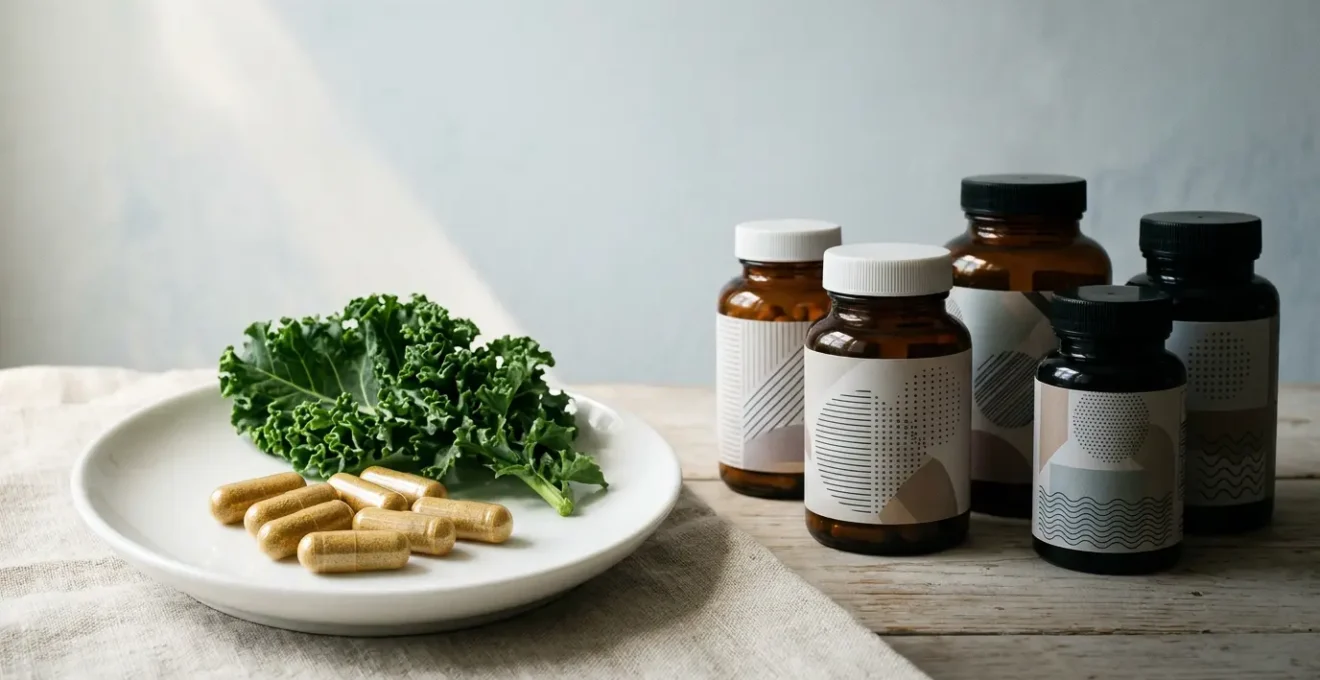
The most effective vision supplements are not those with the longest ingredient lists, but those with clinically proven formulas at the correct, stable dosage.
- The AREDS2 formula is the only one with large-scale clinical proof for slowing Age-Related Macular Degeneration (AMD), but many high street brands use incomplete or ineffective variations.
- Cheap supplements often rely on “fairy dusting”—using trace amounts of ingredients for marketing—and unstable forms like gummies that degrade quickly and under-deliver on nutrients.
Recommendation: Stop buying based on brand names or price alone; learn to read the label like an analyst to find true value and protect your sight.
Walk down the aisle of any UK high street chemist like Boots or a health store like Holland & Barrett, and you are confronted with a dizzying wall of “vision health” supplements. Bottles promise to sharpen your sight, protect your eyes from screens, and keep your macula healthy, all with a proprietary blend of exotic-sounding ingredients. It’s a confusing and often expensive marketplace, preying on our deep-seated fear of losing our sight.
The common advice is simplistic: look for lutein and zeaxanthin, maybe some bilberry. This leads many well-intentioned consumers down one of two paths: either they grab the cheapest bottle assuming it’s “better than nothing,” or they splurge on the most expensive one, believing a higher price tag equals higher quality. Both approaches are often a waste of money.
But what if the real value of a supplement isn’t on the flashy front label? The truth is that a product’s worth is hidden in the clinical evidence, the dosage integrity, and the formulation science—details most brands hope you’ll ignore. The difference between a therapeutic tool and a bottle of expensive hope lies in understanding these details. This guide isn’t here to sell you a product; it’s here to arm you with the critical knowledge to stop being a passive consumer and start being a savvy analyst of your own health.
In the following sections, we will deconstruct the only scientifically validated formula, expose the common industry tricks used to part you from your money, and provide a clear framework for deciding when to save and when to invest in a supplement that truly supports your long-term vision. This is how you find real value on the supplement shelf.
Contents: A Skeptic’s Guide to Eye Supplements
- Why Is the AREDS2 Formula the Only One Proven to Help DMLA?
- How to Spot “Fairy Dusting” of Bilberry in Cheap Supplements?
- Gummy Vitamins or Capsules: Which Form Delivers the Dosage You Need?
- The Vitamin A Risk That Smokers Need to Know Before Supplementing
- When to Buy Generic Supplements Instead of Branded Versions?
- Why Is Kale Considered a Superfood for the Macula?
- Why Does Modern Office Work accelerate Vision Loss in Your 40s?
- Age-Related Macular Degeneration: Can Diet Slow Progression After Diagnosis?
Why Is the AREDS2 Formula the Only One Proven to Help DMLA?
In the murky world of supplements, clinical evidence is the only lighthouse. While countless products claim to support eye health, only one specific formulation has been rigorously proven in large-scale human trials to slow the progression of intermediate-to-advanced Age-Related Macular Degeneration (AMD). This is the AREDS2 formula. The original Age-Related Eye Disease Study (AREDS) and its successor, AREDS2, were landmark trials sponsored by the U.S. National Eye Institute.
The research is unequivocal. The studies found that taking the specific combination and dosage of antioxidants and minerals could significantly impact the disease’s course. According to the National Eye Institute’s landmark clinical trials, this specific formula was shown to reduce the risk of AMD progression by about 25% over a five-year period. This isn’t a cure, but it is a powerful, evidence-backed intervention.
More recent research continues to underscore its importance. A July 2024 study on geographic atrophy (a late stage of dry AMD) published in the *Ophthalmology* journal found that AREDS2 supplements can slow down sight loss in these patients by 55% over three years. This makes the AREDS2 formula the non-negotiable gold standard. Any supplement targeting AMD that does not contain this precise formula—10mg Lutein, 2mg Zeaxanthin, 500mg Vitamin C, 400 IU Vitamin E, and 80mg Zinc—is not based on the highest level of scientific evidence.
How to Spot “Fairy Dusting” of Bilberry in Cheap Supplements?
“Fairy dusting” is one of the supplement industry’s dirtiest secrets. It’s the practice of including a minuscule, therapeutically useless amount of a popular or expensive ingredient in a formula simply to be able to list it on the label. Trendy ingredients like bilberry, astaxanthin, or saffron are common victims. You see the name, assume you’re getting the benefit, but in reality, you’re getting little more than marketing hype mixed with cheap filler.
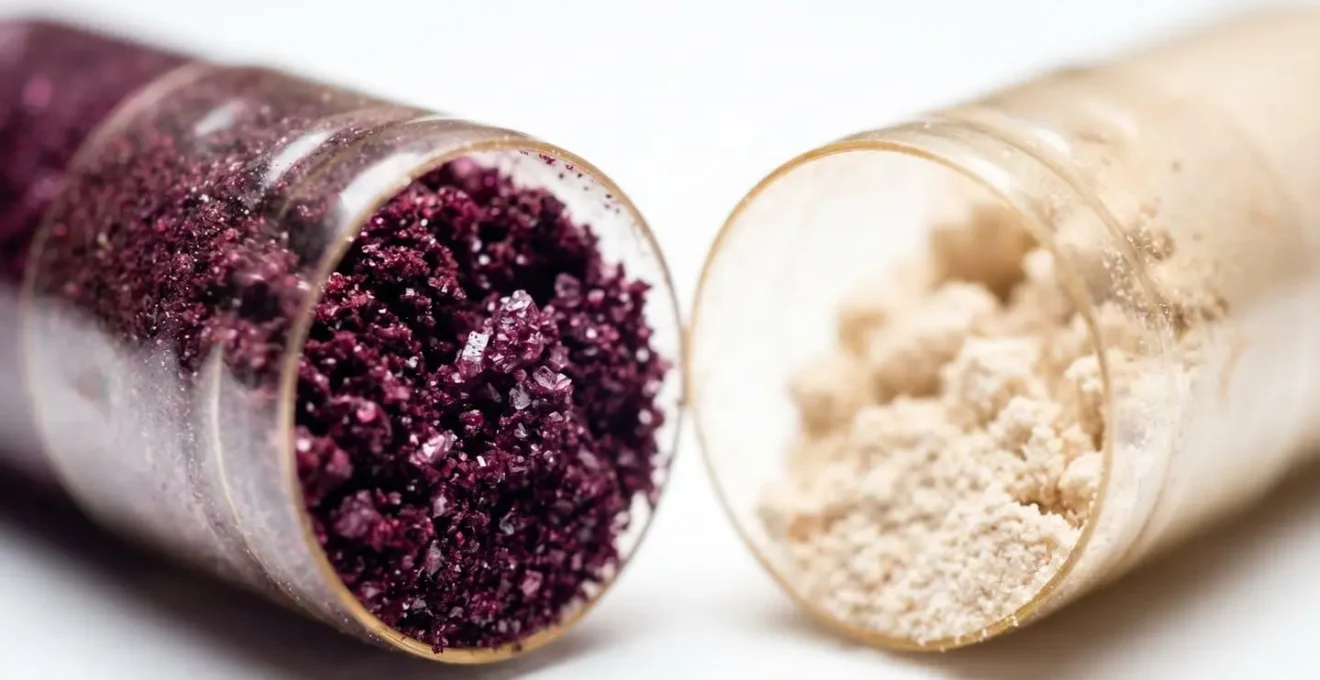
The image above provides a stark visual metaphor: one capsule is packed with a dense, richly pigmented active ingredient, while the other contains a sparse, pale powder. This is the difference between a therapeutic dose and “fairy dust.” Manufacturers use this trick because the active, standardized extract is expensive, while the name recognition is free advertising. They rely on consumers not checking the dosage, which is often hidden in a “proprietary blend” or listed in micrograms (mcg) to look more impressive than it is.
To avoid being misled, you must become a label detective. You need to compare the dose listed on the bottle to the doses used in clinical studies for that ingredient. For bilberry, for instance, studies on eye fatigue often use doses of 80-160mg of a standardized extract, not the 1mg or 5mg you might find “dusted” into a cheap multivitamin.
Your Red Flag Checklist for Supplement “Fairy Dusting”
- Check for “proprietary blends”: Are ingredients hidden in a blend that doesn’t disclose individual amounts? This is a major red flag for hiding tiny doses.
- Scrutinize the units: Is the dosage listed in micrograms (mcg) instead of milligrams (mg) to make the amount seem larger? (1000mcg = 1mg).
- Check the ingredient order: Is the ingredient you want at the very end of the list? Like food labels, ingredients are listed by weight, so last on the list means least in the pill.
- Compare to clinical studies: Do a quick search for “bilberry clinical study dose” and compare it to your supplement. The difference can be shocking.
- Be skeptical of long lists: Does the product boast 20+ ingredients in a tiny total amount (e.g., 42 ingredients in a 5mg total blend)? This is a classic “fairy dusting” strategy.
Gummy Vitamins or Capsules: Which Form Delivers the Dosage You Need?
Gummy vitamins have exploded in popularity, transforming supplementation from a chore into a tasty treat. For children or those with difficulty swallowing pills, they seem like a perfect solution. However, when it comes to delivering a precise, stable, and therapeutic dose of nutrients for a serious condition like AMD, the science of formulation overwhelmingly favours traditional capsules. The convenience of gummies comes with significant compromises in dosage integrity and stability.
The manufacturing process for gummies requires heat, which can degrade sensitive antioxidants like Vitamin C and B vitamins. Furthermore, their gelatinous, moist environment makes them inherently less stable. According to studies in pharmaceutical journals, gummy vitamins can lose between 20-40% of their potency within a year, and sometimes even faster. Manufacturers often “over-fortify” the product to compensate, but this leads to inconsistent dosing—the gummy you eat today might have a very different nutrient level than the one you eat in six months.
Beyond potency, there’s a simple issue of space. The sugar, gelatin, water, and flavourings needed to make a gummy take up most of the volume, leaving little room for the actual vitamins. This is why you’ll never find a complete, high-dose AREDS2 formula in a gummy format. The following table highlights the critical differences an informed consumer must understand.
| Feature | Gummy Vitamins | Capsules |
|---|---|---|
| Nutrient Capacity | Limited due to sugar, gelatin, and stabilizers occupying volume | High-density powder allows 40-50 nutrients at therapeutic levels |
| Dosage Consistency | Individual gummies vary in nutrient content from same bottle | Automated filling delivers precise, consistent amounts |
| Sugar Content | 2-8g added sugar per serving; can total 15-20g daily with multiple supplements | Zero added sugar |
| Shelf Stability | Lose 20-40% potency in 6-12 months; moisture accelerates degradation | Maintain 90-95% potency for 2-3 years |
| Heat-Sensitive Nutrients | Manufacturing heat degrades vitamins C, B-complex; moisture triggers hydrolysis | Protected from moisture; superior stability for sensitive antioxidants |
| Bioavailability | Generally comparable to pills when fresh and properly stored | Consistent absorption; some forms designed for enhanced bioavailability |
The Vitamin A Risk That Smokers Need to Know Before Supplementing
One of the most critical—and often overlooked—aspects of supplement safety is the interaction between nutrients and lifestyle. A prime example is the danger posed by high-dose beta-carotene supplementation for smokers and former smokers. Beta-carotene is a precursor to Vitamin A and was a key component of the original AREDS formula. However, alarming findings from two major clinical trials in the 1990s forced a complete re-evaluation.
The landmark Alpha-Tocopherol, Beta-Carotene (ATBC) Cancer Prevention Study, which followed over 29,000 male smokers in Finland, was halted early for a shocking reason. Instead of preventing cancer, the data showed that the group taking high-dose beta-carotene supplements had an 18% increased incidence of lung cancer and a higher mortality rate compared to those taking a placebo. This wasn’t a statistical fluke; it was a clear and dangerous signal.
This finding was so profound that it led directly to a modification of the AREDS formula, resulting in AREDS2. In the new formula, beta-carotene was completely removed and replaced with the carotenoids lutein and zeaxanthin, which have not been shown to carry the same risk. This is not just a minor tweak; it’s a critical safety update based on robust evidence.
Case Study: The ATBC and CARET Trials – A Warning Ignored by Some Brands
The ATBC study was not an isolated finding. A second trial, the Beta-Carotene and Retinol Efficacy Trial (CARET) in the US, which involved over 18,000 heavy smokers and asbestos-exposed workers, reported a 28% increase in lung cancer and a 17% increase in deaths in the supplemented group. The results were so clear and concerning that the trial was stopped ahead of schedule. The combined evidence from these trials demonstrated that in the specific biological environment of a smoker’s lungs, high-dose isolated beta-carotene acts as a pro-oxidant, paradoxically increasing cancer risk. This is why any modern, responsibly formulated eye supplement, especially one for AMD, should be beta-carotene free. If you are a current or former smoker, you must ensure any vision supplement you take uses the safer AREDS2 formulation.
When to Buy Generic Supplements Instead of Branded Versions?
After navigating the minefield of formulations and dosages, the final question often comes down to price: should you pay a premium for a big-name brand or can you get the same value from a cheaper generic or store-brand version? The answer, frustratingly, is “it depends.” The key is to shift your mindset from “brand vs. generic” to “certified vs. uncertified” and “simple vs. complex.”
The supplement industry is notoriously under-regulated. Research has repeatedly shown that what’s on the label is not always what’s in the bottle. A study highlighted by the National Institutes of Health (NIH) found significant discrepancies, noting that many supplements for eye health had incorrect amounts of the stated nutrients. This is where third-party certifications become your most powerful tool. Seals from organisations like USP (United States Pharmacopeia) or NSF International mean an independent lab has verified that the product contains the ingredients listed, in the correct amounts, and is free from contaminants. A certified generic is often superior to an uncertified premium brand.
The decision also depends on the complexity of the product. For a simple, single-ingredient supplement like Vitamin D or a basic Vitamin C, a certified generic is almost always the smart economic choice. However, for a complex, synergistic formula like AREDS2, a brand may justify its higher price if it invests in higher-bioavailability ingredients (like FloraGLO® Lutein, which has been used in many clinical trials) or conducts its own research on formula stability and absorption. The key is to determine if you are paying for real science or just marketing.
- For simple, single-ingredient products (Vitamin C, D, Zinc): Choose a reputable generic with third-party certification (USP, NSF) to save money without sacrificing quality.
- For complex formulas (AREDS2): A branded version may be justified if it uses patented, higher-bioavailability ingredients with clinical data to back them up. Look for names like FloraGLO® or ZeaONE®.
- Always verify third-party testing seals: This is non-negotiable. A seal from USP or NSF on a generic bottle makes it a more trustworthy choice than a premium brand without one.
- Investigate the brand’s investment: Does the brand’s website talk about clinical research and bioavailability studies, or just vague lifestyle marketing? The former indicates an investment in quality.
- Compare ingredient forms: Look for specific, high-quality forms like chelated minerals, methylated B-vitamins, or standardized botanical extracts. These indicate a commitment to quality over cost-cutting.
Why Is Kale Considered a Superfood for the Macula?
Before the first supplement was ever bottled, nature provided the ultimate eye food. While this article focuses on supplements, it’s crucial to remember that a “food first” approach is the foundation of long-term health. When it comes to vision, few foods can match the nutritional powerhouse that is kale. It is considered a superfood for the macula for one primary reason: it has one of the highest natural concentrations of lutein and zeaxanthin on the planet.

Lutein and zeaxanthin are the two carotenoid pigments that form the macular pigment. This pigment is a yellow-ish layer in the center of your retina that acts like a pair of internal sunglasses, filtering out harmful high-energy blue light before it can damage the sensitive photoreceptor cells beneath. A denser macular pigment is associated with better visual function and a lower risk of developing AMD. While the body cannot produce these vital nutrients, it can absorb them from food and deposit them in the macula.
A single serving of cooked kale can provide well over 20mg of lutein and zeaxanthin, far exceeding the 12mg total found in the AREDS2 formula. Furthermore, when consumed as part of a whole food, these nutrients come packaged with fibre, other vitamins, and phytochemicals that can aid in their absorption. While supplements are essential for achieving the high, therapeutic doses needed to slow established AMD, a diet rich in dark leafy greens like kale, spinach, and collard greens is the primary strategy for building a dense, protective macular pigment throughout your life.
Why Does Modern Office Work accelerate Vision Loss in Your 40s?
For millions of people in their 30s and 40s, a subtle but worrying change is happening. The long hours spent staring at computer screens, a hallmark of modern office work, are creating a perfect storm of factors that accelerate age-related vision changes. The phenomenon, often bundled under the term “Digital Eye Strain,” is more than just tired eyes; it’s a physiological stress that can hasten the onset of presbyopia (the loss of near-focusing ability) and contribute to long-term issues.
The problem is threefold. First is the drastically reduced blink rate. When we focus intently on a screen, our natural blink rate can drop by more than half. Blinking is essential as it re-moisturizes the cornea, and a reduced rate leads to the gritty, dry, and irritated eyes that are hallmarks of a long day at the desk. Over time, this chronic dryness can affect the quality of the eye’s surface.
Second is the constant near-focus demand. Our eyes’ focusing muscles are designed for dynamic use—looking far, then near. Office work locks them into a fixed, close-up posture for hours on end. This sustained muscular effort, known as an accommodative spasm, leads to fatigue, headaches, and can make it harder for the muscles to relax and focus on distant objects. This constant strain can make the natural, age-related stiffening of the eye’s lens feel more pronounced, much earlier.
Finally, there is the issue of high-energy blue light. While the sun is the largest source, the sheer cumulative hours spent in front of LED screens expose the retina to a significant amount of this specific wavelength. While the long-term effects are still being studied, blue light is known to generate oxidative stress in the retinal cells, which is the very mechanism that nutrients like lutein and zeaxanthin are meant to combat. Modern work life, therefore, is actively depleting the very protective systems we need for long-term eye health.
Key Takeaways
- The AREDS2 formula is the only one backed by major clinical trials for AMD; check your label for the exact ingredients and doses.
- Beware of “fairy dusting” and “proprietary blends” which hide ineffective, trace amounts of ingredients.
- Capsules offer superior dosage accuracy and stability compared to gummy vitamins, which can degrade and contain hidden sugars.
Age-Related Macular Degeneration: Can Diet Slow Progression After Diagnosis?
Receiving an AMD diagnosis can be frightening, but it is not a sentence to inevitable vision loss. While there is no cure, a wealth of scientific evidence shows that you are not a helpless passenger. Alongside targeted supplementation like the AREDS2 formula, dietary intervention is a powerful and proactive tool that can help manage the condition and slow its progression. The food you eat directly influences the level of inflammation and oxidative stress in your body, two key drivers of AMD’s pathology.
The goal is to adopt an anti-inflammatory, antioxidant-rich diet. This isn’t a complex or exotic regimen; it closely mirrors the Mediterranean diet. Key components include a high intake of dark leafy greens (kale, spinach) for their lutein and zeaxanthin, colourful fruits and vegetables for a broad spectrum of antioxidants, and oily fish (like salmon, mackerel, and sardines) at least twice a week. These fish are rich in the omega-3 fatty acids EPA and DHA, which have potent anti-inflammatory properties and are a major structural component of the retina.
Conversely, it’s just as important to reduce or eliminate foods that promote inflammation. This means limiting processed foods, sugary drinks, refined carbohydrates (white bread, pastries), and unhealthy fats found in many fried and packaged goods. These foods can spike blood sugar and promote a state of chronic, low-grade inflammation that can exacerbate the damage occurring in the macula.
AMD has a strong inflammatory component, so adopting a low-glycemic, antioxidant-rich diet helps reduce the systemic inflammation that can exacerbate the condition.
– Dr. Emily Chew, NIH National Eye Institute, Division of Epidemiology and Clinical Applications
This expert opinion underscores a critical point: diet is not a peripheral “nice-to-have”; it is a central pillar of managing AMD after diagnosis. It works synergistically with supplements to create an internal environment that is less hospitable to the disease’s progression.
Armed with this knowledge, you are no longer a passive consumer in the supplement aisle. You are an informed analyst capable of discerning scientific value from marketing hype. The next step is simple: pick up the supplement bottle in your cabinet, turn it over, and read the label with these new eyes. See if it meets the evidence-based standard, or if you’ve simply been paying for a well-marketed placebo.