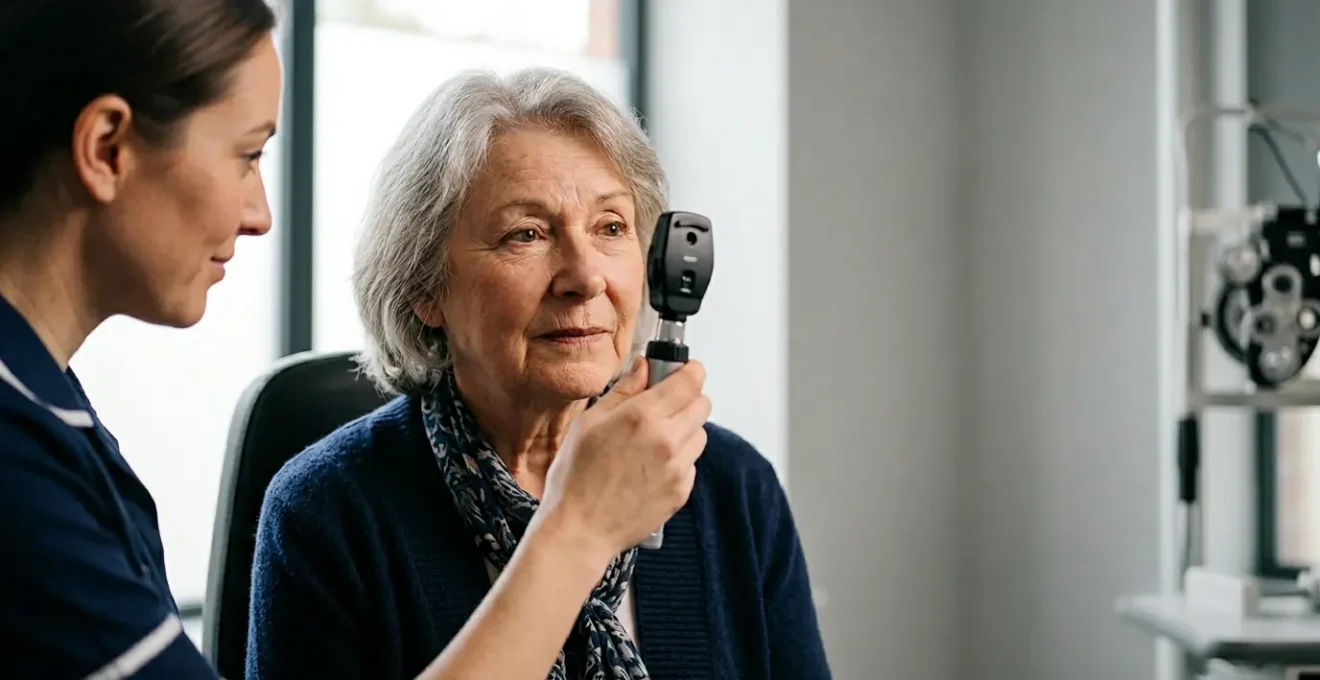
Glaucoma damage is irreversible, but sight loss is preventable in most cases if the condition is caught and managed early through routine NHS screening.
- UK guidelines now recommend a one-off laser procedure (SLT) as the primary treatment for many, offering a lifestyle-friendly alternative to daily eye drops.
- Your genetic and ethnic background significantly impacts your risk, often qualifying you for free, earlier NHS eye tests from age 40.
Recommendation: The single most important action is to understand your personal risk factors and attend regular eye tests to actively partner with the NHS in protecting your vision.
The thought of losing one’s sight is a profound and understandable fear, particularly as we get older. We are often told to look out for changes in our vision, but what if the most dangerous threat is one you cannot see? This is the reality of glaucoma. It develops without pain and without obvious symptoms in its early stages, quietly damaging the optic nerve that connects your eye to your brain. Many people believe that glaucoma management is simply a matter of checking eye pressure or using daily drops, but this view is outdated and dangerously incomplete.
The real key to preserving your vision lies not in passively waiting for a diagnosis, but in actively partnering with your optometrist and the NHS. The landscape of glaucoma care in the UK has evolved significantly, with new guidelines and technologies that empower you to take control. The purpose of this guide is to move beyond the generic advice and give you a clear understanding of the clinical rationale behind each step of the NHS pathway. It’s about knowing *why* a certain test is performed, *what* your treatment options really mean for your lifestyle, and *how* to navigate the follow-up process effectively.
By understanding this journey, you transform from a passive patient into an informed partner in your own eye health. This article will walk you through the entire process: from demystifying the “silent thief” and explaining the NHS screening test, to comparing modern treatments and understanding the crucial role of long-term monitoring. This knowledge is your most powerful defence against irreversible vision loss.
To help you navigate this vital information, this article is structured to answer your most pressing questions about glaucoma detection and management within the UK’s healthcare system. You can explore the topics that matter most to you or read through to gain a complete picture of the patient journey.
Summary: Your Complete Guide to Navigating Glaucoma Care in the UK
- Why Is Glaucoma Called the Silent Thief of Sight?
- How Does the NHS Glaucoma Test Work During a Routine Exam?
- Drops or Laser: Which Glaucoma Treatment Suits Your Lifestyle Best?
- The Genetic Risk Factor That Increases Your Glaucoma Odds by 40%
- When to Schedule Your Follow-Up Scans to Monitor Optic Nerve Health?
- Why Does Your Eye Pressure Spike in the Morning?
- Why Can’t the Optic Nerve Regenerate Like Skin Tissue?
- High Eye Pressure: 5 Lifestyle Changes to Lower Readings Before Medication?
Why Is Glaucoma Called the Silent Thief of Sight?
Glaucoma earns its ominous nickname because it causes no pain and its initial symptoms are virtually undetectable to the person experiencing them. The disease typically begins by damaging your peripheral (side) vision, a process so gradual that your brain automatically compensates by filling in the missing information. You don’t see black spots or patches; you simply see less of the world without realising it. This is why the first “symptom” of glaucoma is often not what you notice, but what your optometrist detects during a routine eye examination. By the time you become aware of changes, such as bumping into things or having a narrowed field of view, significant and irreversible damage to the optic nerve has already occurred.
This silent progression is a major public health challenge in the UK. A startling study commissioned by Glaucoma UK estimates there are over 500,000 people in the UK with glaucoma who are currently undiagnosed. They are losing sight every day without knowing it. To picture the effect, imagine watching a football match. In the early stages, you can see the players and the ball in the centre of the pitch perfectly, but you might miss a player running down the wing. As the disease progresses, your view narrows as if you are looking through a tunnel, until only the central action is visible.

As this visual metaphor shows, the central vision remains sharp for a long time, masking the extensive damage happening at the edges. This is why waiting for symptoms is not a viable strategy. According to Professor Paul Foster of the UCL Institute of Ophthalmology, over 40% of glaucoma patients in the UK experience vision loss that could have been prevented with earlier diagnosis and treatment. Regular eye tests are not just for updating your glasses prescription; they are the only effective defence against this silent thief.
How Does the NHS Glaucoma Test Work During a Routine Exam?
The good news is that detecting glaucoma is a standard part of a comprehensive sight test, a process that is straightforward and painless. In the UK, the NHS provides a clear pathway for detection, starting at your local optician. Understanding what happens during this check-up can demystify the process and reinforce the importance of attending. For many people at higher risk, these sight tests are provided free of charge. Specifically, the NHS confirms free annual tests from age 40 for those with a close relative (parent, sibling, or child) diagnosed with glaucoma, and for everyone aged 60 and over.
During your routine exam, your optometrist will perform several key checks specifically for glaucoma. These are often called the “three main tests”:
- Tonometry (Eye Pressure Test): This measures the intraocular pressure (IOP) inside your eye. The most common method is the “puff of air” test (non-contact tonometry), which is quick and not painful. A high reading is a significant risk factor, but it is not a diagnosis on its own.
- Ophthalmoscopy (Optic Nerve Health Check): The optometrist will use a special light and magnifying lens (an ophthalmoscope) to look at the back of your eye. They are assessing the health, shape, and colour of your optic nerve head, looking for subtle signs of damage.
- Perimetry (Visual Field Test): This test maps your peripheral vision. You will look into a machine and click a button whenever you see small flashes of light in your side vision. This directly tests the function of the optic nerve and can detect damage long before you would notice it yourself.
If any of these tests show suspicious results, it does not automatically mean you have glaucoma. It means you require further investigation. Your optometrist will then refer you, either to a specialist glaucoma service at a hospital or to a community optometrist accredited for more detailed assessments. This is the start of your active partnership with the NHS to protect your sight.
Drops or Laser: Which Glaucoma Treatment Suits Your Lifestyle Best?
If you are diagnosed with primary open-angle glaucoma (POAG) or ocular hypertension (high eye pressure), the goal of treatment is to lower the pressure in your eye to prevent further damage to the optic nerve. For decades, the standard first step was a prescription for daily eye drops. However, a major shift in UK clinical practice means this is no longer the only, or even the primary, option. In a move that prioritises patient lifestyle and long-term effectiveness, updated NICE guidelines from January 2022 now recommend Selective Laser Trabeculoplasty (SLT) as the first-line treatment.
SLT is a quick, painless outpatient procedure that uses a low-energy laser to improve the drainage of fluid from the eye, thereby lowering pressure. This “set-and-forget” approach is a game-changer for many patients who struggle with the adherence, side effects, or inconvenience of daily drops. The landmark LiGHT trial, which informed the NICE decision, found that SLT was not only more cost-effective for the NHS but also led to better long-term outcomes for patients. The choice between SLT and drops is a crucial conversation to have with your ophthalmologist, as it depends on your specific condition, lifestyle, and local NHS availability.
This table breaks down the key differences for a patient in the UK, helping you prepare for that important discussion.
| Factor | Eye Drops (Daily) | SLT Laser (One-off) |
|---|---|---|
| NHS Cost to Patient (England) | £9.90 per prescription item (or free if exempt) | Free on NHS (no prescription charges) |
| Treatment Frequency | Daily, lifelong compliance required | Single outpatient procedure, effects last 1-5 years, can be repeated |
| Lifestyle Impact | Must remember daily application, refrigeration needed for some drops, travel complications | Set-and-forget after procedure, no daily routine disruption |
| Side Effects | Eye redness, stinging, eyelash growth, potential allergic reactions | Minimal: temporary inflammation, rare pressure spike |
| Efficacy (6-year data) | 26.8% progression rate (LiGHT trial) | 19.6% progression rate (LiGHT trial) |
| Availability on NHS | Universally available | Varies by NHS Trust (postcode lottery) |
Ultimately, both treatments are effective at lowering eye pressure. However, the move towards SLT as a primary option reflects a modern approach to glaucoma care that values patient convenience and removes the burden of a daily medication routine, leading to better overall disease control.
The Genetic Risk Factor That Increases Your Glaucoma Odds by 40%
While anyone can develop glaucoma, your genetic makeup is one of the most significant and non-negotiable risk factors. The phrase “it runs in the family” is a clinical reality. If you have a first-degree relative—a parent, sibling, or child—with glaucoma, your own risk of developing the condition increases by at least 40%, and in some cases, much more. In fact, research indicates that approximately 50% of people diagnosed with primary open-angle glaucoma have a relative who also has the condition. This is why the NHS offers free eye tests from the age of 40 to this specific high-risk group.
This genetic link underscores the importance of family health conversations. Knowing your family’s eye history is not just a piece of trivia; it is critical medical information that should guide your screening schedule. However, “genetics” in the context of glaucoma in the UK extends beyond immediate family to include your ethnic background. Certain populations have a higher genetic predisposition.
Case Study: UK Ethnic Diversity and Glaucoma Risk
UK population data reveals significant disparities in glaucoma risk. People of African or Afro-Caribbean origin are at a much higher risk of developing primary open-angle glaucoma. They tend to develop it about 10 years earlier than people of European origin, and the disease can progress more aggressively. Conversely, individuals of East Asian descent have a higher susceptibility to a different type, known as angle-closure glaucoma, which can present more acutely and requires different screening considerations. This data highlights that although non-European groups represent a small fraction of the UK’s over-65 population, they are disproportionately affected by glaucoma.
This knowledge is empowering. It means that if you fall into one of these higher-risk categories, you have a clear mandate to be proactive about your eye health. It is a perfect example of where understanding your personal risk profile enables you to engage with the NHS pathway from a position of strength.

Discussing health history within the family, as symbolised here, is a vital part of proactive healthcare. It allows younger generations to understand their inherited risks and take preventative action, turning genetic predisposition from a silent threat into a known factor that can be managed effectively.
When to Schedule Your Follow-Up Scans to Monitor Optic Nerve Health?
A diagnosis of glaucoma—or even being labelled a “glaucoma suspect”—is not the end of the story. It is the beginning of a lifelong journey of monitoring and management. The primary goal of all follow-up appointments is to track the health of your optic nerve over time and ensure that your eye pressure is at a safe level for you. The frequency and location of these appointments depend on your specific situation and are managed through two main NHS pathways. It is crucial to understand which pathway you are on and what to expect.
Being an active partner in your care means knowing your recommended follow-up date and being proactive if you don’t receive an appointment letter. Delays in the hospital eye service can happen, and it is your right to contact the clinic or the hospital’s Patient Advice and Liaison Service (PALS) if you are concerned about a missed appointment. At each visit, your ophthalmologist isn’t just looking at your eyes; they are comparing new scans to old ones with powerful software. This technology can detect microscopic changes in the nerve fibre layer thickness that would be invisible to the naked eye, allowing for treatment adjustments long before you would notice any change in your vision.
Your NHS Glaucoma Monitoring Plan: Key Points to Check
- Pathway Identification: Clarify if you are a ‘glaucoma suspect’ on an annual community optometrist pathway or a ‘confirmed glaucoma’ patient monitored by the hospital eye service every 6-12 months.
- Appointment Tracking: Note the recommended follow-up date from your last appointment letter and set a personal reminder.
- Proactive Communication: If an appointment letter has not arrived within a few weeks of the expected date, contact the hospital eye clinic or the Patient Advice and Liaison Service (PALS).
- Test Understanding: Recognise that each test (pressure, visual fields, OCT scan) provides a different piece of the puzzle for your ophthalmologist to assess stability.
- Data Comparison: Appreciate that the core of monitoring is comparing your latest OCT and visual field scans to all previous ones to detect subtle, slow progression.
This proactive approach ensures that your condition is managed consistently, giving you the best possible chance of preserving your sight for the long term. Your role is not just to show up, but to be an engaged participant in this monitoring process.
Why Does Your Eye Pressure Spike in the Morning?
One of the aspects of glaucoma management that can be confusing is the natural fluctuation of intraocular pressure (IOP). Your eye pressure is not a static number; it changes throughout the day and night, influenced by factors like body position, hydration, and your body’s natural circadian rhythms. For most people, including those with glaucoma, IOP tends to be highest in the early morning, often around the time they wake up. This is partly due to the horizontal sleeping position, which can alter fluid dynamics in the eye, and the natural spike in the hormone cortisol upon waking.
This daily variation is clinically significant. If your pressure is only ever measured in the afternoon when it might be naturally lower, your care team might get an incomplete picture of your overall IOP control. This is why consistency in your follow-up appointments is so important. As the Manchester Royal Eye Hospital’s guidelines for patients state, scheduling your check-ups at a similar time of day for each visit gives your ophthalmologist a more reliable, like-for-like comparison to judge the stability of your condition.
Furthermore, other health conditions can influence this pressure pattern. Medical research has established a strong connection between Obstructive Sleep Apnoea (OSA) and elevated intraocular pressure. OSA, a condition where breathing repeatedly stops and starts during sleep, can affect blood flow and pressure dynamics throughout the body, including the eyes. If you are being treated for glaucoma and also experience symptoms like loud snoring or significant daytime fatigue, it is highly advisable to discuss OSA screening with your GP. Treating a sleep disorder may contribute to better eye pressure management alongside your primary glaucoma therapy.
Why Can’t the Optic Nerve Regenerate Like Skin Tissue?
The urgency behind early glaucoma detection and treatment is rooted in a fundamental biological fact: the optic nerve cannot heal itself. Unlike skin, which can regenerate after a cut, or bone, which can mend after a fracture, the cells that make up the optic nerve are part of the central nervous system (CNS), much like the brain and spinal cord. The optic nerve is essentially a bundle of over a million delicate nerve fibres (axons) responsible for transmitting everything you see from the retina to the brain. When these fibres are damaged by the effects of glaucoma, they are lost forever. This is why glaucoma is the second leading cause of irreversible blindness globally; the vision it takes away cannot be recovered.
This is the critical difference between glaucoma and a condition like cataracts. A cataract clouds the eye’s natural lens, and vision can be fully restored by surgically replacing that lens. With glaucoma, the “camera” (the eye) may be fine, but the “cable” connecting it to the “computer” (the brain) is permanently damaged. Current treatments like drops, laser, and surgery are all designed to do one thing: halt further damage by lowering eye pressure. They are incredibly effective at preserving the vision you still have, but they cannot restore what has already been lost.
This “irreversible threshold” is what drives the global research effort to find ways to protect and even regenerate the optic nerve. The UK is at the forefront of this pioneering science, offering hope for the future.
UK Research: Pioneering Optic Nerve Regeneration
While not yet a clinical reality, a future beyond just lowering pressure is being actively explored in the UK. Leading research hubs like Moorfields Eye Hospital in London, in partnership with the UCL Institute of Ophthalmology, are conducting cutting-edge trials on neuroprotection. At the same time, research teams at Cardiff University are investigating stem cell therapies, while researchers in Cambridge explore novel genetic approaches to encourage nerve regeneration. These UK-based efforts are vital in the quest to one day move from simply halting glaucoma to reversing its damage.
While we wait for these scientific breakthroughs, the message for today is clear and urgent: prevention of damage through early detection and consistent treatment is the only strategy that works.
Key takeaways
- Symptoms of glaucoma appear too late; routine NHS screening is the only effective defence against silent, irreversible vision loss.
- UK guidelines now recommend a one-off laser procedure (SLT) as the first-line treatment for many, offering a lifestyle-friendly alternative to daily eye drops.
- Your family history and ethnic background are major risk factors that may entitle you to free, earlier NHS eye tests from age 40.
High Eye Pressure: 5 Lifestyle Changes to Lower Readings Before Medication?
While medical and surgical treatments are the cornerstone of managing glaucoma, a growing body of evidence shows that certain lifestyle modifications can play a valuable supportive role in managing intraocular pressure (IOP). These changes are not a replacement for prescribed treatment but can contribute to overall eye health and potentially improve the effectiveness of your primary therapy. Adopting these habits empowers you to take an active, daily role in your condition, complementing the clinical care you receive from the NHS. It’s about controlling what you can control.
The focus is on moderate, sustainable habits that promote good blood flow and reduce unnecessary spikes in eye pressure. Before making any significant changes, especially regarding exercise, it is always wise to consult with your GP and ophthalmologist. Here are five evidence-based interventions:
- Engage in Aerobic Exercise: Moderate activity like brisk walking, cycling, or swimming for at least 30 minutes, four times a week, has been shown in studies to achieve a measurable reduction in IOP. The key is consistent, moderate activity, not high-intensity bursts.
- Manage Stress Levels: High levels of the stress hormone cortisol can correlate with increased eye pressure. NHS-promoted techniques like mindfulness meditation, deep breathing exercises, or using an app like Headspace can be effective tools for stress management.
- Boost Dietary Nitrates: Consuming nitrate-rich vegetables helps improve blood flow to the optic nerve. Foods like kale, spinach, and beetroot are excellent sources. Even a small, regular glass of beetroot juice can have measurable benefits on vascular health.
- Modify Certain Activities: Be mindful of activities that temporarily and dramatically spike IOP. These include inverted yoga poses (like headstands), playing high-resistance wind instruments (like the trumpet), or wearing overly tight neckties and collars that constrict blood flow.
- Hydrate Thoughtfully: Stay well-hydrated, but avoid consuming very large volumes of fluid (e.g., a litre of water) in a short space of time, as this can temporarily raise IOP. Spacing your fluid intake throughout the day is a better approach.

Incorporating nutrient-dense foods like beetroot and kale is a simple, practical way to support your optic nerve health through your diet. These small, daily choices, when combined, create a healthier internal environment that supports the work of your medical treatments.
The most crucial step you can take after reading this is to act on it. Book your NHS sight test today, or encourage a family member—especially one over 40 with a family history of glaucoma—to do so. It is a simple, painless action that could be the single most important factor in preserving their sight for a lifetime.