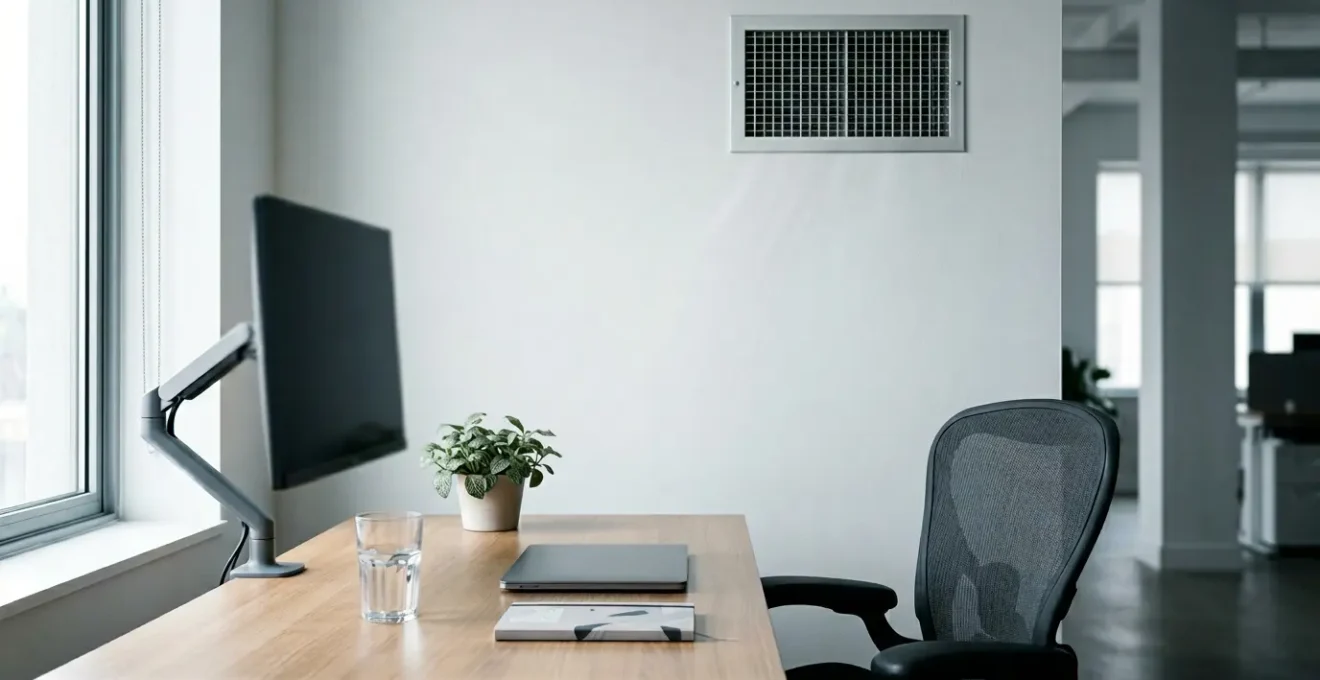
Office air conditioning isn’t just making your eyes feel dry; it’s actively dismantling their natural protective barrier, leading to chronic inflammation and potential damage.
- The dry, recycled air accelerates the evaporation of your tear film, leaving your cornea exposed.
- Many common “hydrating” eye drops contain preservatives that can be toxic to corneal cells with repeated use.
- Unconscious habits, like the reflexive urge to rub irritated eyes, can turn minor discomfort into a physical corneal abrasion.
Recommendation: The most effective solution is not just to add moisture, but to manage your immediate micro-environment (humidity, airflow) and retrain your body’s automatic responses (blinking, rubbing) to restore your eye’s natural equilibrium.
That gritty, burning sensation in your eyes after a long day at the office is more than just a minor annoyance. For many office workers, it’s a chronic battle. You reach for hydrating drops, hoping for relief, only to find it fleeting. You’re told to take breaks, to look away from your screen, yet the discomfort persists, a constant, nagging reminder of the sterile, climate-controlled environment you work in. This cycle of irritation and temporary fixes often overlooks the root of the problem.
The conventional wisdom about managing office-induced dry eye focuses on reactive measures. But what if the very solutions we rely on are insufficient or, in some cases, even counterproductive? What if the key isn’t just to repeatedly add moisture, but to fundamentally alter the environmental and behavioral factors that are stripping it away in the first place? The issue is not merely dryness; it’s a systemic disruption of your eye’s delicate ecosystem, a microscopic war being waged on your corneas by the very air you breathe.
This guide will move beyond simple remedies to offer a strategic approach. We will dissect the mechanisms by which office environments cause harm, from the physics of tear film evaporation to the cellular impact of preservatives in eye drops. By understanding the true nature of the threat, you can build a robust defense, transforming your workspace from a source of irritation into a zone of corneal safety. We’ll explore how to manage your micro-environment and retrain your reflexes to protect your long-term vision.
To navigate this complex topic, we will break down the core issues into actionable sections. The following summary outlines the strategic path to understanding and protecting your corneal health in a modern office setting.
Summary: Understanding and Combating Corneal Damage from Office Environments
- Why Does Dry Air Break Down Your Protective Tear Film So Quickly?
- How to Position a Humidifier to Save Your Corneas During Winter?
- Liquid Drops or Gel: Which Hydration Lasts Through an 8-Hour Shift?
- The Rubbing Reflex That turns Mild Inflammation into a Corneal Abrasion
- When to Practice Conscious Blinking to Rehydrate Your Eyes Naturally?
- Why Can’t Your Teen Focus on Distant Objects After Gaming?
- Why Hydrating Your Eyes Before Your Morning Coffee Boosts Focus?
- Gaming and Eye Strain: How to Protect Your Teenager’s Vision During Marathons?
Why Does Dry Air Break Down Your Protective Tear Film So Quickly?
The air in a modern, air-conditioned office is an invisible assailant for your eyes. The core of the problem lies in its low relative humidity. Your eye is protected by a sophisticated, three-layered tear film: a mucin base for adhesion, a large aqueous (water) middle layer for hydration, and a thin outer lipid (oil) layer that prevents evaporation. Office HVAC systems aggressively remove moisture from the air, creating a powerful evaporative gradient. This dry air acts like a sponge, pulling moisture directly from the surface of your eye and compromising the lipid layer’s primary function.
Once this oily barrier is destabilized, the underlying aqueous layer is left exposed to the dry environment, leading to rapid water loss. In fact, in environments with low relative humidity typical of an office, research demonstrates that a staggering 40-60% contribution of evaporation to total tear loss can occur. This isn’t a slow process; it’s a continuous and rapid depletion that your natural tear production struggles to keep up with. The result is an unstable tear film that breaks up between blinks, exposing the sensitive corneal nerve endings and triggering the familiar sensations of burning, grittiness, and inflammation. This breakdown of the tear film equilibrium is the first critical failure in the chain of events leading to chronic dry eye.
Visualizing this delicate structure helps to understand its vulnerability. The lipid layer, though microscopic, is the frontline defense against an aggressive environmental input.

As this image conceptually represents, the tear film is not a simple fluid but a complex, layered system. When the outer layer is compromised by dry air, the entire structure is at risk of collapse, leaving the sensitive corneal surface unprotected and prone to inflammatory damage.
How to Position a Humidifier to Save Your Corneas During Winter?
If dry air is the aggressor, reintroducing moisture into your personal workspace is the most direct counter-attack. A personal humidifier is not just a comfort item; it’s a critical tool for creating a protective micro-climate around your desk and restoring your tear film equilibrium. The goal is to raise the relative humidity in your immediate vicinity to an optimal range of 40-60%, which significantly slows the rate of tear evaporation. However, simply owning a humidifier is not enough; its placement and type are crucial for effectiveness and safety.
The strategy is to create a personal moisture zone without directing a stream of mist at your face or electronics. An ultrasonic humidifier is often ideal for a quiet office due to its silent operation, but it requires distilled water to prevent the dispersal of mineral “white dust.” An evaporative model is a robust alternative for shared spaces, though it requires more maintenance. Whichever you choose, positioning it correctly is key to creating a stable, healthy environment for your corneas.
To implement an effective humidity control strategy, a systematic approach is required. The following plan provides a clear checklist for setting up and maintaining your personal office humidifier for optimal corneal health, a key part of your overall hydration strategy.
Your Action Plan: Optimal Humidifier Placement
- Position the humidifier 3-4 feet from your workspace to create a personal moisture zone without direct mist contact.
- Aim the mist output upwards, allowing moisture to settle and disperse naturally into the air rather than directly at your face.
- Use a digital hygrometer to precisely monitor humidity levels, adjusting the humidifier’s settings to maintain a consistent 40-60% range.
- Coordinate with building management about central HVAC humidity controls, referencing workplace health regulations as a basis for your request.
- For ultrasonic models, consistently use distilled water to prevent mineral dust dispersal which can irritate both your lungs and eyes.
Choosing the right device is the first step in this process. The following table, based on analysis from sources like Medical News Today’s review of humidifiers, breaks down the options for an office setting.
| Humidifier Type | Advantages | Disadvantages | Best For |
|---|---|---|---|
| Ultrasonic | Silent operation, energy efficient, no heat production | Can disperse mineral white dust if using tap water, requires distilled water | Quiet office environments, personal desk use |
| Evaporative | Self-regulating humidity output, no white dust, naturally filtered | Requires regular filter changes, slightly louder operation, higher maintenance | Shared office spaces, consistent all-day humidity control |
| Steam Vaporizer | Kills bacteria through boiling, clean mist output | Hot water safety risk, higher energy consumption, can over-humidify | Home use, not recommended for offices |
Liquid Drops or Gel: Which Hydration Lasts Through an 8-Hour Shift?
When environmental controls aren’t enough, artificial tears become the next line of defense. The choice between liquid drops and thicker gels depends on the severity of dryness and the need for longevity. Liquid drops offer immediate, cooling relief but their effects are often short-lived, requiring frequent reapplication. Gels and ointments have a higher viscosity, allowing them to cling to the ocular surface longer, providing sustained hydration that can be crucial for enduring an 8-hour shift. They form a more robust protective layer, ideal for severe dryness but can cause temporary blurriness, making them better for use before long periods of focus or at the end of the day.
However, the most critical factor in choosing an artificial tear is not its viscosity, but what it contains. A significant portion of over-the-counter products includes preservatives designed to prevent bacterial growth in the bottle. The most common of these, benzalkonium chloride (BAK), is a known cytotoxic agent. While it keeps the bottle sterile, clinical evidence shows that BAK used in approximately 70% of ophthalmic formulations causes cytotoxic damage to corneal cells with chronic exposure. This creates a vicious cycle: you use drops to soothe irritation, but the preservative itself contributes to long-term cellular damage and inflammation.
Therefore, the number one rule for a daily hydration strategy is to choose preservative-free options. These are typically available in single-use vials and, while more expensive, they eliminate the risk of preservative-induced toxicity. This is not a minor consideration; it is a fundamental aspect of a safe and effective long-term hydration strategy. The research on this topic is clear and concerning, as highlighted by a study in the journal *PMC*.
Prescribing BAK-containing eye drops should be avoided in patients with mitochondrial deficiency, and these adverse effects are more problematic with chronic exposure, as in lifetime therapy, but can also manifest after exposure as brief as seven days.
– PMC Research Study, The Eye Drop Preservative Benzalkonium Chloride Potently Induces Mitochondrial Dysfunction
The Rubbing Reflex That turns Mild Inflammation into a Corneal Abrasion
When your eyes feel gritty and irritated, the instinct to rub them is almost overwhelming. This rubbing reflex provides a moment of perceived relief by stimulating tear flow and masking the discomfort with pressure. However, this is one of the most damaging things you can do to an already inflamed eye. The corneal biomechanics are delicate; the cornea itself is a soft, easily damaged tissue. Rubbing it, especially with the microscopic debris that may be on your hands or eyelashes, acts like sandpaper on the ocular surface. This mechanical stress can easily turn mild, chemically-induced inflammation into a physical injury, such as a painful corneal abrasion.
The key to preventing this damage is not just willpower, but a pre-planned behavioral override. You must consciously replace the harmful rubbing reflex with safe, soothing alternatives. The goal is to provide a sensory input that satisfies the urge for relief without causing mechanical harm. This involves redirecting the physical action away from the eyeball itself to surrounding areas or replacing it with a cooling, non-contact sensation. This conscious intervention is a critical skill in managing chronic eye irritation and preventing acute injury.
The emotional response to discomfort is powerful, and the gesture to rub the eye is deeply ingrained. Recognizing this urge without acting on it is the first step.

Instead of giving in to this impulse, you need a toolkit of “tactile swaps.” These are simple, immediate actions you can take the moment you feel the urge to rub. They provide an alternative form of relief that protects the delicate corneal surface.
- Gently press the bony orbital rim: Use your fingertips to apply firm but gentle pressure to the bone around your eye socket, never the eyeball itself. This provides a relieving pressure sensation without any risk to the cornea.
- Apply a cool compress: A chilled gel mask, or even a clean cloth soaked in cool water, applied to the closed eyelid can provide immense soothing relief from inflammation and itching.
- Use refrigerated preservative-free drops: The coolness of the drops provides an immediate, refreshing sensation that can override the feeling of grittiness and reduce the urge to rub.
- Practice the ’10-second pause’: When the urge strikes, close your eyes, take a slow deep breath, and count to ten. This simple mindfulness trick can often be enough for the intense urge to subside.
- Keep hands occupied: If you find your hands drifting towards your face unconsciously, hold a stress ball, a pen, or practice finger stretches to keep them busy and away from your eyes.
When to Practice Conscious Blinking to Rehydrate Your Eyes Naturally?
Blinking is your body’s natural, built-in system for rehydrating and cleaning the ocular surface. A full, complete blink spreads the three layers of the tear film evenly across the cornea, replenishing the protective lipid layer and clearing away debris. However, during periods of intense focus, particularly when staring at a computer screen, our blink rate plummets. In fact, workplace research reveals that staring at screens can lead to a 30% decrease in blink rate, and the blinks we do perform are often incomplete “flicker” blinks that don’t fully spread the tear film. This is a primary driver of digital eye strain and office-related dry eye.
The solution is to implement “conscious blinking” exercises into your workday. This isn’t about constantly thinking about blinking, which is impossible, but about using specific work events as triggers for short, focused blinking routines. The goal of this behavioral override is to re-establish a healthy blink pattern and ensure the cornea remains properly lubricated throughout the day. By linking these exercises to common digital tasks, you can turn dead time or routine actions into moments of active eye rehydration.
Instead of waiting for a calendar notification that you’ll inevitably ignore, integrate these exercises directly into your workflow. Here are five digital triggers to prompt a conscious blinking routine:
- The “Send” Button Trigger: After focusing intensely to write an email, perform 10 full “Blink and Seal” cycles (close eyes gently but completely for two seconds) every time you click “Send.” This resets your tear film after a period of concentration.
- The Loading Screen Trigger: Use the “dead time” of a website loading or a video buffering as your cue. Instead of staring impatiently at the screen, use those few seconds to perform several deliberate, full blinks.
- The “20-20-20” Modified Rule Trigger: Set a silent, vibrating alarm on your watch or phone for every 20 minutes. When it goes off, look 20 feet away, and instead of just staring for 20 seconds, perform 10 deliberate, slow blinks.
- The Transition Trigger: Use natural work transitions, like the time between ending a call and starting a new task or walking to a meeting, as a reminder to practice the “Blink and Seal” technique.
- The Meeting Start Trigger: The first minute of any virtual or in-person meeting, while people are settling in, is a perfect, discreet opportunity to perform a quick cycle of conscious blinks to prepare your eyes for the next period of focus.
Why Can’t Your Teen Focus on Distant Objects After Gaming?
To understand the powerful effect of screen time on our own eyes, it’s useful to examine an extreme case: a teenager after a long gaming marathon. When they finally look up from the screen and complain that distant objects appear blurry, they are experiencing a physiological phenomenon known as accommodative spasm, or “pseudomyopia.” The ciliary muscle inside the eye, which is responsible for changing the shape of the lens to focus on near objects, has been contracted for so long that it struggles to relax. It’s essentially a focus muscle cramp, leaving the eye temporarily “stuck” in near-vision mode.
This is compounded by a drastic reduction in blink rate. The intense focus required for gaming causes a significant drop in blinking, which is even more pronounced in younger individuals. For example, a 2023 study published in the journal *Eye* found a staggering blink rate reduction from 20.8 blinks/min to 8.9 blinks/min within the first minute of gaming in children. While an office worker’s focus might be less intense, the underlying mechanism is identical. Prolonged concentration at a fixed, near distance leads to muscle strain and severe tear film evaporation, a combination that results in both discomfort and a temporary inability to focus at a distance.
The symptoms described in studies of young gamers provide a clear window into the processes affecting office workers daily. The following observation from the *Eye* journal study encapsulates the experience.
One hour of smartphone gaming led to increased symptoms of dryness, discomfort, and tiredness in children but did not impact tear film function. Blink rate decreased and interblink interval increased within the first minute of gaming on a smartphone, and this effect was maintained throughout one hour.
– Chidi-Egboka, N.C., Jalbert, I., & Golebiowski, B., Smartphone gaming induces dry eye symptoms and reduces blinking in school-aged children, Eye journal
Why Hydrating Your Eyes Before Your Morning Coffee Boosts Focus?
The first hour of your day sets the tone for your ocular health. Many people start their morning with a hot cup of coffee or tea while catching up on news or emails on a device. This common routine, however, creates a perfect storm for tear film evaporation. Firstly, the heat rising from a hot beverage directly increases the temperature of the air in front of your face. This minor change has a major impact, as scientific measurements demonstrate that a temperature increase from 25°C to 34°C can cause a threefold increase in tear evaporation rates. You are essentially creating a personal, localized dry zone right in front of your eyes.
Secondly, caffeine is a diuretic, which can contribute to systemic dehydration over time, subtly reducing the amount of fluid available for all bodily functions, including tear production. By combining these factors with the reduced blink rate from staring at a screen first thing in the morning, you are starting your day with a significant moisture deficit before you even step into the dry office environment. The key to a better hydration strategy is to reverse this sequence. Before you take your first sip of coffee, take 30 seconds to actively hydrate your eyes.
This means performing a routine of conscious blinking or, more importantly, instilling a dose of preservative-free artificial tears. Think of it as priming your ocular surface. By applying drops *before* you expose your eyes to the heat of your drink and the focus of your screen, you are reinforcing your tear film’s lipid layer when it is most vulnerable. This proactive step ensures your eyes start the day with a full “tank” of moisture, building a buffer that will help them withstand the environmental challenges of the office that lie ahead. It’s a small shift in your morning routine that pays significant dividends in all-day comfort and focus.
Key takeaways
- The primary threat from office air is low humidity, which accelerates the evaporation of your protective tear film.
- A successful defense involves managing your micro-environment with a well-placed humidifier and choosing preservative-free eye drops to avoid long-term cell damage.
- Breaking harmful habits like eye-rubbing and consciously practicing full blinks are critical behavioral changes for protecting your corneas.
Gaming and Eye Strain: How to Protect Your Teenager’s Vision During Marathons?
The principles for protecting a teenager’s vision during a gaming marathon are the same principles an office worker must adopt for their own long-term health—they are simply applied to a more intense scenario. The core of protection lies not in a single solution, but in a holistic approach to environmental ergonomics. This means controlling the lighting, screen position, and postural factors that contribute to eye and body strain. For a gamer, this is about performance and endurance; for an office worker, it’s about sustainability and preventing chronic damage.
The first rule is to manage ambient lighting. Playing or working in a dark room with a single bright screen is a recipe for eye strain. The high contrast forces the iris to work constantly. The solution is “bias lighting”—placing a soft, neutral light source behind the monitor. This raises the average ambient light in the room, reduces the harsh contrast, and lessens the strain on the ciliary muscles. Secondly, ergonomic positioning is vital. The monitor should be at arm’s length, with the top of the screen at or slightly below eye level. This promotes a neutral neck position and a slight downward gaze, which is more comfortable for the eyes and can help reduce the exposed surface area of the cornea, slowing evaporation.
The ultimate strategy, whether for gaming or office work, is the consistent implementation of breaks. The 20-20-20 rule—every 20 minutes, look at something 20 feet away for 20 seconds—is effective because it forces the ciliary muscle to relax, breaking the cycle of accommodative spasm. For a teenager, this can be framed as a “performance reset” to maintain focus. For an office worker, it’s a non-negotiable health practice. The environment below is an example of an ideal setup.
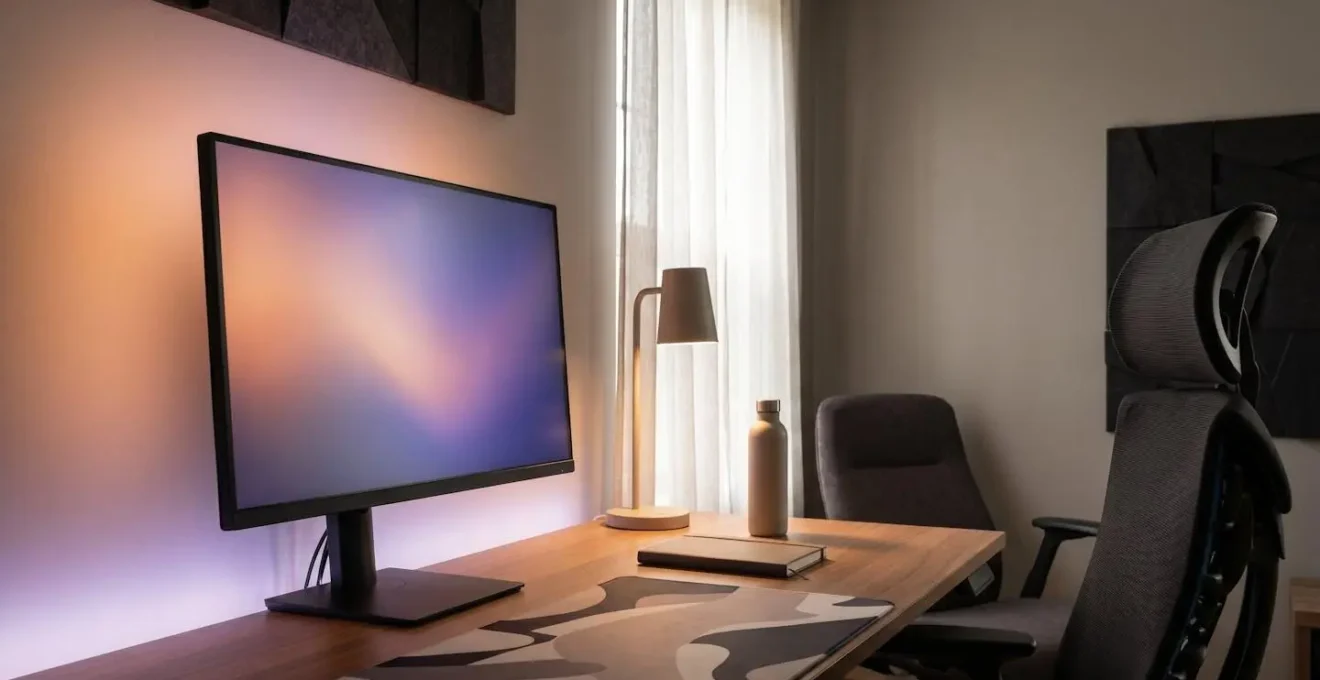
This ergonomic setup—with its bias lighting, proper screen height, and clean workspace—is not just for gamers. It is the blueprint for any healthy, sustainable screen-based workstation. The lessons from these extreme use-cases directly inform the best practices for the chronic, daily exposure of office life.
Begin today by implementing one of these environmental or behavioral changes. The first step to restoring your corneal health is taking control of your immediate ecosystem, turning your workspace from a source of strain into a sanctuary for your vision.