
When your child has pink eye, stopping it from infecting the entire family isn’t about gentle suggestions; it’s about implementing a strict household containment protocol. This guide moves beyond simply ‘washing hands’ to establish a clear system for managing hygiene, identifying contamination hotspots, and knowing precisely when it’s safe to return to school or work, treating your home with clinical-level seriousness to break the cycle of infection.
That moment of dread is familiar to so many parents: your child wakes up with a red, sticky, and unhappy eye. Your first thought is conjunctivitis, or “pink eye,” and your second is how to stop this from spreading to everyone else in the house. The usual advice—wash hands, don’t share towels—is a good start, but it often fails because it lacks a rigorous system. An outbreak at home isn’t a minor inconvenience; it disrupts school, work, and sleep, turning the entire household upside down.
The key to managing a conjunctivitis outbreak isn’t just a list of tips; it’s a change in mindset. You must establish a household containment protocol, treating your home with the same diligence as a clinical setting. This means understanding the critical differences between a gooey, bacterial infection and a watery, viral one, as they dictate both treatment and how long someone is contagious. It means identifying and decontaminating hidden infection hotspots that go far beyond the bathroom towel.
But if the real strategy isn’t just about avoiding towels, but about implementing a full-scale hygiene protocol, what does that actually look like? This guide provides that system. We will break down the essential steps, from the correct way to clean a crusted eye without spreading germs, to the non-negotiable rules for school and work, and the often-overlooked makeup purge that prevents reinfection. By following this structured approach, you can move from anxiously reacting to an infection to confidently containing it.
This article details the practical, evidence-based steps to manage conjunctivitis at home and prevent it from spreading. Explore the sections below to build your effective household containment protocol.
Summary: Bacterial vs. Viral Conjunctivitis: A Household Containment Guide
- Why Are Your Child’s Eyes Sticky in the Morning but Clear During the Day?
- How to Clean a Crusted Eye Without Causing Further Irritation?
- School or Home: Which Symptoms Require Keeping Your Child Off Class?
- The Towel Mistake That Infects the Whole Family Within 24 Hours
- When Is It Safe to Return to Work After a Viral Eye Infection?
- Why Do Cold Compresses Provide Immediate Relief for Allergic Pink Eye?
- Why Does Mascara Become a Bacterial Breeding Ground After 3 Months?
- Pink Eye Remedies: What Works at Home Before Calling Your GP?
Why Are Your Child’s Eyes Sticky in the Morning but Clear During the Day?
Waking up to find your child’s eyelids sealed shut with a sticky discharge is alarming, but seeing their eyes look clearer by midday can be confusing. This pattern is a classic sign of conjunctivitis and doesn’t mean the infection is gone. The “sticky eye” effect is most prominent after sleep because discharge accumulates when the eyes are closed and not blinking. During the day, the natural action of blinking helps to temporarily flush away discharge, giving a false impression of improvement.
It’s crucial to observe the type of discharge, as it’s the most reliable initial clue to the cause. Think of it as a simple symptom triage. A thick, yellow or greenish, pus-like discharge that makes the eyelids feel glued together is a hallmark of bacterial conjunctivitis. In contrast, viral conjunctivitis typically produces a clear, watery discharge with minimal crusting, often accompanied by a gritty or burning feeling. If the primary symptom is intense itching with a watery, sometimes stringy white mucus, it’s more likely to be allergic conjunctivitis.
Understanding this difference is vital because it affects how long your child is contagious. A child with clearer eyes during the day is still infectious. The blinking is merely cosmetic; it doesn’t stop the virus or bacteria from spreading. It’s important to remember that contagiousness persists for the duration of the infection. For viral cases, this can be for as long as 10 to 14 days from the onset of symptoms, even if the eye looks better in the afternoon.
Therefore, never use the “clearer eye” test as a reason to send a child back to school or relax your hygiene protocol. The infection is still active and requires consistent management.
How to Clean a Crusted Eye Without Causing Further Irritation?
Cleaning a sore, crusted eye requires a gentle touch and a strict method to avoid making things worse. The goal is twofold: provide comfort and prevent cross-contamination, either to the other eye or to another person. Rubbing or picking at the crusts can scratch the delicate skin of the eyelid and introduce more bacteria. The correct technique is about softening, not scrubbing. A gentle, methodical approach is the only safe way to manage discharge.
Before you begin, wash your hands thoroughly. The first step is to lay a clean, warm, damp washcloth over the closed eye. Let it rest for two to three minutes. This warmth and moisture will soften the dried crusts, allowing them to be wiped away without any harsh friction. It’s a simple but critical step to ensure the process is painless and non-irritating for your child.
This image demonstrates the gentle contact required for safe eye cleaning.
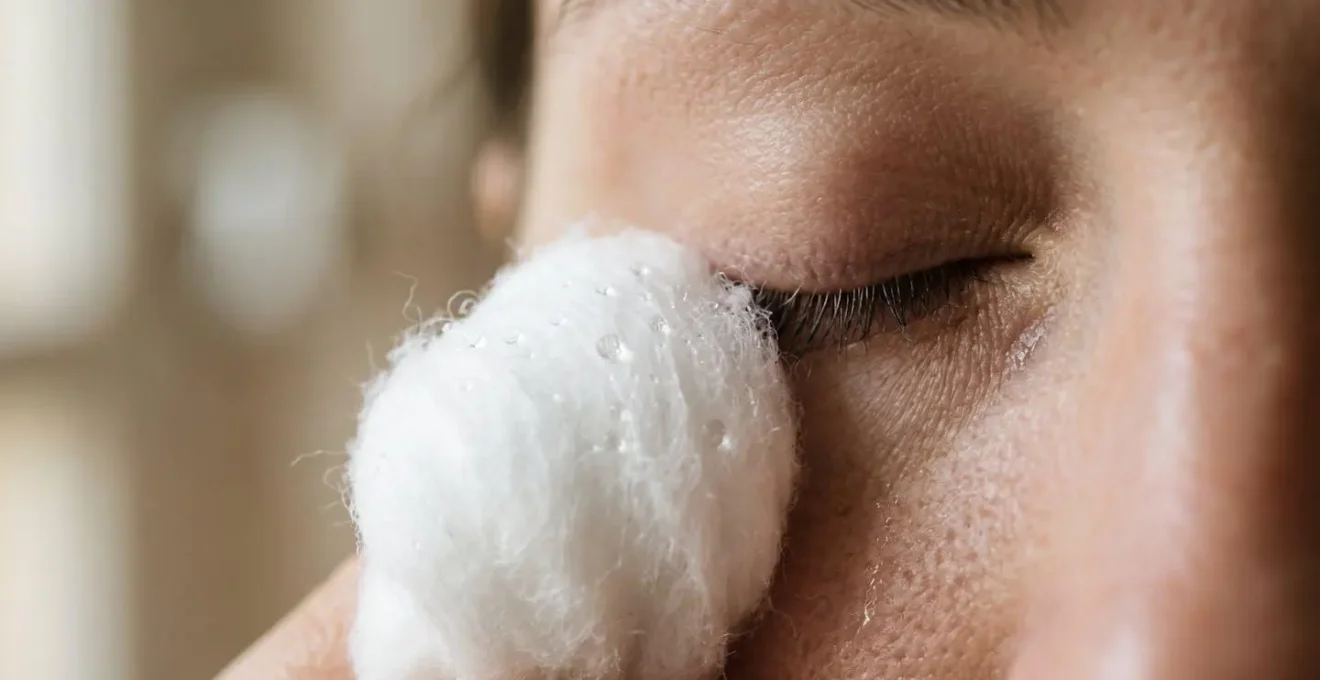
Once the crusts are softened, the wiping technique is paramount. Use a fresh cotton ball or a clean section of the washcloth for a single wipe, moving gently from the inner corner of the eye (near the nose) to the outer corner. This one-way direction prevents you from dragging germs back across the eye. Immediately discard the used cotton ball. If using a washcloth, fold it to use a fresh section for each wipe. Never, under any circumstances, use the same cotton ball or cloth on both eyes—this is a primary way cross-contamination occurs.
Your Action Plan: Safe Eye Cleaning Protocol
- Soak to Soften: Lay a clean, warm, damp washcloth over the closed eye for 2-3 minutes to soften dried crusts without friction.
- Wipe Directionally: Using a fresh cotton ball, wipe gently from the inner corner (near the nose) to the outer corner in a single, smooth motion.
- Discard Immediately: Use each cotton ball only once, then discard. Never reuse it or use it on the other eye.
- Maintain Hand Hygiene: Wash hands thoroughly with soap and water for at least 20 seconds before and after cleaning the eye.
- Separate Materials: If both eyes are affected, use completely separate washcloths or sets of cotton balls for each eye to prevent cross-contamination.
After cleaning, wash your hands again. Any washcloths used must be placed directly into the laundry and washed in hot water with detergent to kill any lingering pathogens.
School or Home: Which Symptoms Require Keeping Your Child Off Class?
Deciding whether to keep your child home from school with conjunctivitis is a common dilemma for parents. The answer isn’t a simple “yes” or “no”; it depends on the type of infection and your child’s ability to manage their symptoms. As a school nurse, my primary concern is preventing an outbreak. Therefore, the rules are strict but clear: a child with an active, contagious infection must stay home until they are no longer a risk to others.
The guidance varies based on the suspected cause. For bacterial conjunctivitis, which is typically identified by a GP and treated with antibiotic eye drops or ointment, the rule is straightforward. Your child may usually return to school 24 hours after starting effective antibiotic treatment, provided their symptoms are improving. For viral conjunctivitis, the most common type, there is no antibiotic cure. The body’s immune system must fight off the virus. In this case, your child should stay home until the discharge is minimal, the redness has significantly faded, and—most importantly—they are old enough and able to reliably avoid touching their eyes and face. This typically takes around 5 to 7 days.
Beyond the type of infection, consider the functional criteria. Is there still active, weepy discharge or pus? If so, they stay home. Do they feel unwell, have a fever, or show other signs of illness? If yes, they stay home, regardless of how their eye looks. A child must be well enough to participate in normal school activities without requiring one-on-one care or posing a risk to classmates and staff. It’s also worth noting that school policies themselves can differ. In fact, a 2022 survey revealed significant variation, with 15 of 50 US states having no policies at all, while others require physician approval to return.
When in doubt, always err on the side of caution. Contact your child’s school or daycare to confirm their specific policy, and consult your GP if you are unsure about the symptoms. Keeping your child home for an extra day is far better than being the source of a classroom-wide outbreak.
The Towel Mistake That Infects the Whole Family Within 24 Hours
The single shared hand towel in the family bathroom is the most common cross-contamination vector in a household conjunctivitis outbreak. A person with an infected eye touches or wipes it, uses the towel, and the virus or bacteria is then readily transferred to the next person who uses it. This simple mistake can cause the infection to sweep through an entire family in as little as 24 hours. Stopping the spread requires you to identify and isolate all shared fabric “contamination hotspots.”
Your first action must be to remove all shared towels from use. Immediately implement a strict, color-coded towel system, assigning a specific hand towel and bath towel to every member of the household. The infected person’s towels must be kept separate and washed daily in hot water with a good detergent. This rule is non-negotiable. Do not assume a towel “looks clean.” Adenovirus, a common cause of viral conjunctivitis, can survive on dry surfaces for weeks.
The protocol extends beyond towels. All shared fabrics that come into contact with faces or hands are potential risks. This includes:
- Pillowcases: The infected person’s pillowcase must be changed daily and washed in hot water. Do not allow anyone else to use their pillow or bed.
- Shared Blankets and Throws: Remove decorative cushions and shared blankets from sofas in common areas. Quarantine them until the infection has cleared.
- Stuffed Animals: A child’s favourite teddy bear can be a major contamination hotspot. Isolate stuffed toys that have been in contact with your child during the illness.
An organised bathroom with separate towels for each family member is a visual representation of an effective containment strategy.

For eye cleaning, it is safest to use disposable cotton balls instead of reusable washcloths. If you must use a washcloth, it must be used once and then immediately placed in the hot wash. Treating every fabric surface as a potential risk is the only way to effectively break the chain of transmission.
When Is It Safe to Return to Work After a Viral Eye Infection?
Just as with children, an adult with conjunctivitis must consider when it is safe to return to the workplace to avoid infecting colleagues. The decision depends heavily on two factors: the type of infection and the nature of your work environment. Viral conjunctivitis, the most common form in adults, is highly contagious and spreads easily in close-quarters settings. Medical sources indicate that viral conjunctivitis remains contagious for 10-12 days from onset, as long as the eyes are red and producing discharge.
Your return-to-work timeline should be based on a risk assessment of your job. If you work in a private office with minimal human contact, you may be able to return sooner, typically once the discharge is minimal and symptoms are clearly improving (around 5-7 days). However, if you work in an open-plan office, the risk is higher. You should wait until there is no active discharge and redness is significantly reduced, which could be closer to 7-10 days. Strict hand hygiene is absolutely essential in this environment.
For those in high-risk professions, the rules are much stricter. If you work in healthcare, food service, or childcare, you have a professional responsibility to prevent transmission. You should not return to work until you are completely asymptomatic, which may take the full 10-14 days. Your employer may also require a note from your GP clearing you to return. This is to protect vulnerable patients, customers, and children.
The following table provides a general guideline for returning to work, but you should always prioritise public health and follow your company’s specific policies.
| Work Environment | Bacterial Conjunctivitis | Viral Conjunctivitis | Risk Level |
|---|---|---|---|
| Private office (minimal contact) | Return 24-48 hours after starting antibiotics | Return when eye discharge is minimal and symptoms improving (5-7 days) | Low |
| Open-plan office | Return 48 hours after starting antibiotics; practice strict hand hygiene | Return when no active discharge and redness significantly reduced (7-10 days) | Moderate |
| Food service / Healthcare | Return 48-72 hours post-antibiotics with medical clearance | Return only when completely asymptomatic (10-14 days); may require physician note | High |
| Contact lens wearers (any environment) | Wait 24-48 hours after symptoms completely resolve before reinserting lenses | Wait 24-48 hours after symptoms completely resolve before reinserting lenses | Extended quarantine required |
If you wear contact lenses, do not resume wearing them until at least 24-48 hours after all symptoms have completely resolved. Discard the lenses and case you were using when the infection started. When in doubt, work from home if possible and consult your GP for personalised advice.
Why Do Cold Compresses Provide Immediate Relief for Allergic Pink Eye?
For the intense itching and swelling of viral or allergic conjunctivitis, a cold compress can feel like a miracle. This immediate relief isn’t just a placebo effect; it’s based on a physiological process called vasoconstriction. When you apply a cold temperature to the skin, the superficial blood vessels in that area narrow. In the eye, this physically reduces the flow of blood and, with it, the inflammatory mediators like histamines that are causing the redness, swelling, and itching.
This mechanism is why a cold compress is the recommended choice for viral and allergic cases. It directly counteracts the body’s inflammatory response, providing significant symptom relief within about 10-15 minutes of application. Conversely, a warm compress is reserved for bacterial conjunctivitis. In that case, the goal isn’t to reduce inflammation but to help liquefy the thick, purulent discharge, which helps unblock glands and improve drainage from the eye. Using the wrong temperature compress can be counterproductive; a warm compress on an already inflamed allergic eye can increase blood flow and make the itching and swelling worse.
To use a compress safely and effectively, you must follow best practices. Always use a clean, soft cloth for each application. For a cold compress, use one that has been refrigerated, not frozen, and always place a protective layer (like another thin, clean cloth) between the cold pack and the skin to prevent an ice burn. Apply it with gentle weight only—never press firmly on the eyeball itself. The compress should be applied for 10-15 minutes at a time, several times a day as needed for comfort.
Hygiene remains paramount. Use a fresh, clean cloth for every single application and wash it in hot water immediately afterwards. This simple, evidence-based home remedy, when used correctly, is one of the most effective tools for managing the discomfort of conjunctivitis while your body or the medication does the work of clearing the infection.
Why Does Mascara Become a Bacterial Breeding Ground After 3 Months?
Eye makeup, particularly liquid or cream-based products like mascara and eyeliner, represents a significant and often overlooked risk for eye infections. The dark, moist environment inside a mascara tube is a perfect breeding ground for bacteria. Every time you use the wand, it picks up natural bacteria from your eyelashes and skin and introduces it back into the tube. Over time, this bacteria multiplies. This is why ophthalmologists recommend replacing your mascara every three months, even if it’s not empty.
If you develop conjunctivitis, this risk escalates dramatically. Any makeup or tool that touched your eyes immediately before or during the infection is now contaminated with a high load of the infectious virus or bacteria. Continuing to use these products is a guaranteed way to cause reinfection or prolong the initial illness. After an eye infection, a “decontamination purge” of your makeup bag is not optional; it is a critical step in your recovery and prevention plan.
Your post-infection makeup protocol must be ruthless. There is no safe way to sanitize liquid products. You must immediately discard:
- Any mascara, liquid eyeliner, or gel eyeliner used during the infection.
- Any cream eyeshadows or eye creams that you apply with your fingers.
- Any makeup applicators or brushes that touched the infected eye.
For other products, some sanitisation is possible. Eye pencils can be sharpened to expose a fresh, uncontaminated surface. Pressed powder eyeshadows can be sanitised by gently wiping the top layer with a tissue soaked in 70% isopropyl alcohol. However, when in doubt, it is always safer to throw it out. The cost of replacing a mascara is negligible compared to the discomfort and risk of another round of infection.
Your Checklist: Post-Infection Makeup Purge
- Discard Liquids: Immediately throw away any mascara, liquid/gel eyeliner, and cream eye products used within the two weeks prior to and during the infection.
- Sanitize Pencils & Powders: Sharpen eye and lip pencils to create a new, clean surface. Gently wipe the top layer of pressed powder products with 70% isopropyl alcohol.
- Replace Brushes: Discard any makeup brushes, sponges, or applicators that touched the infected area. Attempting to wash them carries a high risk of residual contamination.
- Address Contact Lenses: Throw away the contact lenses and the storage case you were using when the infection began. Open a fresh pair only after all symptoms have completely resolved for 24-48 hours.
- Check Timelines: Your purge should include makeup used up to two weeks before symptoms appeared, as contamination can precede the visible signs of infection.
Finally, do not apply any eye makeup at all until the infection is completely gone and your eyes have been clear for at least 24-48 hours. This allows the delicate surface of your eye to fully heal without irritation or risk of reinfection.
Key Takeaways
- Differentiate symptoms: A thick, yellow/green discharge suggests bacterial conjunctivitis, while a clear, watery discharge points to viral.
- Implement strict hygiene: Use a color-coded towel system and change pillowcases daily to prevent household spread. Wash all contaminated fabrics in hot water.
- Follow quarantine rules: Keep children home for 24 hours after starting antibiotics for bacterial cases, and for 5-7 days (or until symptoms subside) for viral cases.
Pink Eye Remedies: What Works at Home Before Calling Your GP?
When conjunctivitis strikes, the first instinct is often to seek immediate medical help. However, for most common cases, particularly viral conjunctivitis, the foundation of treatment is supportive home care. The goal is to manage symptoms, provide comfort, and meticulously prevent the spread while your immune system does the work of clearing the virus. Knowing which home remedies are safe and effective—and which are dangerous—is essential before you decide to call your GP.
The safest and most effective home care strategies focus on soothing the eye and maintaining strict hygiene. Preservative-free artificial tears are a cornerstone of this approach. Used 4-6 times a day, they help to lubricate the irritated eye and flush out viral particles or allergens. They are safe for all types of conjunctivitis. This should be combined with correct compress therapy: cold compresses for the inflammation of viral and allergic cases, and warm compresses to loosen discharge in bacterial cases. Finally, diligent environmental hygiene—disinfecting high-touch surfaces like doorknobs, phones, and remote controls twice daily—is crucial to stop the household re-infection cycle.
It is equally important to know what to avoid. The internet is filled with “natural” remedies that are ineffective and potentially harmful. You should never put breast milk, tea bags, colloidal silver, or honey in an infected eye. These substances are not sterile and can introduce new bacteria, cause allergic reactions, or create permanent skin damage. Sticking to evidence-based care is the only safe path.
This table summarises which remedies are safe and which you must avoid.
| Remedy | Status | Rationale |
|---|---|---|
| Preservative-free artificial tears | ✓ SAFE | Provides lubrication, flushes irritants, no risk of contamination or allergic reaction |
| Cold/warm compresses (clean cloth) | ✓ SAFE | Reduces inflammation (cold) or loosens discharge (warm) when applied correctly with clean materials |
| Frequent handwashing | ✓ SAFE | Essential prevention measure; reduces transmission and prevents secondary infection |
| Breast milk | ✗ DANGEROUS | No proven antibacterial efficacy; introduces new bacteria and potential pathogens to infected eye |
| Tea bags (chamomile, green tea) | ✗ DANGEROUS | Risk of allergic reaction, chemical irritation, and introduction of contaminants; no clinical evidence of benefit |
| Colloidal silver | ✗ DANGEROUS | Can cause permanent blue-gray skin discoloration (argyria); FDA warns against use; no proven efficacy |
| Honey or sugar solutions | ✗ DANGEROUS | Can introduce bacteria, cause severe irritation, potentially worsen infection |
You should call your GP if symptoms are severe, if there is significant eye pain or a change in vision, if a newborn has symptoms, or if a bacterial infection does not improve after 48 hours of antibiotic treatment. By using this triage approach, you can confidently manage most cases at home while knowing exactly when to escalate for professional medical care.