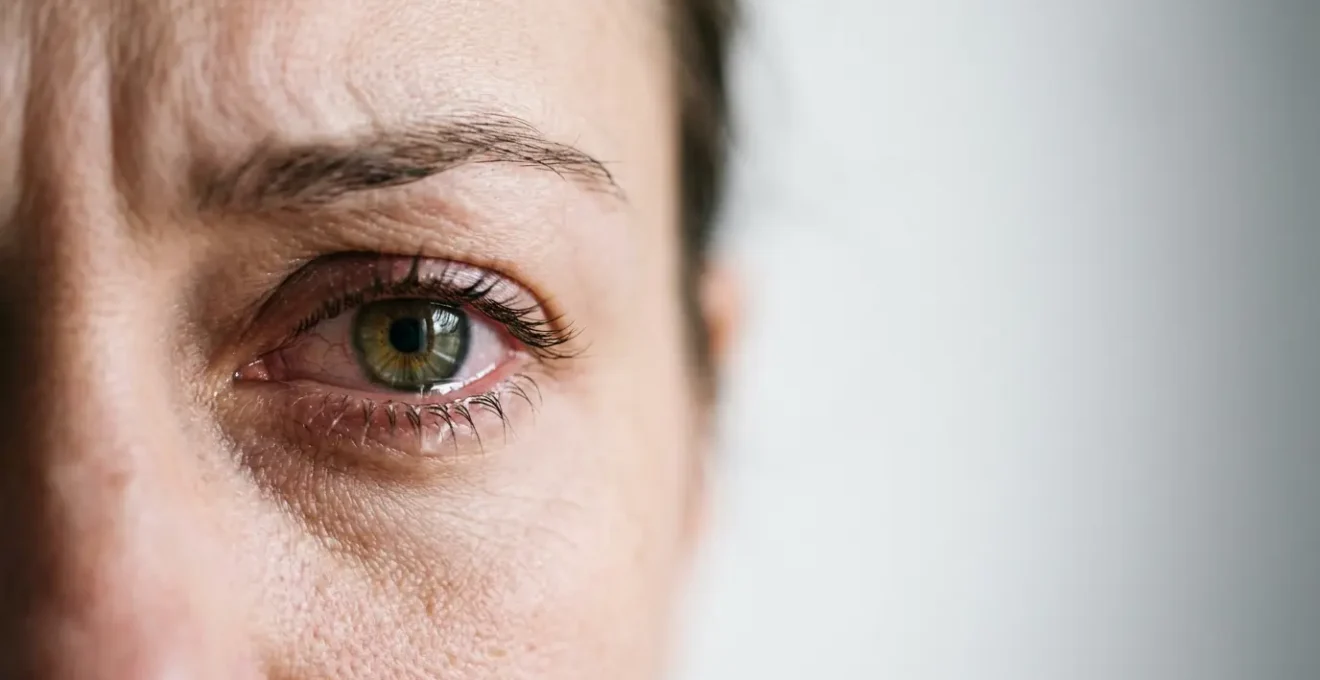
Contrary to the hope that it’s just “bad irritation,” the severe, sharp pain associated with a contact lens is a biological red alert. This isn’t a minor issue to be solved with rewetting drops; it is your cornea, one of the most sensitive parts of the human body, signaling a potential breach by dangerous pathogens. Ignoring this warning, even for a few hours, can be the difference between a full recovery and permanent vision loss.
That sharp, searing, light-sensitive pain hits you suddenly. It’s not the familiar feeling of a dry lens or a speck of dust. This is different. This is aggressive. Your first instinct might be to rub your eye, add more solution, or just try to power through it, hoping it will resolve itself. Many believe that proper lens hygiene is the only major factor in eye health, and if they’ve been “mostly good,” it can’t be anything serious.
The common advice to “clean your lenses better” or “don’t wear them for too long,” while true, fails to capture the gravity of this specific moment. This is because it misinterprets the very nature of the signal your body is sending. The critical mistake is treating this acute pain as a simple irritation when it is, in fact, a sophisticated and urgent alarm system screaming that your eye’s primary defense has been compromised.
But what if the intensity of that pain wasn’t the problem, but the most important piece of information you could receive? This guide is written from the perspective of a corneal specialist to help you decode that alarm. We will move beyond generic advice to explain the precise biological reasons behind the pain, the specific pathogens linked to common hygiene mistakes, and the non-negotiable actions required to handle a vision-threatening emergency. This isn’t just about discomfort; it’s about understanding a crisis in real time to save your sight.
To navigate this critical situation, we will explore the underlying mechanisms of corneal pain and provide a clear, step-by-step emergency protocol. The following sections are designed to give you the clarity and confidence to act decisively.
Summary: Contact Lens Keratitis: The Painful Warning Sign You Must Never Ignore?
- Why Is Corneal Pain So Much More Intense Than Normal Irritation?
- How to Remove a Lens Stuck on a Painful Eye Safely?
- Fungal or Bacterial: Which Infection Is Linked to Improper Lens Storage?
- The Showering Mistake That Introduces Acanthamoeba into Your Eye
- When Can You Wear Lenses Again After a Corneal Ulcer Heals?
- Why Do Your Eyes Need Oxygen Even When You Are Asleep?
- Why Do Preservatives in Multipurpose Solutions Irritate Some Eyes?
- Sleeping in Contact Lenses: Why One Night Can Cost You Your Vision?
Why Is Corneal Pain So Much More Intense Than Normal Irritation?
The excruciating pain of keratitis isn’t an exaggeration; it’s a direct consequence of your cornea’s unique anatomy. Think of it as your body’s most sensitive tripwire. Unlike skin, which has a distributed network of nerves, the cornea is packed with an astonishing number of sensory nerve endings. In fact, research demonstrates that the cornea has a 300 to 600 times higher nerve density than skin, making it the most powerfully innervated tissue in the human body.
This is an evolutionary defense mechanism. The cornea has no blood vessels, so it cannot swell or bleed easily to signal injury. Instead, it uses this dense web of nerves to send an overwhelming pain signal at the slightest disruption. A minor scratch, or epithelial breach, that would be trivial on your hand becomes a source of agonizing pain on your eye. This breach is an open door for microorganisms.
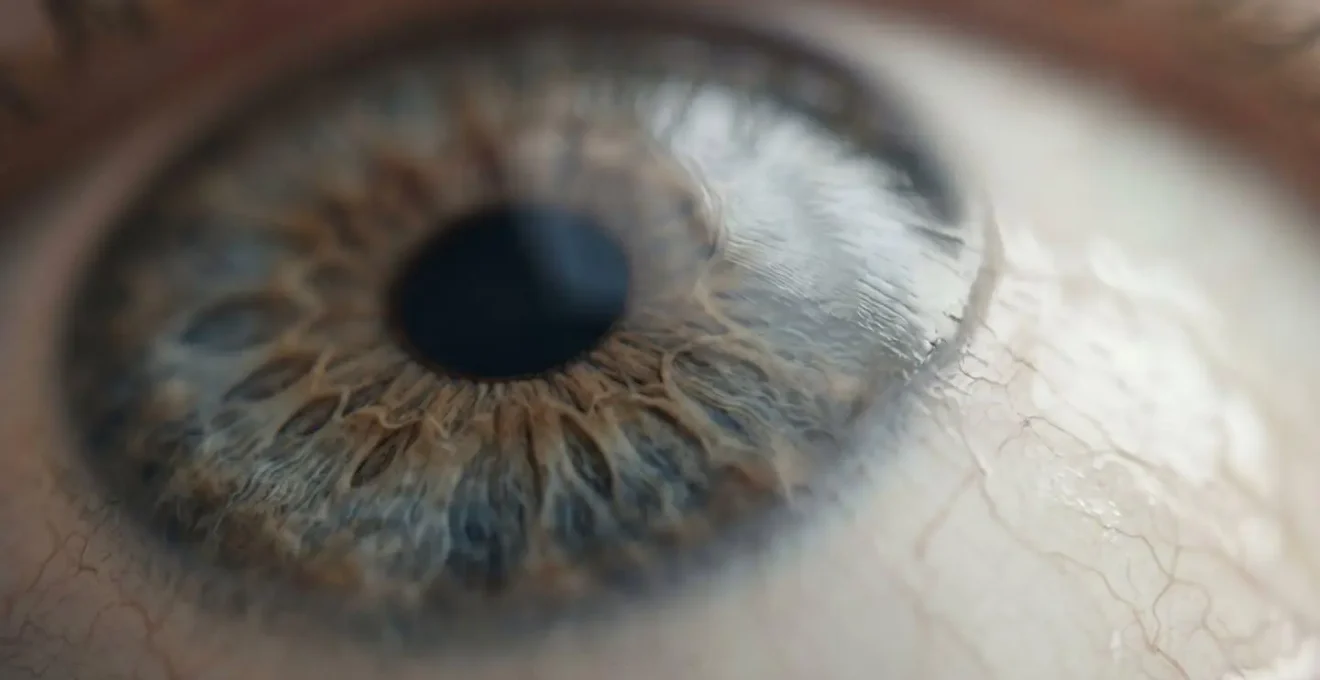
When an infection like keratitis begins, pathogens invade this breached surface, directly irritating these thousands of nerve fibers. The body’s inflammatory response further amplifies the signals, leading to the classic symptoms of intense pain, extreme light sensitivity (photophobia), and the constant sensation of a foreign body. This is not “irritation.” It is your body’s maximum-volume alarm, signaling a direct threat to a delicate and irreplaceable structure. The intensity of the pain is directly proportional to the seriousness of the warning.
How to Remove a Lens Stuck on a Painful Eye Safely?
When your eye is in severe pain, the instinct to immediately rip the contact lens out is strong, but this can cause more harm. An inflamed cornea is fragile, and aggressive removal can worsen an epithelial abrasion, deepening the gateway for infection. If a lens feels stuck, it’s often due to extreme dryness and inflammation. You must proceed with a calm, methodical approach. Do not panic. The goal is to rehydrate the lens so it can be removed without causing further trauma to the corneal surface.
Follow the “PAUSE” method, a safe emergency procedure. If at any point the pain intensifies or the lens will not budge after two gentle attempts, STOP immediately. Do not force it. Leave the lens in and seek immediate emergency medical care. Trying to be a hero can cost you your vision.
Your Action Plan: The PAUSE Method for Emergency Lens Removal
- Prepare: Wash your hands thoroughly with soap and water, then dry them completely with a lint-free towel. Move to a well-lit area with a mirror.
- Add moisture: Apply a generous amount of preservative-free artificial tears or sterile saline solution directly into the affected eye. Close your eye and wait 2-3 minutes for the lens to rehydrate and loosen its grip on the inflamed cornea.
- Use pads: Only use the soft pads of your fingertips—never your fingernails. Your nails can easily scratch the cornea. Gentle, steady pressure is the key to avoiding more damage.
- Slide: Gently press on the edge of the lens and try to slide it off the central cornea and onto the white of the eye (the sclera). It is much safer to pinch and remove the lens from this less sensitive area.
- Extract: Once on the sclera, gently pinch the lens between your thumb and forefinger to remove it. If the lens does not move easily, STOP. This is a critical sign that you need professional help.
Once the lens is out, do not discard it. Place it in its case with solution, as it may be needed for laboratory analysis to identify the infectious agent. Do not, under any circumstances, put a new lens in. Your eye needs to be assessed by a professional immediately.
Fungal or Bacterial: Which Infection Is Linked to Improper Lens Storage?
While various pathogens can cause keratitis, improper lens storage is overwhelmingly linked to one primary culprit: bacteria. In fact, clinical evidence shows that up to 90% of contact lens-associated keratitis cases are bacterial infections, with Pseudomonas aeruginosa being the most common and aggressive offender. This bacterium thrives in damp environments and is notoriously difficult to eradicate once it establishes a foothold.
The link to storage is the formation of a biofilm matrix. This is a slimy, protective shield that bacteria build inside your contact lens case. Simply rinsing the case is not enough to break down this matrix. Bacteria embed themselves within it, protected from the disinfecting solution. When you place your lens in the case, it becomes contaminated. The next day, you are placing a lens covered in an organized colony of aggressive bacteria directly onto your eye.
Fungal keratitis, while less common, is often linked to environmental exposure (like a vegetative injury to the eye) but can also result from poor storage hygiene, especially if tap water is used to rinse the case. However, the day-to-day risk from topping off old solution or failing to physically clean the case is predominantly bacterial. As medical researchers on biofilm prevention emphasize, the mechanical action of cleaning is non-negotiable.
physically rubbing the case is as crucial as rubbing the lenses
– Medical researchers on biofilm prevention, Contact Lens–Associated Keratitis—an Often Underestimated Risk
This is why the “rub and rinse” technique is vital for both the lenses and the case. You must physically disrupt the biofilm before the disinfectant can do its job. Failing to do so is like trying to wash a greasy pan without a sponge—the grime remains.
The Showering Mistake That Introduces Acanthamoeba into Your Eye
Beyond bacteria, there is a far more insidious threat lurking in a place you perceive as clean: your water supply. Showering, swimming in pools, or using a hot tub while wearing contact lenses is one of the most dangerous things a wearer can do. This is because it exposes your eyes to Acanthamoeba, a free-living amoeba that causes a rare but devastating and notoriously difficult-to-treat form of keratitis.
While anyone can be infected, the risk is astronomically higher for contact lens wearers. The lens acts like a sponge, trapping the amoeba against the cornea and giving it time to invade. Epidemiological studies confirm that over 80% of Acanthamoeba keratitis occurs in contact lens wearers. The amoeba exists in two forms: an active trophozoite and a dormant, highly resistant Acanthamoeba cyst. Standard chlorine levels in tap water and pools are not sufficient to kill this cyst form, making any water exposure a significant risk.
Case Study: The Iowa Acanthamoeba Outbreak
An analysis of an outbreak in Iowa provides a chilling real-world example of this risk. Among 63 affected contact lens wearers, 17.5% reported showering while wearing their contacts. This, along with swimming in lakes, was identified as a primary risk factor. The diagnosis was often delayed because the initial symptoms mimic other infections, giving the amoeba time to burrow deep into the corneal tissue. The outcome was catastrophic: due to the difficulty in treatment and delayed diagnosis, 41.3% of patients in this group became legally blind in the affected eye.
This is not a theoretical danger. The simple, thoughtless act of stepping into the shower with your lenses in creates a perfect storm for an infection that can lead to months or years of painful treatment and, all too often, permanent vision loss or the need for a corneal transplant.
When Can You Wear Lenses Again After a Corneal Ulcer Heals?
After the intense treatment for a corneal ulcer, the desire to return to the convenience of contact lenses is understandable. However, this is one of the most critical phases for preventing a recurrence. The answer to “when” is simple and absolute: only when your ophthalmologist gives you explicit clearance. There is no standard timeline, as it depends entirely on the severity of the infection, the extent of any scarring, and the complete healing of the corneal surface.
The healing process is complex. The cornea must undergo epithelial regeneration, where new cells grow to cover the defect left by the ulcer. This new surface is initially fragile and more susceptible to reinjury or infection. Resuming lens wear prematurely can easily cause a new epithelial breach, creating a pathway for another infection, which is often more aggressive than the first. Your eye doctor will use a special dye (fluorescein) and a slit-lamp microscope to confirm that the epithelium is fully intact and stable before even considering a return to lens wear.
Furthermore, the infection may have altered the shape of your cornea or left a scar that affects vision and lens fit. A new contact lens fitting is almost always required. Your doctor may recommend switching to a different type of lens, such as daily disposables, to minimize the risks associated with storage and hygiene. In some cases, especially after severe scarring or with Acanthamoeba, your doctor may advise against ever wearing soft contact lenses again. Heeding this advice is paramount.
Why Do Your Eyes Need Oxygen Even When You Are Asleep?
Your cornea is a unique living tissue: it has no blood vessels. To stay healthy and clear, it gets most of its oxygen directly from the atmosphere when your eyes are open. A contact lens, even a modern, highly breathable one, acts as a partial barrier, reducing this oxygen supply. During the day, this reduction is usually manageable. At night, everything changes for the worse.
When you close your eyelids to sleep, the oxygen supply to your cornea is already naturally reduced, coming only from the tiny blood vessels on the back of your eyelids. Placing a contact lens in this environment creates a state of profound oxygen deprivation, known as corneal hypoxia. This is not a passive state; it is an active assault on your eye’s defenses. One eye care professional memorably described the danger with a powerful analogy.
Your cornea breathes from the front. Closing your eye with a lens on top is like putting a wet pillow over your face
– Eye care professionals on corneal hypoxia, Contact Lens Complications – EyeWiki
This “suffocation” weakens the corneal epithelium, making it less resilient and more prone to microscopic breaks. These tiny openings become perfect entry points for any bacteria that might be on the lens. Hypoxia also creates a warmer, more stagnant environment under the lens, which is an ideal breeding ground for pathogens like Pseudomonas. Essentially, you are simultaneously weakening your eye’s defenses while creating a perfect incubator for its enemies.
Why Do Preservatives in Multipurpose Solutions Irritate Some Eyes?
Multipurpose solutions are a marvel of convenience, designed to clean, disinfect, and store lenses with a single product. To achieve this, they contain preservatives that kill microorganisms. However, for some individuals, these very preservatives can become a source of chronic irritation, redness, and discomfort, a condition known as solution-induced corneal staining (SICS) or preservative-associated toxicity.
The problem is one of accumulation. Every time you store your lenses, they absorb a small amount of these preservative chemicals. When you wear the lenses, these chemicals are slowly released onto your eye’s surface throughout the day. For most people, this is not an issue. But for those with sensitive eyes, this constant, low-grade chemical exposure can damage the superficial cells of the cornea, leading to symptoms that mimic dry eye or a mild infection. This creates a confusing clinical picture and can even increase susceptibility to a real infection.
The issue is compounded by widespread non-compliance with hygiene instructions. A comprehensive survey of nearly 1,000 contact lens wearers found that only 1% follow all hygiene directions correctly. This includes critical steps like rubbing lenses, using fresh solution every time (no “topping off”), and replacing the case regularly. When users fail to follow these steps, they not only increase their infection risk but can also exacerbate preservative-related irritation. If you experience persistent irritation despite good hygiene, switching to a preservative-free hydrogen peroxide-based system, under the guidance of your eye doctor, is often the solution.
Key Takeaways
- Pain is an Emergency Signal: Intense, sharp pain in a contact-wearing eye is not “irritation.” It is a direct signal of a potential corneal breach and a vision-threatening emergency.
- Water is the Enemy: Never allow tap water, shower water, or pool water to come into contact with your lenses. It contains Acanthamoeba, a pathogen that can cause devastating and permanent vision loss.
- Never Sleep in Lenses: Sleeping in lenses, even for one night, drastically increases your risk of severe infection by “suffocating” the cornea and creating a perfect breeding ground for bacteria.
Sleeping in Contact Lenses: Why One Night Can Cost You Your Vision?
Of all the risk factors associated with contact lens wear, one stands alone as the single most dangerous and yet most common mistake: sleeping in your lenses. This includes everything from an accidental overnight doze to intentionally using “extended wear” lenses. The science is unequivocal. This one habit is a gamble with your eyesight, where the odds are heavily stacked against you.
The core of the danger lies in the combination of corneal hypoxia and bacterial proliferation we’ve discussed. You are systematically disabling your eye’s natural defenses while providing a warm, moist, and stagnant incubator for any pathogen present on the lens. The consequences are stark and measurable. Research from the U.S. Centers for Disease Control and Prevention (CDC) is not ambiguous on this point.
According to their findings, sleeping in contact lenses increases your risk of a serious corneal infection by 6 to 8 times. This isn’t a minor increase; it’s a dramatic multiplier that turns a low-probability event into a significant and predictable danger. It is the single greatest risk factor for developing microbial keratitis. Every night you sleep with lenses in, you are actively inviting a vision-threatening emergency.
The pain, potential for scarring, and risk of permanent vision loss from a corneal ulcer are not worth the minor convenience of not removing your lenses before bed. This is the ultimate, controllable risk factor. If you do nothing else, making the commitment to never sleep in your contacts again is the most important decision you can make for the long-term health of your eyes.
If you are experiencing any of the symptoms described—severe pain, light sensitivity, redness, or blurred vision—do not wait. Remove your lenses safely if possible and go to an ophthalmologist or an emergency room immediately. Your vision is not something to gamble on. This is the moment to act decisively.