
The question of whether optic nerve damage is “reversible” often misses the crucial point: the real power lies not in waiting for a cure, but in proactive strategies to protect remaining vision and adapt your life for continued independence.
- The optic nerve’s complexity and the formation of scar tissue currently prevent natural regeneration, unlike other body tissues.
- However, emerging research and targeted nutrients show significant promise in slowing decay, a concept known as “active neuroprotection.”
Recommendation: Shift your focus from “reversal” to “resilience.” Your most effective path forward is a combination of neuroprotective measures, home safety adaptations, and early low vision rehabilitation.
Receiving a diagnosis of optic nerve damage can feel like a door slamming shut. The word “permanent” echoes in your mind, and the future can suddenly seem uncertain and frightening. It’s a natural reaction to search desperately for a sign of hope, a possibility of reversal. Most medical advice focuses on the hard reality: the optic nerve, as part of the central nervous system, does not regenerate like skin or bone. This is the clinical truth, but it is not the end of the story.
This article is for you—the person grappling with this new reality. While we must be grounded in science, we will look beyond the simple “yes or no” of reversibility. The more empowering question is: “What can I do *now* to protect the vision I have, slow the progression, and live a full, independent life?” The answer is not a single miracle cure, but a multifaceted strategy built on understanding the biology, embracing neuroprotection, and making intelligent adaptations.
We will explore the scientific reasons behind the regeneration challenge, but more importantly, we will dive into the proactive steps you can control. From specific nutrients that support neural health to critical home modifications and the right time to seek rehabilitation, this guide will provide you with a realistic, evidence-based roadmap. It’s time to move from a place of fear to a position of informed action.
Summary: Is Optic Nerve Damage Reversible or Permanent in 2024?
- Why Can’t the Optic Nerve Regenerate Like Skin Tissue?
- Why Is Glaucoma Called the Silent Thief of Sight?
- The Blood Pressure Mistake That Accelerates Optic Nerve Decay
- Supplements for Nerves: Which Nutrients Actually Support Neural Health?
- Why Do Pastel Colours Become Invisible to Seniors With Yellowing Lenses?
- Adapting the Home for Aging Eyes: How to Prevent Falls for Seniors?
- How to Make Your Home Safer with Limited Peripheral Vision?
- When to Start Low Vision Rehabilitation for Maximum Independence?
Why Can’t the Optic Nerve Regenerate Like Skin Tissue?
To understand why optic nerve damage is such a challenge, we must first appreciate its complexity. It’s not a simple wire; it’s a dense bundle of over 1.5 million nerve fibers, each an extension of a retinal ganglion cell, transmitting visual data from your eye to your brain. When these fibers are damaged, they don’t just grow back. The primary obstacle is a biological process that, while designed to protect, ultimately prevents repair. After an injury, specialized cells called astrocytes rush to the site and form a dense, tangled web known as a glial scar. This scar tissue acts as a physical barrier, effectively blocking any attempt by the nerve axons to regrow and reconnect.

As this visual representation suggests, the glial scar is a formidable obstacle. However, this does not mean the scientific community has given up. On the contrary, understanding this barrier is the key to overcoming it. Researchers are exploring ways to dissolve or bypass this scar tissue, and some progress is being made in encouraging axon regrowth. This is where a glimmer of future hope resides, moving from simply managing damage to actively promoting repair.
Case Study: Nfe3 Protein Research
In a significant breakthrough, researchers at UConn School of Medicine demonstrated that a protein called Nfe3 could stimulate the regrowth of nerve cells in the damaged optic nerves of mice. By using gene therapy to introduce Nfe3, they observed individual nerve fibers beginning to regenerate. The results were comparable to the best-known regeneration factors but without the dangerous side effects of inflammation or tumor risk that have plagued other experimental therapies. This study provides a crucial proof-of-concept that regeneration is biologically possible if the right molecular switches are flipped.
Understanding this biological barrier is the first step toward empowerment. It explains the “why” behind the diagnosis and shifts the focus to the promising research aimed at overcoming it. For now, the most effective strategy remains protecting the nerve fibers that are still healthy.
Why Is Glaucoma Called the Silent Thief of Sight?
Glaucoma, a primary cause of optic nerve damage affecting an estimated 60 million individuals worldwide, earns its ominous nickname because it causes irreversible vision loss with almost no early symptoms. The damage begins in the peripheral (side) vision, an area we don’t consciously rely on for detailed tasks like reading. The brain, in its remarkable capacity to adapt, plays a central role in this deception. It actively “fills in” the missing information from the damaged areas, creating a complete picture from incomplete data. This process, known as cerebral compensation, means a person can lose a significant amount of peripheral vision without noticing anything is wrong.
The BrightFocus Foundation provides a clear explanation for this insidious process, highlighting the brain’s role in masking the early signs of damage:
Your brain tries to compensate by filling in the damaged areas. Because of this compensation, and the generally slow progression of glaucoma, you won’t notice changes to your vision.
– BrightFocus Foundation, Optic Nerve Regeneration Resource
This silent progression is precisely why regular, comprehensive eye exams are critical, especially for those with risk factors like family history or high intraocular pressure. By the time a person notices “tunnel vision” or begins bumping into things, a substantial and irreversible amount of nerve damage has already occurred. The theft has been committed, silently and slowly, over years. The key is not to wait for symptoms but to catch the thief before it can steal any more of your sight.
The Blood Pressure Mistake That Accelerates Optic Nerve Decay
When we think about optic nerve health, we often focus on eye pressure (IOP). However, another crucial factor is the blood flow that nourishes the nerve. The health of the optic nerve depends on a steady supply of oxygen and nutrients, governed by what is called ocular perfusion pressure (OPP). This is the difference between the arterial blood pressure flowing into the eye and the intraocular pressure pushing against it. If your OPP is too low, the nerve is effectively starved. This is where a common but dangerous mistake can occur, particularly for patients being treated for systemic hypertension.
The mistake is aggressive nocturnal blood pressure reduction. Many people take their hypertension medication in the evening to control blood pressure while they sleep. However, for a glaucoma patient, dropping blood pressure too low overnight (nocturnal hypotension) can be catastrophic for the optic nerve. While you sleep, your blood pressure naturally dips. If medication causes it to dip too far, your OPP can plummet, accelerating nerve decay. The goal is not just to lower eye pressure, but to maintain a healthy balance that ensures adequate blood flow. With data suggesting that glaucoma affects over 3 million Americans, half of whom are undiagnosed, many people may be inadvertently harming their optic nerves by managing their blood pressure without considering their ocular health.
It is absolutely essential to discuss the timing of your blood pressure medication with both your cardiologist and your ophthalmologist. They may recommend taking medication in the morning or even performing a 24-hour blood pressure monitoring test to ensure your OPP remains stable. This coordination between specialists is a vital part of a proactive neuroprotection strategy.
Supplements for Nerves: Which Nutrients Actually Support Neural Health?
In the quest for proactive strategies, many patients turn to supplements. While the market is flooded with claims, a few nutrients are backed by compelling scientific research for their role in active neuroprotection. This approach aims not to reverse damage, but to protect the remaining nerve cells from further decay. One of the most promising compounds in this area is Citicoline. It’s a naturally occurring compound in the body that is essential for synthesizing phospholipids, which are critical building blocks for nerve cell membranes. Essentially, Citicoline provides the raw materials to help keep nerve cells structurally sound and functional.
The research into its effects on glaucoma is particularly noteworthy. It appears to work through a mechanism entirely different from standard treatments that focus on lowering eye pressure. As Dr. Kevin C. Chan, the lead author of a key study, explains:
Citicoline protects against glaucoma through a mechanism different from that of standard treatments that reduce fluid pressure. Since glaucoma interrupts the connection between the brain and eye, we hope to strengthen it with new types of therapies.
– Dr. Kevin C. Chan, NYU Langone News (2021)
His research provided remarkable results, showing that in animal models of glaucoma, treatment with citicoline led to a reduction in nerve decay of up to 74 percent. Other nutrients often cited for neural health include Ginkgo Biloba, for its potential to improve blood flow to the optic nerve, and antioxidants like Vitamins C and E, which help combat oxidative stress. However, it is crucial to remember that no supplement can replace conventional medical treatment. Always consult with your ophthalmologist before starting any new supplement regimen to ensure it is safe and appropriate for your specific condition.
Why Do Pastel Colours Become Invisible to Seniors With Yellowing Lenses?
A common and often disorienting experience for older adults, which can be compounded by optic nerve issues, is a change in color perception. Specifically, light, soft colors like pale blues, lavenders, and light greens can become difficult or even impossible to distinguish. This isn’t just a function of nerve damage; it’s often caused by a natural aging process within the eye’s lens. Over decades, the clear, flexible lens of a young eye gradually hardens and takes on a yellowish or brownish tint. This process is similar to how a clear piece of plastic might yellow over time when exposed to sunlight.
This yellowed lens acts like a built-in filter, specifically blocking shorter wavelengths of light, which correspond to the blue and violet end of the color spectrum. As a result, the world can take on a sepia-toned hue. Colors that are a mix containing blue, like pastels, lose their vibrancy. A pale blue might appear gray, and a lavender indistinguishable from off-white. This has significant implications for home safety. A light-colored grab bar on a white tiled wall, a pale blue toilet seat in a white bathroom, or a light gray floor mat on a light-colored floor can become virtually invisible, creating serious fall risks. The solution is not to try and “see” the colors better, but to adapt the environment using high-contrast strategies.
For instance, using brightly colored tape to mark the edges of steps, installing dark-colored switch plates on light walls, and choosing towels and bathmats that contrast sharply with the bathroom walls are all simple but highly effective modifications. A red piece of tape on an “off” switch or a bright yellow strip on the edge of a stair can be a lifesaver when subtle color cues are lost.
Adapting the Home for Aging Eyes: How to Prevent Falls for Seniors?
For individuals with optic nerve damage, particularly conditions like glaucoma that affect peripheral vision, the home can become an obstacle course. Vision loss is a major contributor to falls, which are a leading cause of injury and loss of independence among older adults. According to the CDC, there is a significantly increased fall risk associated with vision impairment. The good news is that many of these risks can be dramatically reduced through thoughtful and targeted home modifications. The goal is to create a predictable, high-contrast, and well-lit environment that compensates for diminished sight.
Research from the National Eye Institute has consistently shown that these adaptations are not just minor conveniences; they are powerful interventions. Simple changes can make a profound difference in maintaining safety and independence. Key strategies include:
- Clearing Pathways: Ensure main travel routes through rooms are wide and completely free of clutter, electrical cords, and small furniture. Remove throw rugs, as their edges are notorious trip hazards.
- Improving Lighting: Eliminate glare and dark spots. Use task lighting for activities like reading or cooking, and consider adding nightlights in hallways, bedrooms, and bathrooms for safe navigation at night.
- Increasing Contrast: As discussed, use color to make important items stand out. This applies to furniture, handrails, doorknobs, and stair edges.
- Creating Consistency: Keep essential items—like keys, phones, and remote controls—in the same designated spot every time. This reduces the need for visual searching and minimizes frustration.
These modifications are about creating an environment that supports, rather than challenges, your remaining vision. By systematically reducing hazards, you are not just preventing falls; you are building confidence and preserving your ability to live safely and independently in your own home.
How to Make Your Home Safer with Limited Peripheral Vision?
Losing peripheral vision is like losing the early warning system for your environment. You may not see an object to your side until you are right on top of it, leading to bumps, stumbles, and falls. Making your home safer is not about bubble-wrapping your furniture; it’s about creating clear, predictable “safe channels” for movement and making key elements more visible. It requires a systematic audit of your living space to identify and mitigate hazards that are invisible to your field of view.
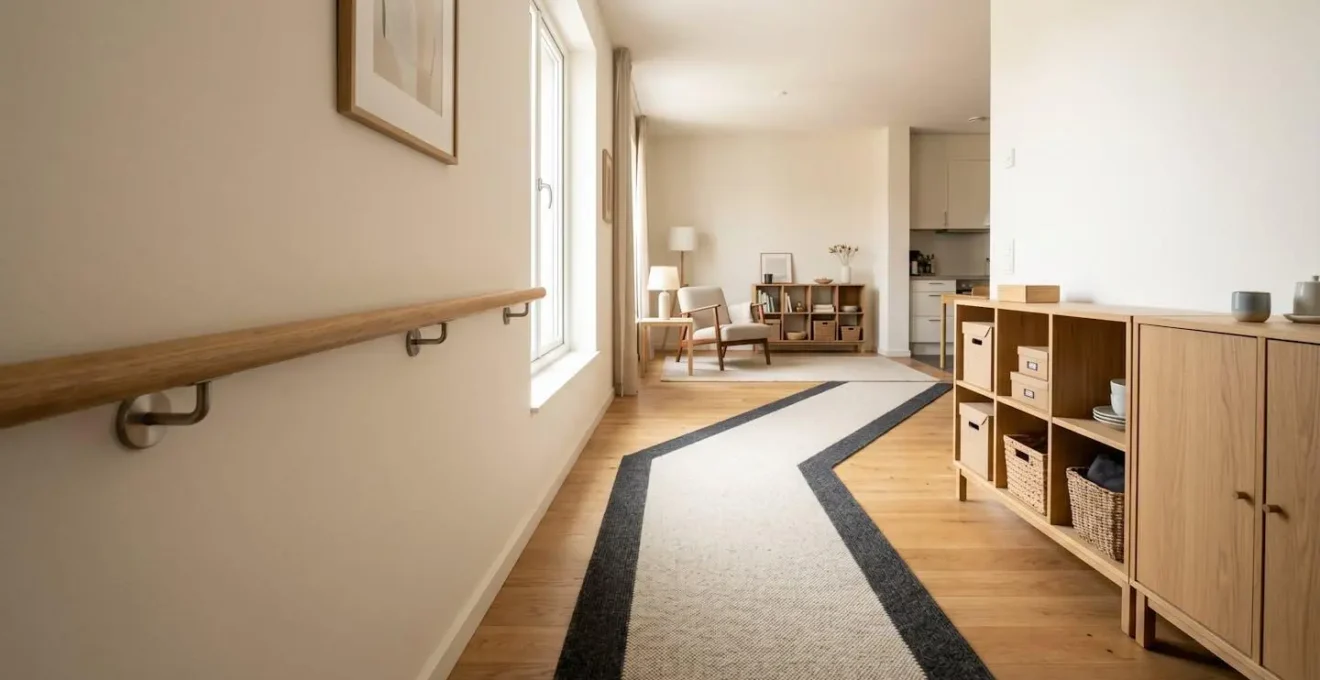
This image of a clean, organized space with clear pathways illustrates the core principle: simplicity and predictability are your greatest allies. The following checklist can guide you through a room-by-room safety audit to make your home a safer, more navigable space.
Action Plan: Home Safety Audit for Peripheral Vision Loss
- Map Your Pathways: Identify your most-used routes (e.g., bed to bathroom, kitchen to living room). Ensure these “safe channels” are at least 3 feet wide and completely clear of obstacles like shoes, bags, or low tables.
- Mark Key Transitions: Use brightly colored, high-contrast tape on the top and bottom edges of all stairs and any changes in floor level. This makes elevation changes visible head-on.
- Enhance Contrast: Check that doorknobs contrast with doors, light switches contrast with walls, and furniture contrasts with the floor. Use contrasting placemats under plates at the dinner table.
- Organize by Touch and Location: Group similar items together (e.g., all medications in one bin) and keep them in the same spot always. Use tactile markers like small bumps or rubber bands on appliance controls (e.g., the ‘5’ on the microwave, the ‘start’ button on the washer).
- Implement Zoned Lighting: Eliminate general, diffuse overhead light that creates glare. Instead, use focused task lamps for reading, cooking, and hobbies. Ensure pathways are evenly lit without creating deep shadows.
By methodically addressing these points, you shift from reacting to your environment to controlling it. Each modification is a step towards greater confidence and sustained independence in your daily life.
Key takeaways
- The optic nerve’s inability to regenerate is a complex biological reality, primarily due to the formation of glial scar tissue, not a simple lack of healing ability.
- A proactive strategy focusing on “neuroprotection” (slowing decay with nutrients and lifestyle) and “adaptation” (modifying your environment) is more empowering than waiting for a cure.
- Early intervention with low vision rehabilitation is the most critical step toward maintaining long-term independence and quality of life.
When to Start Low Vision Rehabilitation for Maximum Independence?
The answer is simple and urgent: you should start low vision rehabilitation as soon as the vision loss begins to interfere with your daily life. Too many people wait until their vision loss is severe, believing that rehabilitation is a last resort. This is a critical mistake. Starting early is the key to maximizing your long-term independence. The goal of rehabilitation is not to restore lost sight, but to train you to use your remaining vision as efficiently and effectively as possible. Waiting until you have less vision to work with only makes the learning process more difficult.
The impact of vision loss on daily activities is significant; research shows adults with vision loss report activity limitations at more than double the rate of those without (34% vs. 16%). This is precisely what rehabilitation aims to prevent. A low vision rehabilitation team is a group of specialists who work together to create a personalized plan for you. This team typically includes:
- A Low Vision Specialist (Optometrist or Ophthalmologist): They will evaluate your remaining vision and can prescribe specialized optical devices like high-powered magnifiers, telescopes, and tinted glasses to reduce glare.
- An Occupational Therapist (OT): The OT is your expert for daily living. They will teach you new, safer ways to cook, clean, manage medications, and modify your home environment.
- An Orientation & Mobility (O&M) Specialist: The O&M specialist teaches you how to navigate your world safely, from using a white cane to cross the street to developing techniques to navigate crowded spaces without relying on peripheral vision.
- Technology Trainers: These specialists can introduce you to a world of assistive technology, from screen readers on your computer to voice-controlled smart home devices and accessibility features on your smartphone.
Think of low vision rehabilitation as physical therapy for your eyes and brain. It rewires your approach to daily tasks, builds new skills, and restores confidence. Engaging with this process early gives you the best possible chance to adapt smoothly and maintain the lifestyle you value.
The journey after a diagnosis of optic nerve damage is not about finding a magic bullet for reversal. It is about assembling a toolbox of realistic, powerful strategies. By understanding the science, embracing active neuroprotection, adapting your environment, and engaging with rehabilitation professionals early, you can write your own story of resilience and independence. The next logical step is to take this knowledge and open a dialogue with your eye care team to build a personalized plan that empowers you to live fully and safely.