In summary:
- Your declining night vision is not just a feeling; it’s a measurable reality caused by physical changes in your eyes.
- You can objectively self-assess your night driving fitness using practical tests involving street signs and colour recognition.
- Managing light sources, both inside and outside your car, is more critical than simply buying brighter bulbs.
- Anti-reflective coatings on glasses are a proven safety aid, while yellow-tinted “night driving glasses” are ineffective and potentially dangerous.
- The decision to stop driving at night should be based on objective evidence of your capabilities, not just age or fear.
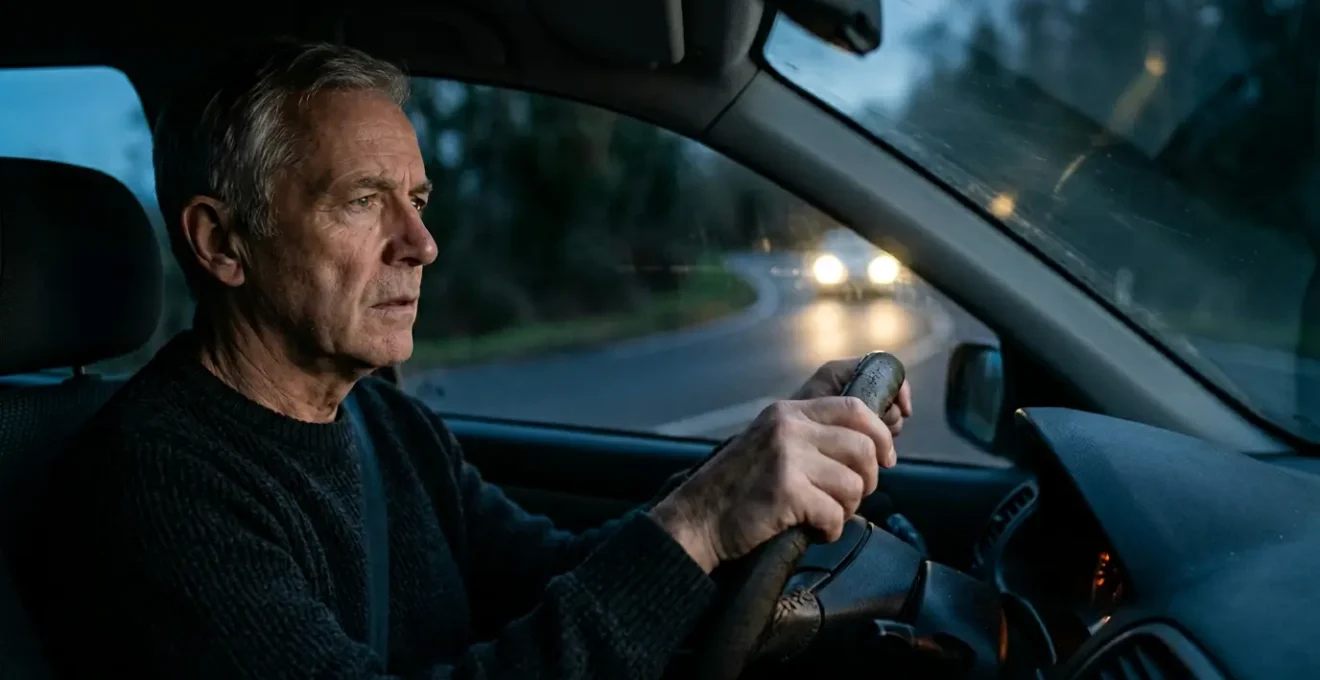
There’s a moment every experienced driver eventually faces. The sun dips below the horizon, and the familiar confidence you feel behind the wheel begins to wane. Headlights from oncoming traffic seem more piercing than before, street signs take a fraction longer to come into focus, and a nagging question surfaces: “Am I still safe driving at night?” It’s a deeply personal and often unsettling question. For years, you’ve relied on your skill and experience, but now your own eyes seem to be sending you a different signal. This uncertainty can lead to anxiety, avoidance of nighttime journeys, and a loss of independence.
The common advice is often frustratingly vague: “get your eyes checked,” “clean your windshield,” or “just drive slower.” While these tips have their place, they fail to address the core of your concern. They don’t give you a concrete way to measure your own ability or understand the specific changes happening to your vision. You need more than platitudes; you need objective tools and a clear-eyed understanding of the risks. This isn’t about giving up your keys prematurely; it’s about taking responsible control of your driving safety with the same seriousness you’ve applied to your decades on the road.
This guide takes a different approach. We’re going to move beyond guesswork and into the realm of practical self-assessment. The real key isn’t just acknowledging a problem, but understanding its specific nature—the “why” behind the glare and the “how” of measuring your own visual performance. We will treat your night vision not as a mystery, but as a system you can learn to monitor and manage.
We’ll explore the science behind why your vision changes, provide you with concrete tests you can perform to gauge your own capabilities, and debunk common myths about quick fixes. By the end, you won’t just have an answer to the question of whether you should stop driving at night; you’ll have a framework for making that decision responsibly and confidently, based on facts, not fear.
Summary: Fading Light, Fading Confidence: A Driver’s Guide to Night Vision and Road Safety
- Why Does Your Ability to See Pedestrians Drop by 50% at Night?
- How to Self-Assess Your Night Vision Using Street Signs?
- Motorways or Country Lanes: Which Route Is Safer for Aging Eyes?
- The Dashboard Dimming Mistake That Ruins Your Night Adaptation
- When to Upgrade Headlamp Bulbs to Improve Your View of the Road?
- Why Do Modern LED Headlights Cause More Painful Glare Than Older Bulbs?
- Why Do Pastel Colours Become Invisible to Seniors With Yellowing Lenses?
- Night Driving Glare: Which Lens Coatings Actually Improve Safety on UK Roads?
Why Does Your Ability to See Pedestrians Drop by 50% at Night?
The fundamental challenge of night driving is a dramatic loss of information. Your eyes are simply receiving a fraction of the data they do during the day. This is due to the way our eyes are built. In low light, we rely on the “rod” cells in our retinas, which are excellent at detecting motion in the dark but are terrible with colour and fine detail. Your pupils also dilate to let in more light, but this makes them less able to focus sharply. The result is a world of grey shapes and fuzzy edges where crisp, colourful objects once stood.
This biological shift has severe consequences. Your ability to judge distances is compromised, and your reaction time slows significantly—by as much as 50% compared to daytime driving. You have less time to respond to a sudden event, like a pedestrian stepping into the road. The statistics paint a stark picture: Federal Highway Administration data reveals that a staggering 76 percent of pedestrian fatalities occur at night. This isn’t because there are more pedestrians out after dark; it’s because they are exponentially harder to see.
As we age, these challenges are magnified. The pupils become less responsive, the lens of the eye can become less clear, and the number of effective rod cells may decrease. You require more light to see what a younger driver can see, and you take longer to recover from the glare of oncoming headlights. Understanding this isn’t about creating fear; it’s the first step in acknowledging the very real, physical limitations that every driver must respect. The risk is not theoretical; it is a measurable decrease in your ability to see and react to hazards like pedestrians, cyclists, or debris on the road.
How to Self-Assess Your Night Vision Using Street Signs?
The most empowering step you can take is to move from a vague feeling of unease to an objective measurement of your own vision. You don’t need a high-tech lab; you just need a trusted passenger and the environment you drive in every day. Regular, honest visual self-assessment is the cornerstone of responsible driving in your later years. It provides you with a personal benchmark to track changes over time.
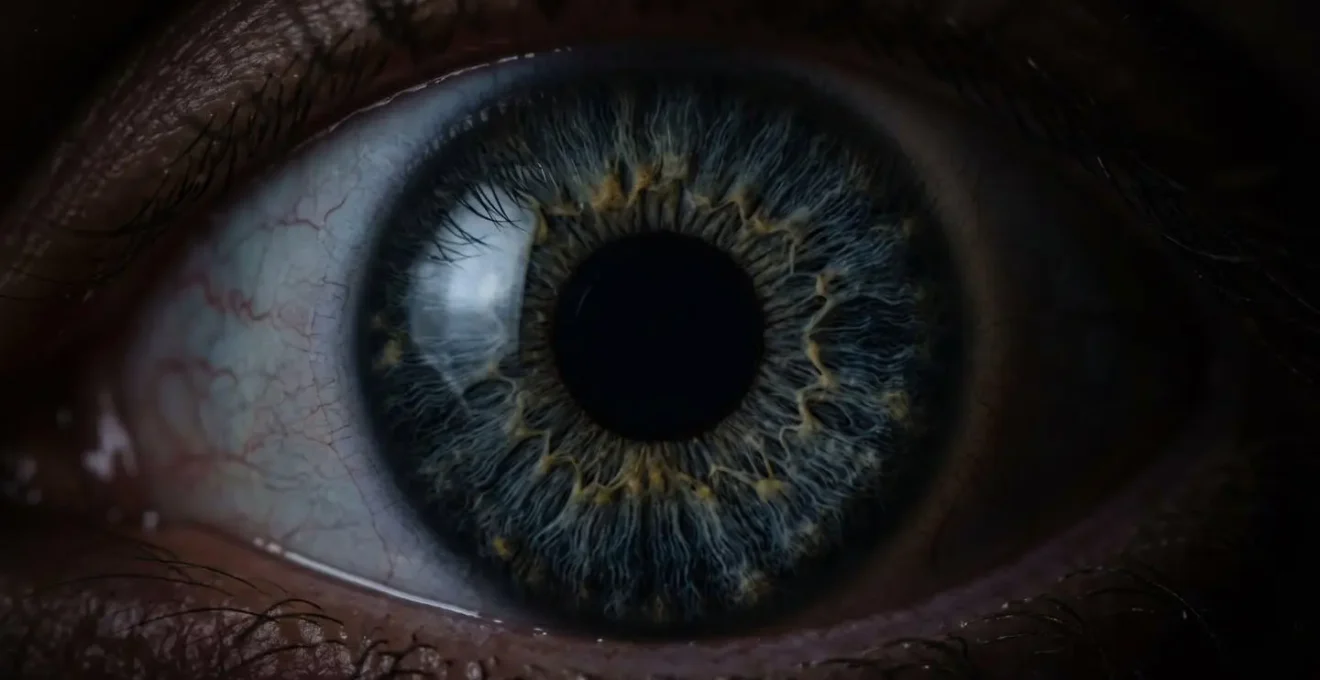
Instead of relying on guesswork, you can use real-world objects like street signs to test your visual acuity and reaction time in the conditions where it matters most. These simple checks transform your passenger from a passive companion into an active co-pilot for your safety. The goal is not to “pass” or “fail,” but to collect honest data about your current capabilities.
Your Action Plan: Three Practical Night Vision Self-Tests
- The Passenger Co-pilot Test: Drive with a trusted passenger who has good vision. Ask them to tell you the moment they can clearly read an upcoming street sign. Make a mental note of that spot. Continue driving and identify the exact moment you can read the same sign. The distance between those two points is your “legibility gap.” As scientific studies on driving performance suggest, tracking this gap over months provides an objective measure of any decline.
- The Sign Re-acquisition Test: While driving on a safe, familiar road, identify a distant sign. As part of a normal driving scan, glance at your rearview mirror for a second, then look back at the road. Time how quickly your eyes can find and refocus on that same sign. A noticeable delay or difficulty in “re-acquiring” the target can indicate a decline in dynamic visual acuity.
- The Colour Rendition Test: At dusk, when light is fading, make a point to identify the colours of traffic signs (green, blue, brown) from as far away as possible. If you find that a green sign appears murky or a blue one looks grey or black, it could be a sign of nuclear sclerosis—a natural yellowing of the eye’s lens that filters out cool colours.
These tests are your personal early warning system. A growing “legibility gap” or increasing difficulty with colour recognition are not judgments; they are simply data points. They are the signals telling you it’s time to have a more serious conversation with your optometrist and to perhaps reconsider your night driving habits.
Motorways or Country Lanes: Which Route Is Safer for Aging Eyes?
When considering night driving, not all roads are created equal. The choice of route can have a greater impact on your safety than the car you drive. Many drivers assume that quiet, dark country lanes are safer than busy motorways. From a night vision perspective, this is a dangerous misconception. The environment of a motorway, while faster, is often far safer for a driver with compromised night vision.
Motorways and major dual carriageways offer a more controlled and predictable environment. They feature:
- Consistent Lighting: Major routes are often illuminated, reducing the strain on your eyes.
- Clear Lane Markings: High-visibility, reflective markings provide a clear path to follow.
- Separation from Oncoming Traffic: A central reservation means you are not subjected to the direct, constant glare of oncoming headlights.
- Fewer Surprises: There are no hidden junctions, farm entrances, or pedestrians stepping out from unlit verges.
In contrast, country lanes are an optical minefield. They are characterized by a lack of ambient light, poor or non-existent road markings, sharp and unexpected bends, and the constant threat of unpredictable hazards like wildlife or farm vehicles. Every oncoming car forces your eyes to adapt from near-total darkness to blinding glare and back again, a process that becomes slower and more difficult with age. The National Safety Council highlights the danger, noting that 50% of traffic deaths happen at night, despite it accounting for only a quarter of all driving. For an older driver, who may need twice as much light to see as well as a 30-year-old, the unlit country lane presents an unacceptable level of risk.
Therefore, if a nighttime journey is unavoidable, your strategy should be to stay on well-lit, well-marked, major roads for as long as possible. Choosing a slightly longer route on a motorway is a far safer decision than taking a “shortcut” down a dark, winding lane. It is a conscious choice to operate within a more predictable and visually supportive environment.
The Dashboard Dimming Mistake That Ruins Your Night Adaptation
One of the most common pieces of night driving advice is to dim your dashboard lights. While correct in principle, most drivers either don’t do it, or they do it incorrectly, completely undermining their own “dark adaptation.” Understanding the biology behind this is key. Your ability to see in the dark depends on a pigment in your eyes’ rod cells called rhodopsin. When exposed to bright light, this pigment is “bleached” and takes time to regenerate. This regeneration process is what we call dark adaptation.
The critical mistake is setting your dashboard brightness at the beginning of your journey and forgetting about it. A setting that seems fine in a lit-up town centre becomes a source of blinding glare on an unlit country road. Your instrument panel and infotainment screen are competing directly with the dark road ahead. Your eyes, forced to constantly adjust between the bright interior light and the dark exterior, can never achieve full dark adaptation. This leaves you less sensitive to faint hazards in the distance.
Research demonstrates that this process of rhodopsin regeneration naturally slows with age. This means you not only require more time to adapt to the dark, but you also recover more slowly from exposure to glare. Therefore, practicing good light hygiene inside your car is non-negotiable. This means actively managing all sources of interior light. Your dashboard and any screens should be dimmed to the absolute minimum level at which you can still comfortably read them. Turn off any unnecessary interior lights and, if possible, switch your navigation screen to its “night mode,” which typically uses a dark background to reduce overall brightness.
Think of your night vision as a precious resource that takes time to build up. Every unnecessary photon of light from inside your car is depleting that resource and making your job as a driver harder and more dangerous. Treat the dimmer switch not as a set-and-forget feature, but as an active tool to be adjusted as your ambient light conditions change throughout your journey.
When to Upgrade Headlamp Bulbs to Improve Your View of the Road?
When visibility starts to decline, the first instinct for many drivers is to seek brighter, more powerful headlamp bulbs. While an upgrade can sometimes help, it is often not the most effective first step and can even be counterproductive. Before you spend money on expensive new bulbs, your primary focus should be on the maintenance and alignment of your existing headlights.
Headlight lenses, especially on older vehicles, can become cloudy, yellowed, and oxidized from UV exposure. This hazy layer can significantly scatter and reduce the amount of light reaching the road, sometimes by more than half. A simple and inexpensive headlight restoration kit, or a professional service, can often make a more dramatic improvement in visibility than a new set of bulbs. It’s the equivalent of cleaning a dirty window before deciding you need a brighter light in the room.
Even more critical is headlight alignment. Over time, due to vibrations and minor bumps, headlights can easily become misaimed. One headlight might point too low, failing to illuminate the road far enough ahead, while the other might point too high, creating dangerous glare for oncoming drivers and failing to light the road surface correctly. Studies have found that a significant majority of cars on the road have at least one misaimed headlight. Properly aligned headlights ensure the light is projected exactly where it’s designed to go, maximizing your view without blinding others. Experts suggest that correct alignment alone can improve useful visibility by up to 30%.
Only after you have ensured your headlamp lenses are crystal clear and their alignment is perfect should you consider upgrading the bulbs. When you do, opt for high-quality, road-legal bulbs from a reputable manufacturer. Avoid bulbs with an excessively blue or purple tint, as these can actually reduce visibility in wet or foggy conditions. The goal is a clean, white light that illuminates the road effectively, not a cosmetic upgrade that compromises safety.
Why Do Modern LED Headlights Cause More Painful Glare Than Older Bulbs?
If you feel that the glare from oncoming headlights has become significantly more intense and painful in recent years, you are not imagining it. This phenomenon is a direct result of the shift from older halogen technology to modern LED (Light-Emitting Diode) and HID (High-Intensity Discharge) systems. The problem isn’t just about brightness; it’s about the fundamental nature of the light itself.
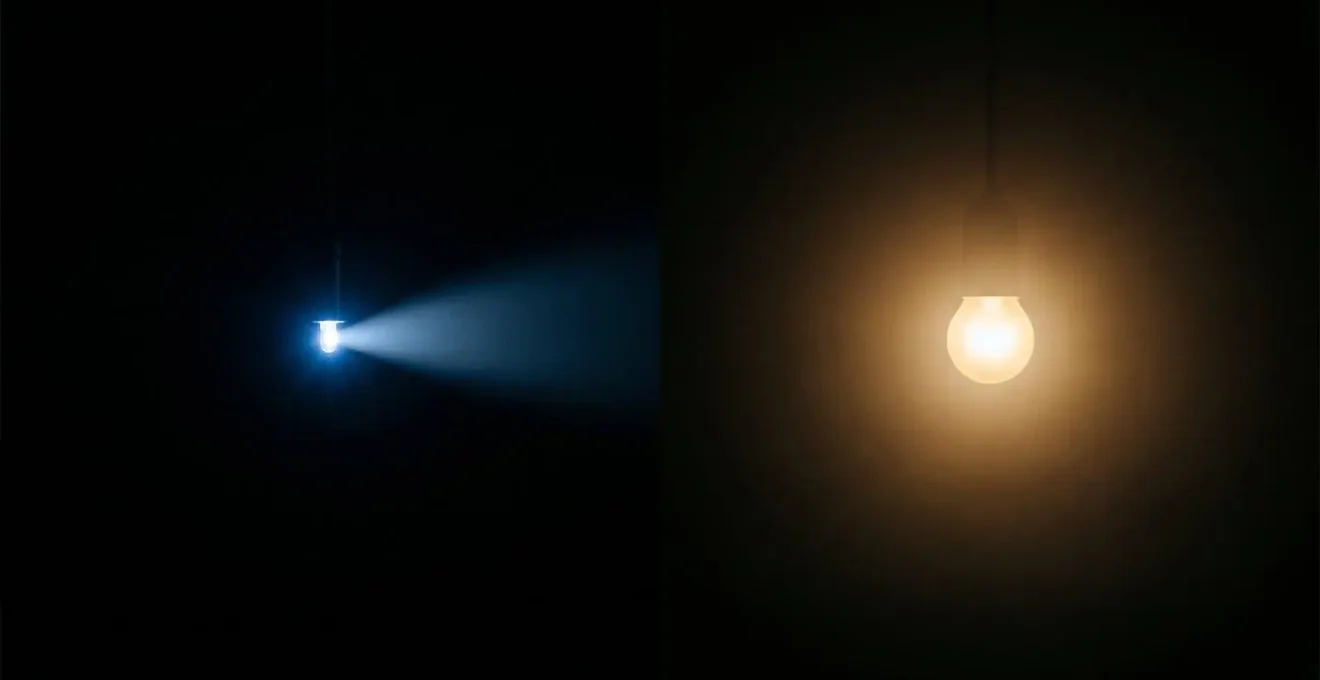
Think of a traditional halogen bulb as a glowing campfire. It’s a source of warm, diffused light that radiates in all directions. It creates a soft-edged, gentle glow. In contrast, a modern LED is like a laser pointer. It’s a tiny, intensely powerful point source that emits a focused, directional beam of cool, blue-white light. This light is much harsher and more concentrated. When your eye encounters this intense point source, it’s perceived as more dazzling and painful, especially for an aging eye that is more sensitive to scatter and glare.
The colour of the light also plays a crucial role. LEDs often have a higher “colour temperature,” meaning they contain more blue light. Blue light scatters more easily within the eye, particularly in an eye with any degree of cataract or clouding of the lens. This increased scattering is what creates the “halo” or “starburst” effect you see around headlights, reducing your ability to see the darker areas of the road around the light source. A recent AAA survey found that a majority of drivers feel headlight glare is a worsening problem.
While these advanced headlights are designed to help the driver of the car they’re fitted to see better, they create a more hostile environment for everyone else on the road. As a driver, you cannot change the headlights of other cars, but you can understand why the problem exists. This knowledge reinforces the need to use proper techniques, such as averting your gaze towards the right-hand edge of the road when faced with an oncoming vehicle, to minimize the direct impact of that intense, focused beam of light.
Why Do Pastel Colours Become Invisible to Seniors With Yellowing Lenses?
A subtle but significant change that affects older drivers is a shift in colour perception. You might notice that it’s harder to distinguish between shades of blue, green, and violet, or that white objects appear to have a yellowish tinge. This is not your imagination; it’s a direct consequence of a natural aging process within the lens of your eye, a condition known as nuclear sclerosis, which is the early stage of cataract formation.
Over a lifetime, the clear, flexible lens inside your eye gradually hardens and develops a yellow or brownish tint. As this happens, the lens begins to act like a built-in colour filter. Specifically, it absorbs and scatters light from the blue and violet end of the spectrum. This is why a crisp, white shirt might look cream-coloured, or the distinction between a dark blue and a black car becomes difficult to see at dusk. This has real-world implications for driving safety. Pastel-coloured cars, which are already low-contrast, can become almost invisible against the grey of the road.
This yellowing is a precursor to cataracts, a clouding of the lens that affects a vast number of older adults. Medical data shows that this is an extremely common part of aging. As one eye care center explains, this “filter” effect is what makes it so much harder to see cooler colours clearly. The impact on driving is a reduction in contrast sensitivity. Your ability to pick out an object—like a light-grey car parked on the side of the road or a pedestrian in a pale blue jacket—is significantly diminished because your eyes are no longer receiving the full spectrum of colour information.
Recognizing this colour rendition deficit is another crucial piece of your self-assessment puzzle. If you find yourself struggling to identify colours at dusk, it’s a strong indicator that your eye’s lenses are changing. This is a clear signal to visit an optometrist for a cataract evaluation and to be extra cautious when driving in low-light conditions, as your ability to detect low-contrast hazards is likely compromised.
Key Takeaways
- Objective self-assessment is more reliable than subjective feelings for determining night driving fitness.
- Managing interior “light hygiene” by dimming all displays is critical for preserving your eyes’ dark adaptation.
- For aging eyes, well-lit, predictable motorways are significantly safer than dark, unpredictable country lanes.
Night Driving Glare: Which Lens Coatings Actually Improve Safety on UK Roads?
When faced with increasing glare, many drivers are tempted by “night driving glasses,” which typically have yellow-tinted lenses. The marketing claims they enhance contrast and reduce glare. As a driving safety professional, I must be firm and clear: this is a dangerous myth. Any tinted lens, regardless of colour, reduces the total amount of light reaching your eyes. In the already light-starved environment of night driving, this further impairs your vision.
In reality, when driving at night or dusk in already limited lighting conditions, ANY tint further reduces the amount of light transmitted to the eye and further impairs vision.
– Laramy-K Independent Optical Lab
Scientific evidence backs this up. A definitive study by the Schepens Eye Research Institute found no difference in pedestrian detection was found with yellow lenses. Worse, they can create a false sense of security, making drivers believe their vision is better than it actually is. On any road, whether in the UK or elsewhere, deliberately cutting down the light that reaches your eye at night is fundamentally unsafe.
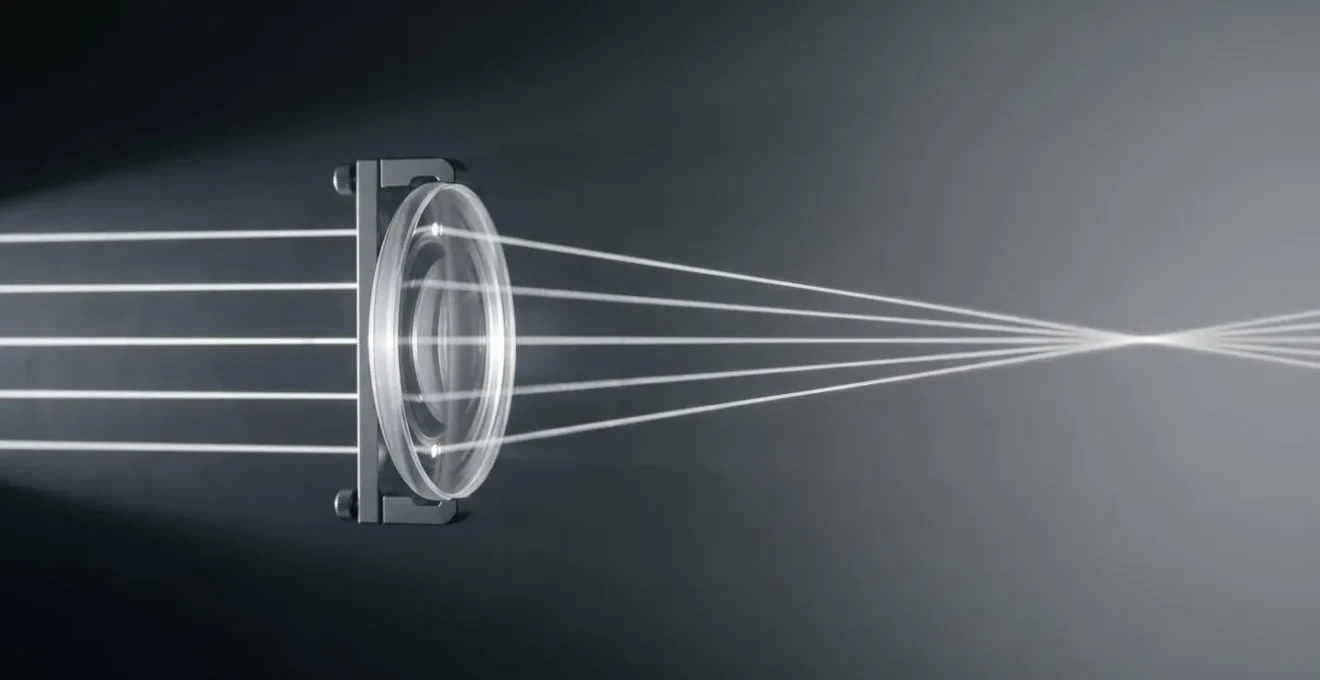
The only lens technology proven to improve visual safety at night is a high-quality anti-reflective (AR) coating on clear prescription or non-prescription glasses. These microscopic coatings work by eliminating the reflections on the front and back surfaces of your spectacle lenses. These reflections are a major source of glare, halos, and “ghost images,” especially from modern headlights. An AR coating allows up to 99% of available light to pass through the lens and reach your eye, providing a clearer, crisper image with noticeably less distracting glare. This is a technology that helps you make the most of the limited light available, rather than blocking it.
If you wear glasses, investing in a quality AR coating is one of the single most effective upgrades you can make for your night driving safety. If you don’t need prescription glasses, a pair of clear, non-prescription lenses with an AR coating can still offer a tangible benefit in reducing distracting reflections. Forget the yellow tints; the solution is to maximize light transmission, not reduce it.
The decision to limit or stop driving at night is a significant one, but it should be a decision driven by evidence, not emotion. By adopting these methods of self-assessment and understanding the real optical challenges, you are taking proactive control. The next logical step is to discuss your findings with an optometrist and your family. Making a responsible plan based on your objective capabilities is the ultimate act of a safe and conscientious driver.