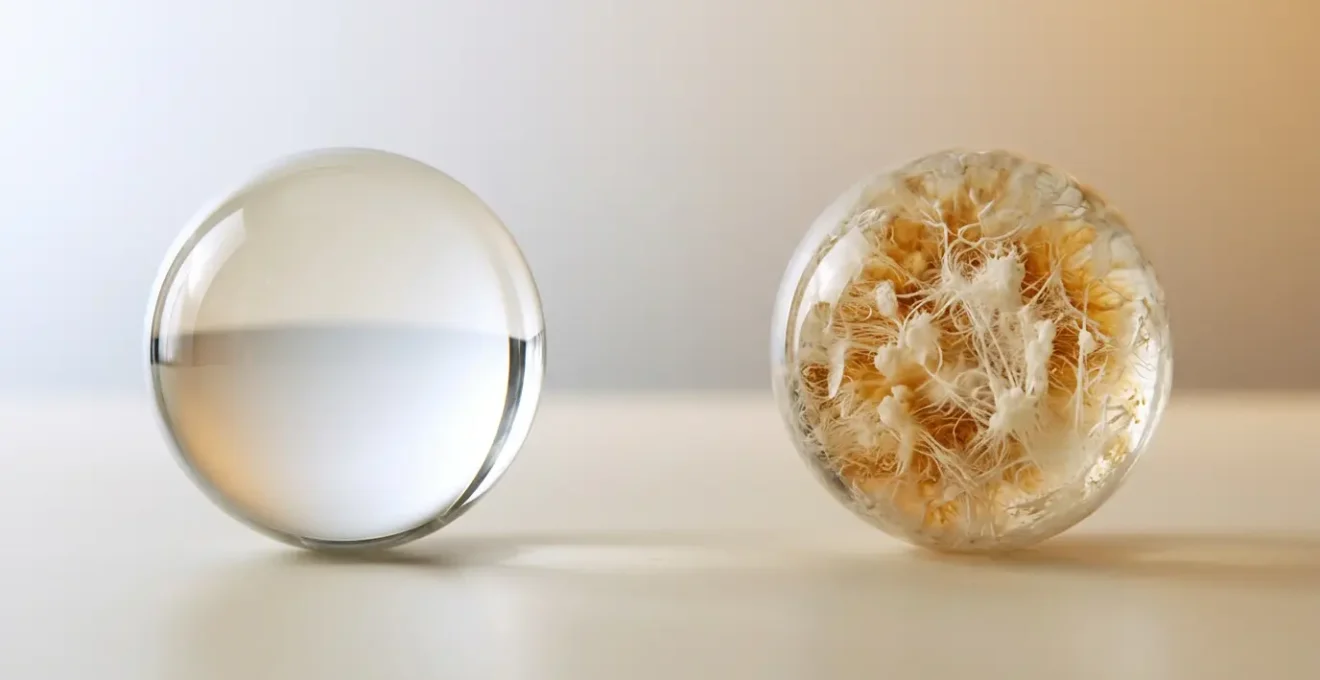
Many assume that gradually clouding vision is an unavoidable part of aging that must simply be endured. The critical insight, however, is that the problem isn’t the change itself, but when it crosses specific functional thresholds that compromise your safety and quality of life. This article provides an analytical framework to help you identify these crucial tipping points, empowering you to move from passive worry to proactive decision-making about your eye health.
Noticing that the world is losing its sharpness can be unsettling. The vibrant reds seem a bit duller, reading the menu in a dimly lit restaurant requires more effort, and the glare from oncoming headlights at night feels more intense than it used to. For anyone over 60, the immediate question is often the same: is this just a normal, inevitable part of getting older, or is it the start of a more significant problem like cataracts? The common advice is to “get stronger glasses” or simply “get used to it,” but this passive approach overlooks a crucial distinction.
The most important factor isn’t just a number on an eye chart. True visual health is about function—your ability to live safely, independently, and with confidence. The shift from normal, age-related lens changes to a clinically significant issue is not a sudden event but a gradual crossing of what we can call functional thresholds. These are the specific points where a subtle loss of vision begins to tangibly interfere with daily tasks, often long before you would describe yourself as having “bad” vision.
This guide moves beyond generic advice. As a specialist in geriatric vision, my goal is to provide you with the analytical tools to assess your own situation. We will dissect the biological process of lens opacification, explore practical adjustments, evaluate the real-world costs and benefits of intervention, and, most importantly, define the clear signs that indicate it’s time to take decisive action. Understanding these thresholds is the key to managing your eye health proactively, not reactively.
To navigate this complex topic, we will explore the fundamental science behind these visual changes and provide a clear framework for making informed decisions about your care. The following sections will guide you through each critical aspect, from understanding the problem to identifying the solution.
Summary: Cloudy Vision: Is It Normal Aging or Early Opacification Requiring Action?
- Why Does the Eye Lens Harden and Cloud Over With Age?
- How to Adjust Reading Lights to Compensate for Lens Opacity?
- New Glasses or Surgery: Which Solution Is Cost-Effective for Early Opacity?
- The Danger of “Cataract Dissolving” Drops Sold Online
- When Does Mild Opacification Become a Safety Hazard at Home?
- Why Night Driving Becomes Dangerous Long Before You Feel Blind?
- When to Wear Sunglasses on the Tube to Prevent Dryness and Strain?
- When to Book Cataract Surgery: The 3 Signs Your Daily Life Is Compromised?
Why Does the Eye Lens Harden and Cloud Over With Age?
The lens of your eye is a marvel of biological engineering, primarily composed of water and highly organized proteins called crystallins. In youth, these proteins are arranged in a precise, transparent structure that allows light to pass through and focus perfectly on the retina. However, with age, this delicate architecture begins to change. The primary mechanism is a gradual, lifelong process of protein breakdown and aggregation.

Over decades, these crystallin proteins can become damaged, denatured, and start to clump together. This clumping scatters light rather than transmitting it cleanly, creating the “cloudy” or “foggy” vision characteristic of a cataract. This is not a disease in the typical sense but an acceleration of a natural aging process. Research confirms that with a global prevalence of over 17.20% for age-related cataracts, it is an extremely common phenomenon. The lens also loses flexibility, leading to presbyopia (the need for reading glasses), but opacification is a separate structural issue.
A key contributor to this process is oxidative stress, a cumulative cellular damage that our bodies become less effective at repairing as we age. As one team of researchers studying this phenomenon noted:
Oxidative stress may result from an imbalance between the production of the reactive oxygen species and the cellular antioxidant defence mechanisms.
– Research team studying oxidative stress in cataract patients, The Oxidative Stress in Cataract Patients – Journal Study
Essentially, the lens’s natural defenses against cellular wear-and-tear weaken, allowing proteins to misfold and create opaque areas. This process explains why colors appear faded and why glare becomes a problem: the disorganized proteins are scattering light waves in a chaotic manner inside your eye.
How to Adjust Reading Lights to Compensate for Lens Opacity?
Before considering more invasive options, simple environmental changes can significantly improve visual function. An opacified lens requires more—and better—light to achieve the same level of clarity. The key is not just brightness (intensity), but also light quality (color temperature) and direction.
First, focus on task lighting. Instead of relying on a single overhead ceiling fixture, which creates shadows and diffuse, low-contrast light, use a dedicated, adjustable lamp. Position the light source to shine directly onto your book, newspaper, or craft project, from over your shoulder or the side. This minimizes glare reflecting off the page and directly into your eyes, a problem greatly exacerbated by a cloudy lens.
Second, consider the color temperature of your light bulbs, measured in Kelvins (K). An opacified, yellowish lens scatters shorter-wavelength blue light more than warmer tones. This is why glare often has a blue or white tint. To counteract this, opt for bulbs in the “warm white” to “soft white” range (2700K to 3000K). This warmer light is less prone to scattering within the cloudy lens, which can reduce eye strain and improve perceived contrast.
Finally, increase the overall intensity. As a general rule, a person in their 60s may need twice as much light as someone in their 20s to perform the same task comfortably. Look for LED bulbs that provide a high lumen output (800 lumens or more for a task lamp) while consuming little energy. The combination of direct, warm-hued, and bright light can make a substantial difference, helping you maintain hobbies and read comfortably for longer.
New Glasses or Surgery: Which Solution Is Cost-Effective for Early Opacity?
When better lighting is no longer enough, the conversation naturally turns to corrective options: updating your eyeglass prescription or considering cataract surgery. While new glasses are often the first step, they are a temporary measure for lens opacification. A new prescription can correct for refractive changes, but it cannot fix the core problem of a cloudy lens that scatters light and reduces contrast. Eventually, no prescription will be strong enough to overcome the opacity.
Cataract surgery, where the cloudy natural lens is replaced with a clear, artificial intraocular lens (IOL), is the only definitive solution. Initially, the cost may seem daunting, with prices ranging from $3,500 to $7,000 per eye without insurance in the United States. However, it is essential to frame this as a matter of cost-effectiveness, not just cost. This one-time procedure is designed to provide clear vision for the rest of your life.
When evaluated over the long term, the value becomes clear. High-quality vision restores the ability to drive safely, reduces the risk of costly falls, and allows for continued independence and social engagement. In fact, comprehensive global health studies have found that the return on investment for cataract surgery is exceptionally high. It is not just a lifestyle improvement; it’s a critical health intervention. Research published in PubMed confirms that cataract surgery is comparable in cost-effectiveness to hip replacement and more effective than many other major medical procedures.
The decision timeline is personal. In the very early stages, an updated eyeglass prescription might be sufficient. But once you find that new glasses offer minimal improvement and your daily activities are limited by poor contrast or glare, surgery becomes the most cost-effective and life-enhancing solution.
The Danger of “Cataract Dissolving” Drops Sold Online
In the digital age, a search for cataract solutions will inevitably lead to advertisements for “miracle” eye drops that claim to dissolve or reverse cataracts without surgery. These products, often containing a compound called lanosterol, are heavily marketed with compelling testimonials. It is critically important to understand that these claims are not supported by robust scientific evidence in humans and can be dangerous.
The theory behind lanosterol originated from early studies showing it could clear protein aggregation in lab settings. However, translating this to a living human eye has proven unsuccessful. The core problem is delivery: getting a sufficient concentration of the compound through the cornea and into the dense structure of the lens is a major biochemical challenge. Subsequent, more rigorous clinical research has failed to replicate the initial hype.
For instance, a pivotal 2019 study published in Scientific Reports meticulously tested a lanosterol solution on human cataractous lenses and found it completely failed to reduce the opacity. Another clinical report on a human patient confirmed that administering the drops had no relevant effect on either reversing the cataract or improving visual acuity. These products are not approved by regulatory bodies like the FDA for treating cataracts.
The danger of these unproven treatments is twofold. First, they waste precious time and money that could be spent on a proven solution. By delaying surgery, an individual’s vision continues to decline, increasing the risk of accidents and social isolation. Second, the contents of these unregulated online products are often unknown. They could contain non-sterile ingredients or contaminants that might cause eye infections or other damage. The only proven, effective, and safe treatment for a significant cataract is surgery.
When Does Mild Opacification Become a Safety Hazard at Home?
One of the most insidious aspects of gradual vision loss is a phenomenon called adaptive normalization. We get used to our deteriorating vision, unconsciously adjusting our behavior and often failing to realize just how compromised we’ve become. This is where “mild” opacification crosses the functional threshold into a genuine safety hazard, particularly within our own homes.
The primary risk is falls. A cloudy lens severely impairs contrast sensitivity—the ability to distinguish an object from its background. This makes it difficult to see the edge of a step on a staircase, a cord on the floor, or a puddle of water on a tile. Research consistently shows that poor vision is a leading cause of falls among older adults, which can lead to devastating injuries like hip fractures and a permanent loss of independence. The hazard is not about being blind; it’s about not processing visual information with enough speed and clarity to navigate safely.
Other daily tasks also become risky. Can you reliably read the labels on medication bottles to ensure the correct dosage? Is it difficult to see the controls on the stove or to judge the temperature of hot liquids? These small moments of uncertainty are the early warning signs that your vision is no longer sufficient for safe, independent living. It’s time to stop asking, “How bad is my vision?” and start asking, “Is my vision good enough to keep me safe?”
Your Home Safety Audit for Early Vision Changes
- Stairways and Transitions: Walk through your home. Can you clearly see the edge of every step? Are the transitions between different flooring types (e.g., carpet to wood) well-defined? Consider adding high-contrast non-slip strips to stair edges.
- Kitchen and Bathroom: Check the visibility of controls on your stove and microwave. Are medication and cleaning product labels easy to read in normal light? Ensure these areas are brightly lit to prevent mistakes.
- Floor-Level Hazards: Scan every room for low-lying obstacles like electrical cords, throw rug edges, and small furniture. Reduced contrast sensitivity can make these items virtually disappear.
- Lighting Assessment: Identify all “danger zones” (stairs, hallways, bathrooms) that are poorly lit, especially at night. Install nightlights and ensure light switches are easily accessible at the entrance to every room.
- Emergency Preparedness: Can you easily read the numbers on your phone to dial for help in an emergency? Is your list of emergency contacts clearly legible? If not, your vision has crossed a critical safety threshold.
Why Night Driving Becomes Dangerous Long Before You Feel Blind?
Night driving is often the first and most alarming functional threshold that people with early cataracts cross. The experience is distinct: oncoming headlights create starbursts or debilitating glare, road signs are harder to read, and judging distances becomes a challenge. This happens long before your daytime vision seems significantly impaired, and the reason lies in the physics of a cloudy lens.

A healthy lens focuses light into a single, sharp point on the retina. An opacified lens, however, acts like a foggy window, scattering light in all directions. During the day, with the pupil constricted, the effect is less noticeable. But at night, the pupil dilates to let in more light. This exposes a larger surface area of the cloudy lens, dramatically increasing the amount of light scatter. This is why you experience debilitating glare and halos around lights, which can temporarily blind you to pedestrians, cyclists, or obstacles on the road.
This critical distinction between visual acuity and visual function is often misunderstood. You might still be able to pass a standard eye chart test in a well-lit doctor’s office, but that test does not measure your performance in low-light, high-glare conditions. As vision performance researchers have pointed out:
One can have 20/20 acuity and still be an unsafe night driver.
– Vision performance research, Visual Acuity vs Visual Performance in Cataract Studies
If you find yourself avoiding night driving, asking others to drive, or feeling a high level of anxiety behind the wheel after dark, you have crossed a major safety threshold. This is not a minor inconvenience; it is a clear sign that your lens is no longer capable of performing one of its most critical functions, regardless of what a daytime eye test might say.
When to Wear Sunglasses on the Tube to Prevent Dryness and Strain?
While glare from the sun is a well-known reason to wear sunglasses, their utility extends to indoor environments, particularly those with aggressive air conditioning or ventilation systems like a subway (or “Tube”), airplane, or large office building. For an eye with an aging or opacified lens, these environments can create a perfect storm of dryness and visual strain.
The primary mechanism at play is tear film evaporation. The air in these enclosed spaces is often very dry and constantly moving. This airflow across the surface of your eyes accelerates the evaporation of your natural tear film, which is crucial for maintaining a smooth, clear optical surface and overall eye comfort. Dryness can cause a gritty sensation, redness, and, importantly, fluctuating blurry vision.
For someone with early cataracts, this is a compounding problem. The eye is already working harder to focus light through a slightly cloudy medium. When the tear film is also compromised, it adds another layer of optical distortion and discomfort. The muscles of the eye strain to maintain focus, leading to fatigue and headaches. This is why your vision might feel significantly worse after a long commute on public transport or a day in an air-conditioned office.
Wearing a simple pair of sunglasses (even with a light or no tint) in these environments acts as a physical barrier. They create a small, protected pocket of air around your eyes, reducing the effect of the drying airflow and slowing tear evaporation. This simple, non-medical intervention can significantly reduce eye strain and maintain more consistent and comfortable vision throughout the day. It’s a practical strategy for managing environmental factors that exacerbate the symptoms of an aging lens.
Key Takeaways
- True visual impairment is measured by loss of function, not just acuity. Pay attention to reduced contrast sensitivity and glare, especially at night.
- Your brain normalizes gradual vision loss, masking the true level of risk. A proactive home safety audit is more revealing than waiting for a crisis.
- Cataract surgery should be viewed as a highly cost-effective investment in safety and independence, not just an expensive last resort for “blindness.”
When to Book Cataract Surgery: The 3 Signs Your Daily Life Is Compromised?
The decision to proceed with cataract surgery is not based on a single test result but on a holistic assessment of how your vision impacts your life. Having navigated the science and the early adjustments, the final determination comes down to three key functional thresholds. If you find yourself identifying with one or more of these, your quality of life is significantly compromised, and it is time for a serious conversation with your ophthalmologist.

- Loss of Important Hobbies or Activities: This is the quality-of-life threshold. Are you giving up activities you love because they have become too difficult or frustrating? This could be reading, sewing, painting, playing cards, or golfing. When vision loss begins to shrink your world and isolate you from sources of joy and engagement, it has become too costly to ignore.
- Compromised Safety in Key Tasks: This is the independence threshold. As discussed, this most often manifests in night driving or a fear of falling at home. If you no longer feel confident navigating stairs, or if you have stopped driving after dark for fear of not seeing a pedestrian or obstacle, your vision is actively limiting your freedom and endangering yourself and others.
- Difficulty with Essential Daily Functions: This is the self-sufficiency threshold. This includes struggling to read medication labels, use a phone, recognize faces, or manage personal finances. When basic, necessary tasks become a source of stress and potential error, professional intervention is no longer optional—it is essential for maintaining your health and well-being.
Cataract surgery is one of the safest and most successful procedures performed today. Data from the National Eye Institute shows that 9 out of 10 people who get cataract surgery can see better afterwards, often achieving a level of clarity they haven’t experienced in years. The goal is not to wait until you are nearly blind, but to act when your vision begins to take more from your life than it gives.
If you recognize your own experiences in these thresholds, the next logical step is to seek a professional evaluation. An ophthalmologist can perform a comprehensive exam to confirm the diagnosis, measure the extent of the opacification, and discuss the best course of action to restore your vision and quality of life.