Worrying about an aging parent’s falls goes beyond just clearing clutter; the solution lies in making their home visually predictable to counteract specific, age-related vision changes.
- Generic advice like “add more light” is insufficient. The key is improving contrast sensitivity—the eye’s ability to distinguish objects from their background.
- Simple, targeted changes to color, lighting type, and patterns can dramatically reduce the risk of stumbles and falls caused by visual misinterpretation.
Recommendation: Start today by conducting a simple audit of two key areas: the contrast between floors and furniture, and the type of light bulbs used for reading versus navigating hallways.
Watching a parent you love start to stumble in their own home is deeply unsettling. You see them trip on a rug they’ve walked over a thousand times, or hesitate at the top of the stairs, and your first instinct is to solve the most obvious problems. The common advice is well-meaning but often superficial: “add more light,” “get rid of the throw rugs,” or “install grab bars.” While helpful, these solutions often miss the root of the issue. A fall isn’t always a sign of clumsiness or frailty; frequently, it’s the first symptom of a home that is no longer compatible with aging eyes.
The problem is that as we age, our eyes don’t just see “less”; they see *differently*. The lens yellows, pupil size decreases, and our ability to distinguish subtle shades and edges—a skill called contrast sensitivity—declines sharply. Your parent isn’t just missing the step; their brain is receiving incomplete data, making it impossible to judge its height and depth accurately. Therefore, the most effective way to prevent falls isn’t just to make a home brighter, but to make it more visually logical and predictable.
This guide moves beyond the basics. We will explore how to systematically counteract the specific visual challenges your parent is facing. We will examine why certain colors become invisible, how to use light as a strategic tool rather than a blunt instrument, and why some “stylish” home decor choices can become dangerous visual traps. By understanding the “why” behind these changes, you can make targeted, effective adaptations that restore not just safety, but your parent’s confidence in navigating their own cherished space.
This article provides a room-by-room, sense-by-sense framework for adapting a home to the realities of aging vision. Follow this structured approach to create a safer, more navigable environment for your loved one.
Contents: A Strategic Approach to Visual Safety
- Why Do Pastel Colours Become Invisible to Seniors With Yellowing Lenses?
- How to Use Tape to Make Step Edges Visible in Low Light?
- Cool White or Warm White: Which Bulb Wattage Improves Reading For Seniors?
- The Rug Pattern Mistake That Confuses Depth Perception
- When to Introduce Voice-Activated Assistants for Visually Impaired Seniors?
- Why Night Driving Becomes Dangerous Long Before You Feel Blind?
- Why Is Kale Considered a Superfood for the Macula?
- When to Book Cataract Surgery: The 3 Signs Your Daily Life Is Compromised?
Why Do Pastel Colours Become Invisible to Seniors With Yellowing Lenses?
Have you noticed your parent struggling to match clothing, or perhaps describing their once-pale blue bathroom as simply “white”? This isn’t a lapse in memory; it’s a physiological reality of the aging eye. Over time, the clear, flexible lens inside the eye naturally begins to yellow and harden. This process acts like placing a permanent yellow or brownish filter over everything they see. As a result, their ability to perceive colors on the cooler end of the spectrum—blues, greens, and purples—is significantly diminished.
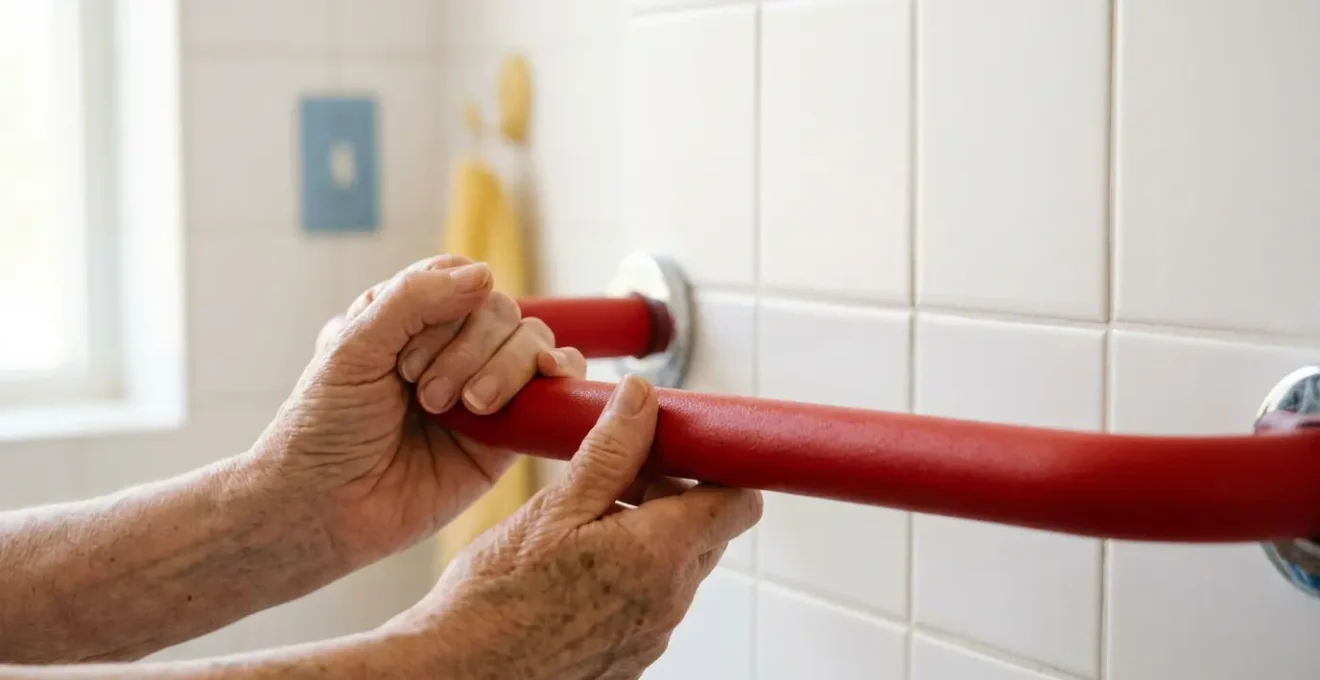
Pastel shades, which have a high degree of white mixed in, are the first casualties of this change. A soft mint green or a pale lavender wall, once calming, can wash out into an indistinct off-white. This has profound safety implications. If a light blue bathmat is on a white tile floor, it effectively becomes invisible, creating a serious trip hazard. The same applies to pale-colored handrails on a light-colored wall or subtle patterns on upholstery. The eye simply can’t distinguish the edge of the object from its background. To ensure safety, you must think in terms of bold, high-contrast colors for crucial elements in their environment.

As this image metaphorically shows, the yellowing lens filters and mutes colors. This is why a light-colored grab bar against a tiled wall might be useless—the eye can’t pick it out. When choosing items like bathmats, toilet seats, or even dinner plates, opt for colors that stand in stark contrast to their surroundings, like a bold red, navy blue, or even a vibrant yellow.
How to Use Tape to Make Step Edges Visible in Low Light?
Stairs are one of the most common sites for falls in the home, especially for individuals with declining vision. The core problem is a loss of contrast sensitivity, which makes it incredibly difficult to judge where one step ends and the next begins. Under uniform or low lighting, a carpeted or wooden staircase can appear as a single, sloping surface to an aging eye. The visual cue that marks the edge of the tread simply disappears, leading to a misstep with potentially devastating consequences.
One of the simplest, most cost-effective, and immediate interventions is the strategic use of high-contrast safety tape. Applying a strip of tape along the edge of each step re-introduces the clear, sharp line that the brain needs to calculate depth and distance. This isn’t just a temporary fix; it’s a powerful and permanent visual aid. The key is to choose a color that creates the maximum possible contrast with the stair material—think bright yellow or white tape on dark wood or carpet, and black or dark blue tape on light-colored stairs.
However, not all tapes are created equal. The best choice depends on the specific location and safety goal. For instance, stairs leading to a basement may benefit from tape that glows in the dark during a power outage, while outdoor steps require a durable, weather-resistant solution. This table breaks down the options to help you make an informed choice.
| Tape Type | Primary Benefit | Best Application | Durability |
|---|---|---|---|
| Photoluminescent Tape | Glows after light exposure for ~20 minutes | Power outages, emergency egress | Moderate (indoor use) |
| High-Contrast Vinyl Tape | Bright color visibility, weather-resistant | Indoor/outdoor stairs | High (3-5 years) |
| Textured Anti-Slip Tape | Tactile + visual cue, prevents slipping | Multi-sensory safety approach | Very High (heavy traffic) |
| Gaffer’s Tape | Non-reflective matte finish, reduces glare | Temporary or testing placement | Low (temporary use) |
Cool White or Warm White: Which Bulb Wattage Improves Reading For Seniors?
The common refrain to “just add more light” for aging parents is a well-intentioned but incomplete piece of advice. While older eyes do need more light to see clearly, the *type* of light is often more important than the raw brightness (wattage). The key lies in understanding light “temperature,” measured in Kelvins (K). A “warm white” bulb (around 2700K) produces a cozy, yellowish glow, while a “cool white” bulb (4000K-5000K) emits a crisp, bluish-white light similar to daylight.
For tasks that require visual precision, such as reading medication labels, newspapers, or recipes, cool white light is superior for aging eyes. As a home lighting specialist notes, this is directly related to the yellowing of the eye’s natural lens. According to one expert in Home Accents Today, “Older people, as they age, the lenses on their eyes begin to yellow. Using a cooler color temperature 3500K to 5000K will provide better visual acuity.” The crisp, blue-toned light effectively cuts through the eye’s internal yellow filter, increasing contrast and making text appear sharper and blacker.
This doesn’t mean you should replace every bulb in the house with harsh, cool light. A strategic, layered approach is best:
- Ambient Lighting: For general room illumination (e.g., ceiling fixtures, recessed lights), use warm white bulbs (2700K-3000K). This creates a comfortable, non-glaring environment for moving around.
- Task Lighting: For reading areas, kitchens, and workshops, use dedicated lamps with cool white bulbs (4000K-5000K). An adjustable desk or floor lamp is ideal, as it allows your parent to direct this high-quality light exactly where it’s needed.
- Safety Lighting: For hallways and paths to the bathroom, use motion-activated night lights with warm white bulbs. This provides enough light to navigate safely at night without disrupting their circadian rhythm with harsh blue light.
The Rug Pattern Mistake That Confuses Depth Perception
You may have been told to remove all throw rugs to prevent falls, but this advice can feel drastic and make a home feel cold and unwelcoming. The truth is, not all rugs are the enemy. The most dangerous culprit for an aging eye is not the rug itself, but its pattern. High-contrast, busy geometric patterns—such as checkerboards, bold stripes, or complex floral designs—can create a dangerous optical illusion for someone with declining vision and depth perception.
This phenomenon is known as the “visual cliff” illusion. The brain of a person with compromised vision may struggle to interpret the busy pattern, perceiving the dark parts of the design as holes or changes in elevation. This can cause them to hesitate, shuffle their feet, or even try to step “over” a non-existent obstacle on a perfectly flat surface, leading directly to a loss of balance and a fall. A beautiful, stylish rug can become a source of daily anxiety and danger.
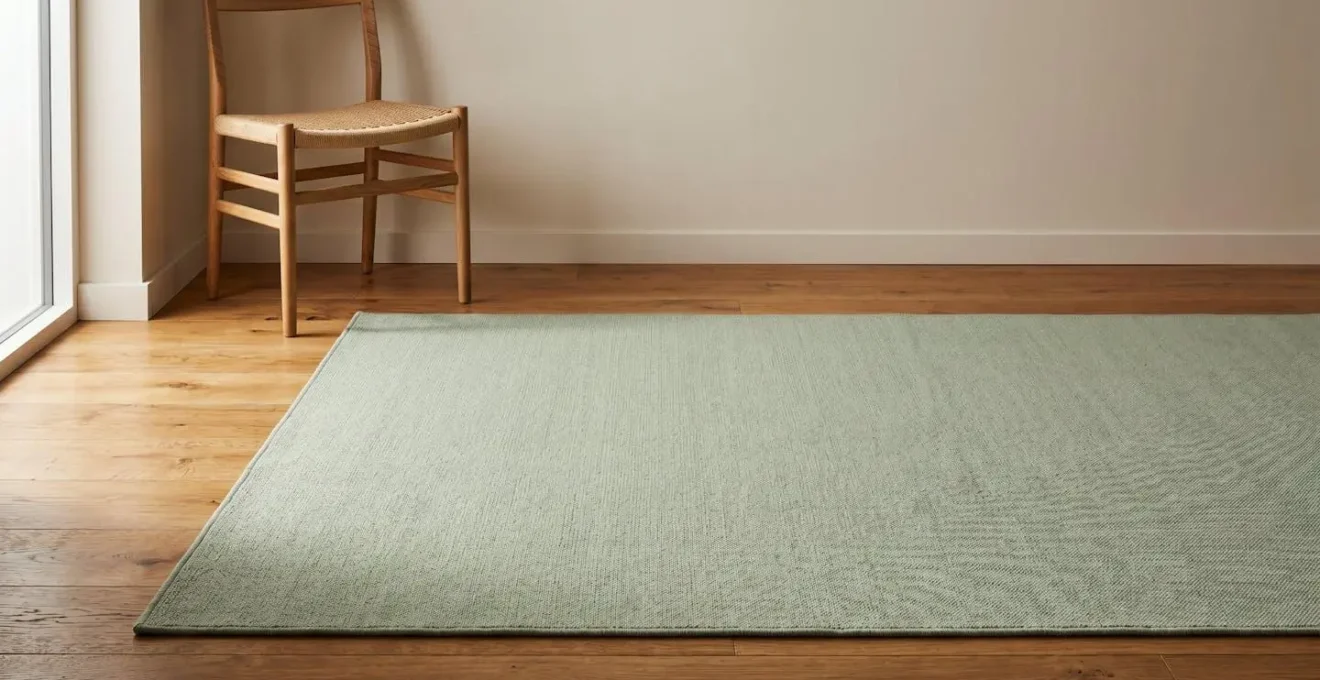
The solution is not necessarily to live with bare floors. The key is to choose rugs that provide comfort and warmth without creating visual confusion. A solid-colored, low-pile rug that has a strong contrast with the main floor is the safest option. For example, a dark-colored rug on a light wood floor clearly defines its edges, providing a predictable and easy-to-read surface for the brain.
Your Checklist for Selecting a Safe Rug
- Pile Height Check: Choose rugs with a pile under 1/2 inch. This prevents the edge from curling up and makes it easier for walkers or canes to glide over it.
- Contrast Check: Select a solid color that contrasts sharply with the floor. Place a dark rug on a light floor or vice-versa to create a clear visual boundary.
- Edge Security Check: Use double-sided carpet tape or a full-size non-slip pad to secure ALL edges and corners of the rug to the floor. This is non-negotiable.
- Pattern Check: Completely avoid busy, high-contrast geometric or swirling patterns. If you desire a pattern, choose a very low-contrast, tone-on-tone design.
- The Squint Test: In the store, squint your eyes while looking at the rug. If the pattern blurs into a confusing mess, it will be problematic for your parent. The safest rugs still look like a solid shape when your vision is blurred.
When to Introduce Voice-Activated Assistants for Visually Impaired Seniors?
For a senior struggling with vision loss, even simple tasks can become frustrating and hazardous. Finding the right button on the remote, reading the thermostat, or turning on a lamp can be a daily challenge. This is where technology, specifically voice-activated assistants like Amazon Alexa or Google Assistant, can transform from a novelty into a powerful tool for safety and independence.
The right time to introduce a voice assistant is when you notice that visual limitations are starting to restrict your parent’s daily activities or create safety risks. For example, if they are hesitant to get up in a dim room because they can’t easily find the light switch, a voice command to “turn on the living room light” can be life-changing. These devices align perfectly with the principles of fall prevention programs like the CDC’s STEADI initiative by enabling hands-free control over the environment. As the CDC has noted, reducing fall risk is critical for the more than 14 million older adults who report falling annually.
However, successful adoption requires a thoughtful, staged approach to avoid overwhelming your parent. Don’t just plug it in and expect them to use it. Introduce its functions gradually, building from enjoyment to utility.
Staged Adoption Framework for Voice Assistants
Stage 1 – The Entertainer (First 2 Weeks): Start with fun, low-pressure commands. Show them how to ask the device to play their favorite music, tell a joke, or read an audiobook. This builds familiarity and positive association. Stage 2 – The Personal Assistant (Weeks 3-6): Introduce practical daily functions. Help them set voice reminders for medications, ask for the weather before dressing, or make hands-free calls to family. Stage 3 – The Home Controller (Month 2+): Once they are comfortable, integrate smart home devices. Start with smart light bulbs, allowing them to control lighting from their chair or bed. This single function can dramatically reduce the risk of navigating dark rooms.
During setup, it is vital to discuss privacy. Explain the “wake word” concept and show them how a trusted family member can manage privacy settings. By introducing this technology with patience and a clear plan, you can provide your parent with a powerful new layer of safety and control over their environment.
Why Night Driving Becomes Dangerous Long Before You Feel Blind?
Your parent may have recently decided to stop driving at night, citing the glare from oncoming headlights or a general feeling of unease. This decision is a crucial clue for you as a caregiver. The very same visual deficit that makes night driving dangerous is what makes their home a potential minefield for falls. The issue isn’t blindness; it’s a dramatic reduction in contrast sensitivity.
As we age, the structures of the eye become less efficient. The pupil gets smaller and less responsive, and the lens and vitreous fluid become less clear. The result is a staggering reduction in the amount of light that actually reaches the retina, the light-sensing part of the eye. In fact, at age 60, the amount of light reaching photoreceptor cells is only one-third of the amount it was at age 20. This means a dimly lit hallway for you might feel like a pitch-black tunnel for them.
This loss of light information makes it incredibly hard to distinguish between objects and their backgrounds. At night on the road, a pedestrian in dark clothing becomes invisible against the pavement. At home, the dark opening of a hallway becomes indistinguishable from a closed wooden door. As fall prevention researchers at the National Institute on Aging point out, there is a direct parallel:
The core issue in night driving—loss of ‘contrast sensitivity’—is the exact same reason why navigating a dimly lit home is dangerous. The glare from headlights is analogous to the glare from a poorly placed lamp at home.
– Fall Prevention Researchers, National Institute on Aging
When your parent gives up night driving, it should be your signal to immediately re-evaluate the lighting and contrast in their home. Are there clear, high-contrast paths between the bedroom, bathroom, and kitchen? Are the tops and bottoms of stairways exceptionally well-lit? Their decision about driving is a clear statement that their world is becoming visually less defined, and your role is to help add that definition back into their most important environment: their home.
Why Is Kale Considered a Superfood for the Macula?
While adapting the external home environment is critical, you can also help “fall-proof” your parent’s vision from the inside out through nutrition. A diet rich in specific nutrients can help protect the delicate structures of the eye, particularly the macula. The macula is the center of the retina, responsible for the sharp, detailed central vision needed to spot small trip hazards like a wrinkle in a rug or a pet’s toy on the floor.
Dark, leafy greens like kale and spinach are considered “superfoods” for the eye because they are packed with lutein and zeaxanthin. These two powerful antioxidants are unique in that they accumulate in the macula, forming a protective pigment. This macular pigment acts like a pair of internal sunglasses, filtering out damaging blue light and protecting the photoreceptor cells. A stronger, denser macular pigment is directly linked to better visual acuity and contrast sensitivity.
Of course, kale is just one piece of the puzzle. A variety of vitamins and minerals work together to support overall eye health. The table below outlines key nutrients that are essential for protecting aging eyes and where to find them in accessible foods.
As outlined in a comprehensive review by the National Center for Biotechnology Information, specific dietary components play a vital role in maintaining eye health.
| Nutrient | Function for Eye Health | Accessible Food Source | Fall Prevention Link |
|---|---|---|---|
| Lutein & Zeaxanthin | Accumulate in macula for sharp central vision | Kale, spinach, eggs | Better ability to see small trip hazards |
| Vitamin C | Antioxidant protection for lens and retina | Oranges, bell peppers, strawberries | Reduces cataract progression |
| Vitamin E | Protects cell membranes from oxidative damage | Almonds, sunflower seeds, avocado | Slows age-related vision decline |
| Zinc | Helps transport Vitamin A to retina | Oysters, beef, pumpkin seeds | Maintains night vision and depth perception |
| Omega-3 Fatty Acids | Supports retinal structure and reduces dry eye | Salmon, sardines, flaxseeds | Improves visual clarity |
For many seniors, chewing tough greens can be difficult. You can make these nutrients more accessible by blending baby kale into a smoothie with fruit and yogurt, or finely chopping it and adding it to soups during the last few minutes of cooking. If dietary intake is consistently a challenge, consult their doctor about whether a lutein and zeaxanthin supplement is appropriate.
Key Takeaways
- Focus on improving contrast, not just increasing brightness. Use color and tape to define edges, stairs, and furniture.
- Eliminate visual “noise.” Avoid busy patterns on rugs, upholstery, and floors that can create confusing optical illusions.
- Use a layered lighting strategy. Employ warm ambient light for general spaces and crisp, cool-white task lighting for reading and detailed activities.
When to Book Cataract Surgery: The 3 Signs Your Daily Life Is Compromised?
You can implement every home modification in this guide, but there may come a point where the problem is no longer the environment, but the eye itself. A cataract is the clouding of the eye’s natural lens—the same lens that yellows over time. Eventually, this clouding becomes so dense that no amount of light or contrast can provide a clear image. Deciding when to opt for cataract surgery is a deeply personal choice, but it should be guided by one simple question: Is vision loss compromising daily function and safety?
Cataract surgery is one of the safest and most common procedures performed today. It involves replacing the clouded natural lens with a clear, artificial one. The improvement in vision is often dramatic and immediate. Many patients are astonished by how bright and colorful the world appears post-surgery. If you’re wondering if it’s time for your parent to have that conversation with their ophthalmologist, look for these three unmistakable signs within their home environment.
Home Safety Checklist: 3 Signs It May Be Time for a Cataract Consult
- Sign 1: Task Failure. Your parent is unable to read medication labels, recipes, or a newspaper, even with their best reading glasses and good task lighting. They now require a magnifying glass or assistance for tasks they used to manage independently.
- Sign 2: Overwhelming Indoor Glare. They complain that the light from windows or even standard lamps is “too bright” or “dazzling.” You find them frequently squinting or shielding their eyes indoors, as the clouded lens scatters light, creating painful glare instead of a clear image.
- Sign 3: Severe Color Confusion. The issue with pastel colors has progressed. They can no longer distinguish between similar colors, like black and navy blue socks, or a light-colored plate on a light-colored tablecloth. This indicates the lens has become significantly clouded.
If you observe these signs, it’s a strong indicator that home modifications alone are no longer sufficient. Encouraging a consultation for cataract surgery is the next logical step in ensuring their safety and restoring their quality of life. The procedure can feel like turning the lights back on, dramatically restoring the vibrant color perception they have lost.