The safest contact lens solution isn’t about convenience vs. power; it’s about the chemical compatibility between your solution, your lens material, and your eye’s unique biology.
- Multipurpose solutions (MPS) rely on preservatives that can bind to certain lens materials, leading to irritation and deposits.
- Hydrogen peroxide offers superior disinfection without preservatives but requires strict adherence to its chemical neutralization process to be safe.
Recommendation: The optimal choice depends on matching your lens material (e.g., Silicone Hydrogel) with a solution whose cleaning agents are effective against your specific deposit profile, and whose disinfection method minimizes your exposure to irritating chemicals.
For contact lens wearers with sensitive eyes, the daily cleaning ritual can feel like a gamble. You stand in the pharmacy aisle, faced with a wall of options, fundamentally boiling down to two philosophies: the all-in-one convenience of a multipurpose solution (MPS) or the deep-cleaning power of hydrogen peroxide. The common wisdom suggests MPS is easier but might cause irritation, while peroxide is more effective but carries the risk of a chemical burn if used improperly. This surface-level understanding, however, misses the crucial point.
As a cosmetic chemist, I analyze formulations not for their marketing claims, but for their molecular interactions. The real difference between these solutions lies in their chemical mechanisms and, most importantly, how they interact with the sophisticated polymers that make up your contact lenses. The discomfort you feel isn’t just a vague “sensitivity”; it’s often a direct result of preservative molecules binding to the lens surface, a process called preservative-induced corneal staining, or the incomplete neutralization of a powerful oxidizing agent.
The choice is not merely about balancing convenience and risk. It’s about understanding the science to make a decision that protects your corneal health. This article will deconstruct these two types of solutions from a chemical perspective. We will move beyond the marketing and dive into the interactions between preservatives and lens materials, the specifics of catalytic neutralization, the crucial role of your lens case in preventing microbial growth, and why the material of your contact lens is as important as the solution you put it in.
To navigate this complex topic, we will break down the key scientific principles and practical hygiene steps. This guide will provide a clear, evidence-based comparison to help you understand which system is chemically better suited for your eyes and lenses.
Summary: A Scientific Comparison of Contact Lens Solutions
- Why Do Preservatives in Multipurpose Solutions Irritate Some Eyes?
- How to Use Peroxide Systems Without Burning Your Cornea?
- Saline Solution or Disinfectant: Which One Actually Kills Bacteria?
- The “Topping Off” Mistake That Breeds Superbugs in Your Case
- When to Throw Away Your Lens Case Regardless of Its Appearance?
- How to Descale Your Lens Case to Kill Biofilm Bacteria?
- Why Is Dk/t the Most Important Number on Your Lens Box?
- Hydrogel vs Silicone Hydrogel: Which Lens Material Lets Your Eyes Breathe?
Why Do Preservatives in Multipurpose Solutions Irritate Some Eyes?
Multipurpose solutions (MPS) are the pinnacle of convenience: they clean, rinse, disinfect, and store lenses with a single liquid. The chemistry enabling this relies on a delicate balance of surfactants (for cleaning), buffers (to match the eye’s pH), and, most critically, preservatives. These preservatives are designed to kill microorganisms in the lens case, but their very nature can be the source of irritation for many users, especially those with sensitive eyes. The problem is one of molecular interaction between the preservative and the lens material itself.
Modern MPS formulations often use high-molecular-weight preservatives like polyquaternium-1 (PQ-1) and polymeric biguanide (PHMB). While effective against many bacteria, these large molecules can be absorbed by and bind to the surface of contact lenses, particularly silicone hydrogel materials. Over time, this accumulation of preservative is released directly onto the cornea, leading to a cytotoxic (cell-damaging) response. This manifests as irritation, redness, and a clinical sign known as corneal staining, where tiny dots on the cornea’s surface become visible to an eye doctor. As researchers Lindsay A. Sicks and Andrew D. Pucker note:
Modern, high-molecular-weight preservatives, including polyquaternium-1 (PQ-1) and biguanides (PHMB), are generally effective against bacteria, minimally effective against fungi, and not effective against Acanthamoeba.
– Lindsay A. Sicks & Andrew D. Pucker, Common Ophthalmic Preservatives in Soft Contact Lens Care Products
This highlights a dual vulnerability: not only can the preservatives cause direct irritation, but their antimicrobial spectrum is not absolute, leaving potential gaps in protection against more resilient organisms like fungi and the dangerous Acanthamoeba parasite. The very components meant to ensure safety can become a source of chronic, low-grade chemical exposure to the eye.
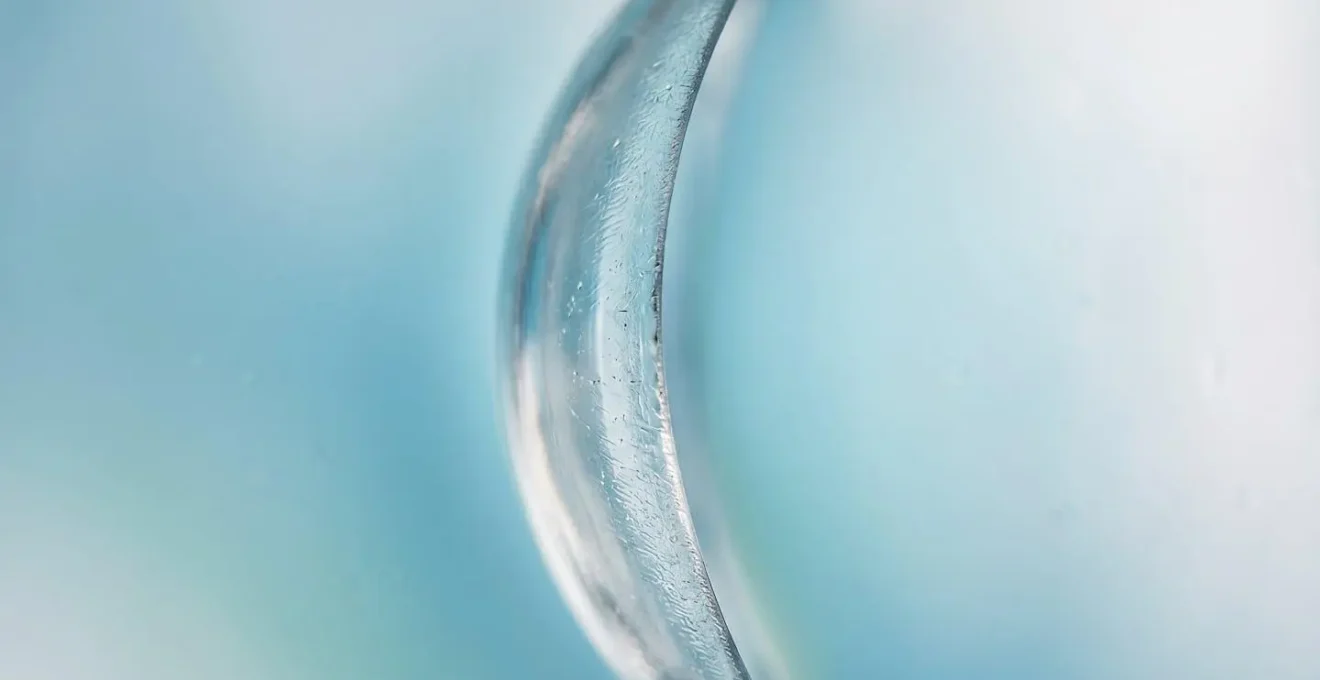
The microscopic structure of the lens material plays a key role in this process. The porous nature of some lenses can act like a sponge for these preservative molecules, creating a reservoir of irritants that is reapplied to your eye each morning. For a sensitive individual, this daily micro-dosing of chemicals is what drives the cycle of discomfort.
How to Use Peroxide Systems Without Burning Your Cornea?
Hydrogen peroxide systems represent a fundamentally different chemical approach to disinfection. Instead of relying on preservatives, they use a 3% solution of hydrogen peroxide (H2O2), a powerful oxidizing agent that is highly effective at killing a broad spectrum of microorganisms, including bacteria, fungi, viruses, and even the notoriously difficult-to-kill Acanthamoeba. The ‘magic’ of these systems is not just in the disinfection, but in the subsequent neutralization process that converts the potent disinfectant into harmless, preservative-free saline before the lens touches your eye.
This neutralization is a controlled chemical reaction, typically facilitated by a platinum-coated catalytic disc built into the bottom of the special lens case provided. When the peroxide solution comes into contact with the platinum catalyst, it rapidly breaks down into water (H2O) and oxygen (O2), which you can see as a gentle stream of bubbles. This process is highly time-dependent and requires a minimum soaking time of six hours to ensure complete neutralization. Putting a lens in your eye before this period is over will result in a significant chemical burn to the cornea, causing intense pain, redness, and temporary vision loss. There is no shortcut to this chemistry.
Even after a full neutralization cycle, trace amounts of peroxide may remain. While the concentration is dramatically reduced, research shows that neutralization typically results in residual levels of 5 to 20 parts per million (ppm) of H2O2. For the vast majority of users, this is completely unnoticeable and safe. However, for the most exquisitely sensitive individuals, even these trace amounts can be enough to cause mild irritation. This explains why a small fraction of users still report sensitivity even with peroxide systems, despite their preservative-free nature.
The cardinal rules of peroxide systems are absolute: only use the special case provided (as it contains the catalyst), never rinse lenses with unneutralized peroxide solution before insertion, and always allow for the full, uninterrupted six-hour neutralization cycle. Adherence to this protocol is what makes it one of the safest and most effective disinfection methods available.
Saline Solution or Disinfectant: Which One Actually Kills Bacteria?
A critical and potentially dangerous point of confusion for many contact lens wearers is the distinction between saline solution and a true disinfecting solution (like MPS or hydrogen peroxide). Saline solution is simply a sterile, pH-balanced saltwater solution (0.9% sodium chloride). Its sole purpose is for rinsing. It has zero disinfecting properties and cannot kill bacteria, fungi, or other harmful microorganisms.
Thinking of saline as a cleaner is like rinsing a dirty dish with plain water—it might remove loose debris, but it does nothing to eliminate the invisible layer of germs. Using saline to store your lenses overnight is one of the most significant risks you can take with your eye health. It creates a perfect breeding ground for bacteria. The lens case becomes a microbial incubator, allowing pathogens to multiply to dangerous levels, which are then transferred directly onto your cornea the next morning.
This practice is a leading cause of severe eye infections, including microbial keratitis. One of the most feared pathogens associated with poor contact lens hygiene is Acanthamoeba, a free-living amoeba found in tap water, soil, and swimming pools. It can cause Acanthamoeba keratitis, a rare but excruciatingly painful and sight-threatening infection. The link to improper lens care is stark; studies indicate that over 80% of Acanthamoeba keratitis cases in the developed world occur in contact lens wearers.
Therefore, the roles of these liquids must be clear:
- Disinfecting Solution (MPS or Peroxide): Used for killing microorganisms and safely storing lenses overnight. This is non-negotiable.
- Saline Solution: Used ONLY for rinsing lenses before insertion *after* they have already been disinfected, or for filling scleral lenses. It should never be used for storage or cleaning.
- Tap Water: Should NEVER come into contact with your contact lenses or your lens case. It is a primary source of Acanthamoeba.
The chemical difference is absolute. Saline provides a comfortable, neutral environment, which is precisely what bacteria also enjoy. Disinfectants create a hostile chemical environment designed to destroy them.
The “Topping Off” Mistake That Breeds Superbugs in Your Case
Perhaps the single most common and dangerous hygiene mistake made by contact lens wearers is “topping off.” This is the practice of adding a small amount of fresh solution to the old solution already in the lens case, instead of completely discarding the old liquid, rinsing the case, and refilling it with fresh solution. From a microbiological standpoint, this is an open invitation for disaster. The old solution is not just used; it is contaminated with debris from your lenses and has had its disinfecting power partially neutralized by proteins and lipids.
When you top off, you are essentially diluting the fresh disinfectant, reducing its efficacy below the concentration needed to kill robust pathogens. Worse, you are creating a “soup” of microorganisms and nutrients (debris from your eyes) that allows for the formation of biofilm. A biofilm is not just a random collection of germs; it’s a structured, organized community of bacteria that secretes a slimy, protective matrix. This matrix shields the bacteria from disinfectants, making them hundreds of times more resistant than they would be as free-floating organisms. This is how “superbugs” are cultivated in your own lens case.
The danger of insufficient disinfection was highlighted in a major public health investigation. The following case study illustrates the real-world consequences.
Case Study: The 2007 Advanced Medical Optics Acanthamoeba Outbreak
In 2007, the U.S. Centers for Disease Control and Prevention (CDC) investigated a nationwide outbreak of Acanthamoeba keratitis. The study found that patients with the infection were nearly 17 times more likely to have used a specific multipurpose solution, Complete MoisturePlus. The investigation concluded that the solution itself was not contaminated from the factory, but its anti-Acanthamoeba efficacy was insufficient, especially when combined with poor hygiene practices like topping off or failing to rub and rinse. This event underscored that user behavior is as critical as the chemical formulation of the solution.
This habit is alarmingly common, partly because it saves time and a small amount of money. However, the risk it introduces is immense. Research demonstrates that the contamination rate for contact lens storage cases is shockingly high, with some studies showing that between 24% and 81% of lens cases test positive for significant microbial growth. Topping off is a primary contributor to these statistics.
When to Throw Away Your Lens Case Regardless of Its Appearance?
The contact lens case is not a permanent accessory; it’s a consumable medical supply with a finite lifespan. Many users make the mistake of judging their case by its appearance. If it looks clean, they assume it is clean. This is a dangerous misconception rooted in an underestimation of the invisible world of microbes and biofilm. Even a case that appears pristine can be heavily colonized with bacteria encased in a protective biofilm.
As discussed, biofilm is a resilient, structured colony of microorganisms. Once it establishes itself on the plastic surfaces of your lens case, it is incredibly difficult to remove completely with solution alone. Research has shown that many disinfecting solutions are unable to penetrate and disrupt an established biofilm. As one study concludes:
Biofilm can rapidly form in lens cases and may not be killed by disinfecting solutions. Of the solutions tested, none were able to prevent biofilm formation or disrupt established biofilm.
– Contact lens case biofilm study researchers, Evaluation of prevention and disruption of biofilm in contact lens cases
This means that even if you follow a perfect “empty, rinse, and refill” routine, an old case can serve as a constant source of contamination, re-introducing bacteria to your freshly cleaned lenses every night. The plastic itself can develop microscopic scratches and crazing over time, creating even more nooks and crannies for biofilms to anchor and thrive.
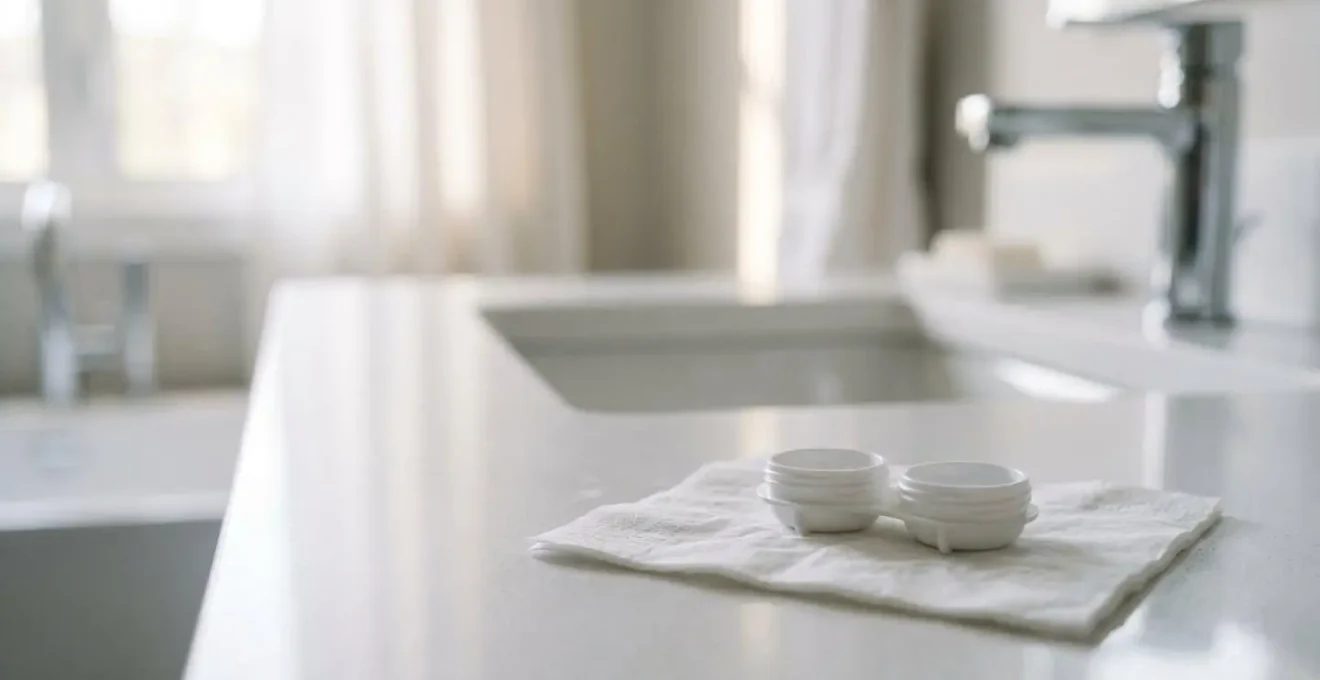
For this reason, eye care professionals and health organizations like the American Optometric Association provide a clear and simple guideline: replace your contact lens case at least every three months. For hydrogen peroxide systems, the case and its catalytic disc must be discarded with each new bottle of solution, as the platinum catalyst loses its effectiveness over time. Waiting for your case to look dirty is waiting far too long. The proactive, scheduled replacement is a cornerstone of preventing serious eye infections.
How to Descale Your Lens Case to Kill Biofilm Bacteria?
While replacing your lens case regularly is the most important step, proper daily cleaning is essential to minimize biofilm formation between replacements. Simply rinsing the case is not enough. Biofilm starts to form almost immediately, and a mechanical, physical action is required to dislodge these early, invisible microbial colonies before they can establish a strong foothold. The most effective cleaning protocol is not based on opinion but on scientific evidence.
The key is a combination of chemical action and physical friction. Studies that compared different cleaning methods found that a multi-step “rub and rinse” technique was vastly superior to passive rinsing alone. The physical rubbing action mechanically breaks up the nascent biofilm structure, allowing the disinfectant in the solution to access and kill the individual bacteria more effectively. In fact, research on biofilm removal has shown that a protocol involving rubbing, rinsing with an effective solution, wiping, and air-drying is the gold standard. As one study found, this combination approach showed the greatest reduction in microbial load compared to other, more passive methods.
A simple rinse might leave up to 90% of the bacteria behind, still clinging to the case walls. To truly clean your case and make it a safe environment for your lenses, a more rigorous, evidence-based approach is required every single day.
Your Action Plan: Evidence-Based Lens Case Cleaning Protocol
- Empty & Rub: After inserting your lenses, discard all old solution. Add a few drops of fresh multipurpose or saline solution and use a clean finger to rub the inside wells of the case for at least 10-15 seconds. This mechanically dislodges the early biofilm.
- Rinse Thoroughly: Rinse the case wells vigorously with fresh multipurpose or saline solution (never tap water) to wash away the dislodged debris and bacteria.
- Wipe & Dry: Use a clean tissue to wipe the interior of the case, removing any remaining moisture and biofilm. Moisture is essential for bacterial survival, so removing it is a critical step.
- Air-Dry Upside Down: Place the case and its lids upside down on a clean tissue in a well-ventilated area. This allows it to dry completely, creating a desiccated environment that is hostile to any surviving bacteria.
- Replace on Schedule: Discard and replace the case every one to three months (or with every new bottle of peroxide solution) regardless of its appearance.
This daily routine takes less than a minute but dramatically reduces the risk of contamination and infection. It transforms the lens case from a potential hazard into the clean, protective device it is meant to be.
Why Is Dk/t the Most Important Number on Your Lens Box?
While the choice of solution is critical, it is only half of the equation. The other half is the contact lens itself—specifically, the material it’s made from. Your cornea has no blood vessels; it gets the majority of its oxygen directly from the atmosphere. A contact lens acts as a barrier, and if that barrier doesn’t allow enough oxygen to pass through, the cornea can suffer from a condition called hypoxia (oxygen deprivation). This can lead to a host of problems, including blurred vision, redness, discomfort, and an increased risk of infection.
To quantify a lens’s ability to transmit oxygen, optometrists and material scientists use a value called oxygen transmissibility, or Dk/t. This number is prominently displayed on every box of contact lenses. In this formula, ‘Dk’ represents the oxygen permeability of the lens material itself, and ‘t’ represents the thickness of the lens. A higher Dk/t value means more oxygen reaches the cornea, promoting better eye health. This number is arguably the single most important technical specification of your lens.
Why does this matter for sensitive eyes? A cornea that is even mildly deprived of oxygen is a stressed cornea. It is more susceptible to swelling (edema), its surface cells (epithelium) are less robust, and it’s less able to fight off infection. This stressed state can significantly amplify any irritation caused by solution preservatives or lens deposits. The feeling of “discomfort” is often a direct signal from your body that the cornea is under duress. As one clinical resource notes, there’s a direct link between physical sensation and cellular health:
Patient discomfort (burning, stinging) can directly correlate with staining of the cornea.
– Eyes On Eyecare, The Best Contact Lens Solutions
Therefore, for someone with sensitive eyes, choosing a lens with a high Dk/t is not a luxury; it’s a foundational requirement for comfort and safety. It ensures the cornea is in the healthiest possible state to begin with, making it more resilient to the other challenges of contact lens wear. Before you even consider which solution to use, ensuring your lens material provides adequate oxygen is the first and most vital step.
Key Takeaways
- The primary cause of irritation from multipurpose solutions is the preservatives binding to the lens material and being released onto the cornea.
- Hydrogen peroxide systems offer superior, preservative-free disinfection but require a strict, uninterrupted 6-hour neutralization to be safe.
- Never “top off” your lens case; this dilutes the disinfectant and promotes the growth of resilient biofilm. Replace your case every 1-3 months.
Hydrogel vs Silicone Hydrogel: Which Lens Material Lets Your Eyes Breathe?
The evolution of contact lens materials has been driven by the pursuit of higher oxygen transmissibility (Dk/t). This has led to two major classes of soft lens materials: traditional hydrogels and modern silicone hydrogels (SiHy). Understanding their fundamental chemical differences is key to making an informed choice and pairing them with the right solution.
Traditional hydrogel lenses are made of water-loving polymers. Their oxygen permeability is directly tied to their water content—the more water, the more oxygen can pass through. However, there is a physical limit to this approach, and hydrogels generally have lower Dk/t values. They are also prone to drying out over the course of the day, as water evaporates from the lens surface, which can cause discomfort for some wearers.
Silicone hydrogel (SiHy) lenses were a revolutionary breakthrough. These materials incorporate silicone, which is highly permeable to oxygen, into the hydrogel polymer matrix. This allows for extremely high Dk/t values, often five to six times greater than traditional hydrogels, independent of water content. This superior oxygen performance has made SiHy the material of choice for extended wear and for promoting optimal daily-wear corneal health. However, this material comes with a trade-off: silicone is naturally hydrophobic (water-repelling) and can have a higher affinity for attracting lipid (oily) deposits compared to hydrogels.
This difference in deposit profile is where solution compatibility becomes crucial. A person wearing a SiHy lens who is prone to lipid deposits may need an MPS with a stronger surfactant (cleaning agent) specifically designed to remove these oily films. Conversely, as mentioned earlier, the preservatives in some MPS can bind more readily to SiHy materials. This creates a complex balancing act that must be managed with your eye care professional. The following table breaks down the key chemical and physical differences:
| Property | Traditional Hydrogel | Silicone Hydrogel |
|---|---|---|
| Oxygen Permeability (Dk/t) | Lower (typically 20-40) | Higher (typically 80-175) |
| Water Content | Higher (38-75%) | Lower to moderate (24-54%) |
| Surface Wettability | Naturally high | May require surface treatment |
| Lipid Deposit Attraction | Lower tendency | Higher tendency due to silicone |
| Material Stiffness (Modulus) | Softer, more flexible | Stiffer (newer generations improved) |
| Best For | Short daily wear, dry eye patients with MGD | Extended wear, high oxygen needs |
| Solution Compatibility | Compatible with most solutions | May require specific surfactant-enhanced solutions |
Ultimately, the “best” material is the one that best suits your individual eye physiology, wear schedule, and tear film chemistry. For sensitive eyes, a high-Dk/t silicone hydrogel lens paired with a preservative-free hydrogen peroxide system often provides the optimal combination of high oxygen, superior disinfection, and minimal chemical irritation.
To make the most informed decision for your sensitive eyes, the next step is to discuss these material and solution interactions with your eye care professional, armed with a new understanding of the chemistry at play.